SERVICE AREA / 03
virtual testing · sensor simulation · SOTIF · scenario libraries
Overview
Validating autonomous driving systems through physical road testing alone is statistically infeasible — the scenario space required to demonstrate sufficient safety margins would demand billions of kilometres of driving. Virtual simulation environments make comprehensive AV validation achievable by enabling millions of scenario variations to be executed in simulation, including safety-critical edge cases that cannot be safely reproduced on physical roads. Our AV simulation team builds virtual testing environments, deploys physics-based sensor models, performs SOTIF analysis, develops structured scenario libraries, and supports safety case development.
Industries Served
Deliverables
Key Aspects
Building physics-accurate virtual testing environments that recreate real-world driving conditions at scale — enabling thousands of scenario variations to be evaluated in simulation before a single kilometre of physical test driving, dramatically compressing AV validation timelines.
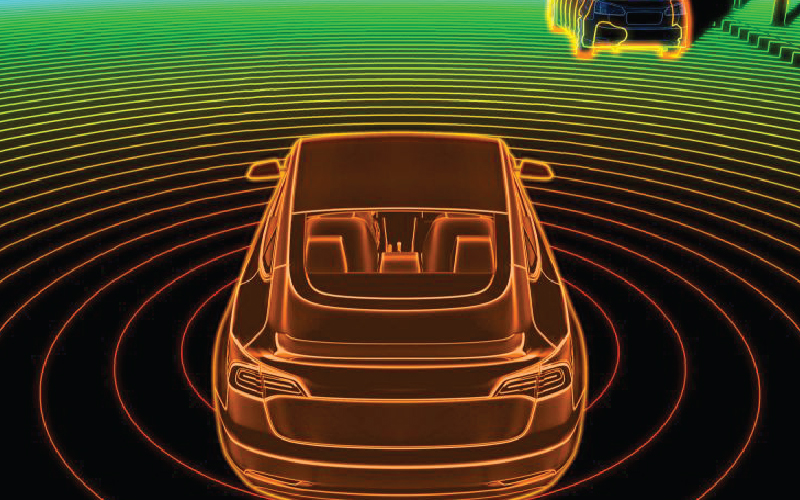
Simulating LiDAR, radar, camera, and ultrasonic sensor models within the virtual environment — generating realistic sensor output data for perception stack testing without physical sensor hardware, enabling early algorithm development and edge-case injection at any scenario.
Performing Safety of the Intended Functionality analysis to identify scenarios where the AV system behaves correctly by design specification but still causes hazardous situations — systematically covering the triggering condition space and quantifying residual risk for regulatory submission.
Developing structured scenario libraries at abstract, logical, and concrete levels — enabling systematic coverage of the operational design domain, parameterised sweep of critical scenario variables, and identification of corner cases that challenge perception and planning modules.
Integrating and validating the full autonomy stack — perception, prediction, path planning, and control — within the virtual testing environment, closing the loop between sensor simulation, algorithm execution, and vehicle response for comprehensive SIL and HIL validation.
Building the safety case and regulatory submission package for AV system homologation — developing the safety argumentation, evidence chain, operational design domain definition, and simulation-based validation evidence required by UNECE WP.29, GSR, and OEM gateway requirements.
Connect with our digitalization team to discuss virtual testing environments, sensor simulation, SOTIF analysis, or safety case development for your autonomous programme.