Mission Engineering
Model, simulate, and evaluate complete mission scenarios including satellites, communication networks, navigation systems, radar coverage, and multidomain operations.

From aircraft and spacecraft to autonomous systems and mission planning, CADFEM empowers aerospace and defence organizations with AI-driven simulation, digital engineering, and mission-level system analysis to accelerate innovation, reduce development risk, and improve operational readiness.
Overview
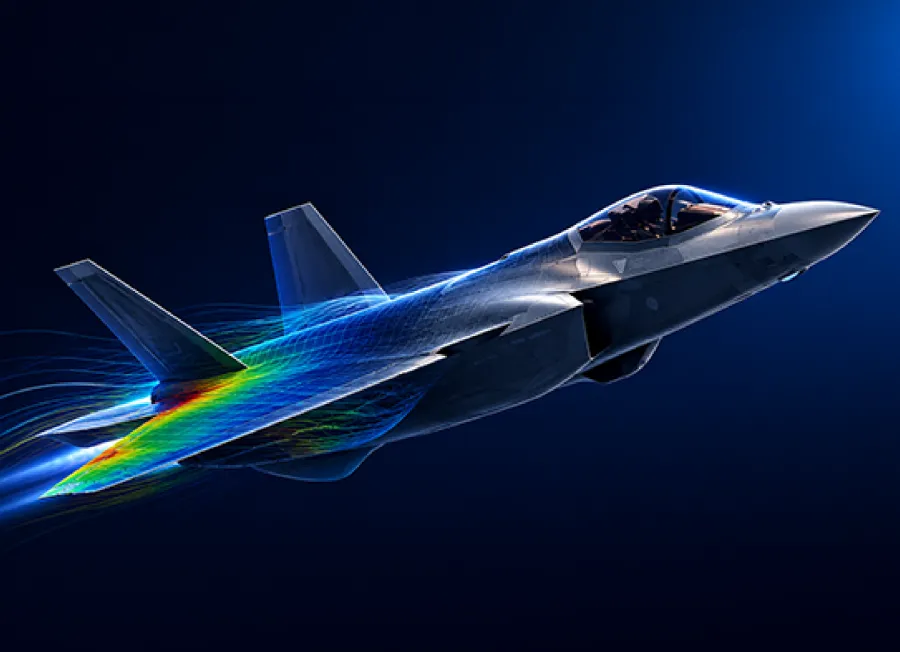
The aerospace and defence industry is undergoing a rapid transformation. Modern aircraft, spacecraft, satellites, defence platforms, and autonomous systems are becoming increasingly software-defined, connected, and mission-driven. As engineering complexity grows, organizations need smarter ways to design, validate, and optimize systems before physical deployment.
CADFEM combines deep domain expertise with Ansys simulation technologies to help organizations adopt simulation-driven digital engineering across the entire product lifecycle. From aerodynamic performance and propulsion systems to mission engineering, embedded software, radar systems, and digital twins, our solutions enable engineers to validate complex systems virtually, reduce physical testing, accelerate certification, and improve mission confidence.
Model, simulate, and evaluate complete mission scenarios including satellites, communication networks, navigation systems, radar coverage, and multidomain operations.
Accelerate development of aircraft, spacecraft, missiles, propulsion systems, and autonomous aerial platforms through simulation-driven engineering.
Virtually validate radar, EO/IR sensors, RF communications, avionics, embedded software, and autonomous systems before deployment.
Connect MBSE, Digital Thread, Digital Twins, AI, and simulation automation into a unified engineering workflow that improves collaboration and decision-making.
Modern defence platforms integrate mechanical, electronic, software, communication, and AI systems that must operate seamlessly.
Programs must move from concept to deployment much faster while maintaining engineering quality and compliance.
Mission-critical systems often require expensive prototypes and field trials, making virtual validation increasingly important.
Engineers must validate sensor fusion, perception, navigation, and AI algorithms across thousands of operational scenarios.
Meeting standards such as DO-178C, ARP4754A, ARP4761, MIL-STD, and cybersecurity requirements demands comprehensive verification.
Platforms must operate effectively across air, land, sea, space, and cyber environments with complete operational awareness.
Reduce design iterations through virtual validation of complete aerospace and defence systems.
Leverage AI-assisted workflows, optimization, and automation to improve engineering productivity and accelerate design exploration.
Evaluate operational scenarios, communication networks, radar coverage, and system interactions before deployment.
Integrate requirements, simulation, verification, and lifecycle management using MBSE, Digital Thread, and Digital Twins.
Analyze structures, fluids, electromagnetics, optics, embedded software, and controls within one connected engineering environment.
Identify performance issues, integration challenges, and operational risks early, minimizing costly redesigns and improving mission confidence.
Mission Engineering & Digital Operations
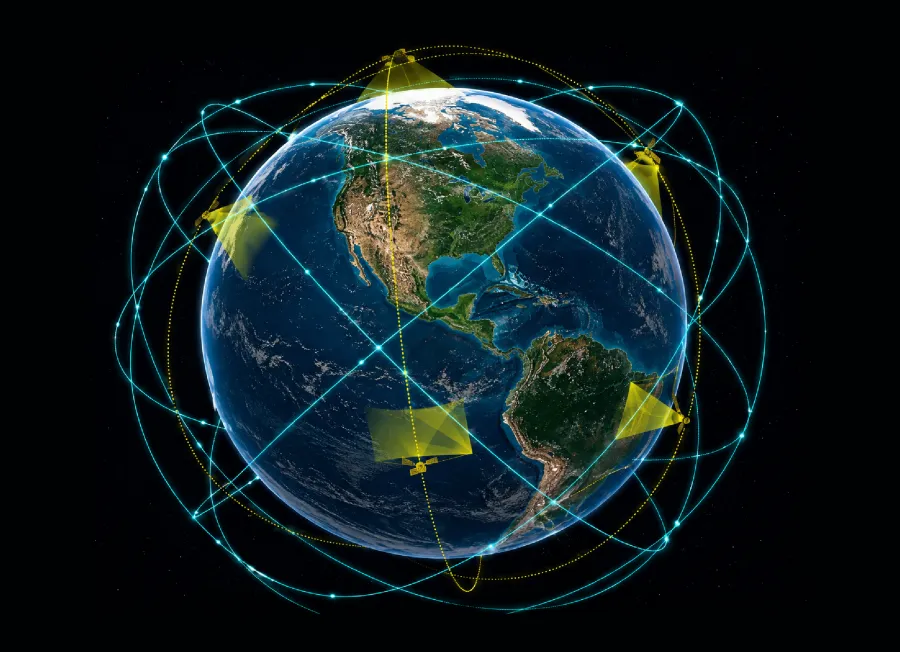
Mission success depends on understanding how platforms perform together—not individually.
CADFEM enables organizations to model complete operational environments using Ansys STK and Digital Mission Engineering. Engineers can simulate satellites, aircraft, communication networks, navigation systems, sensors, and multidomain operations to evaluate mission performance long before deployment.
Aerospace Platforms & Propulsion
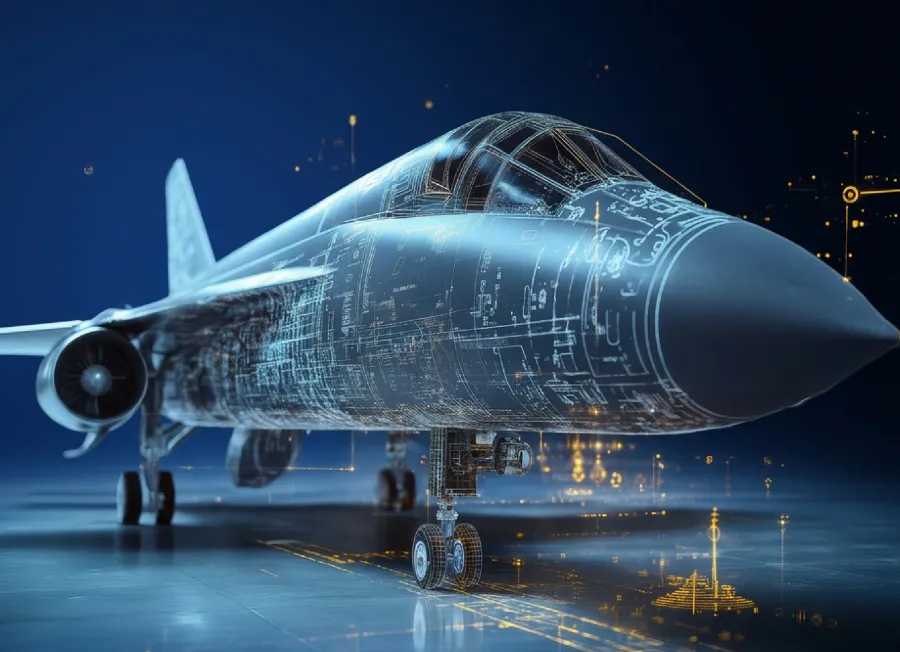
Developing next-generation aerospace systems requires balancing performance, safety, weight, efficiency, and reliability.
CADFEM enables engineering teams to optimize aircraft structures, propulsion systems, hypersonic vehicles, and electric propulsion through high-fidelity multiphysics simulation.

Intelligent Defence Systems
Modern defence platforms rely on intelligent sensing, secure communications, and autonomous decision-making.
CADFEM helps engineers virtually develop and validate radar systems, EO/IR sensors, RF communications, embedded software, avionics, and autonomous platforms before field deployment.
Digital Engineering & AI
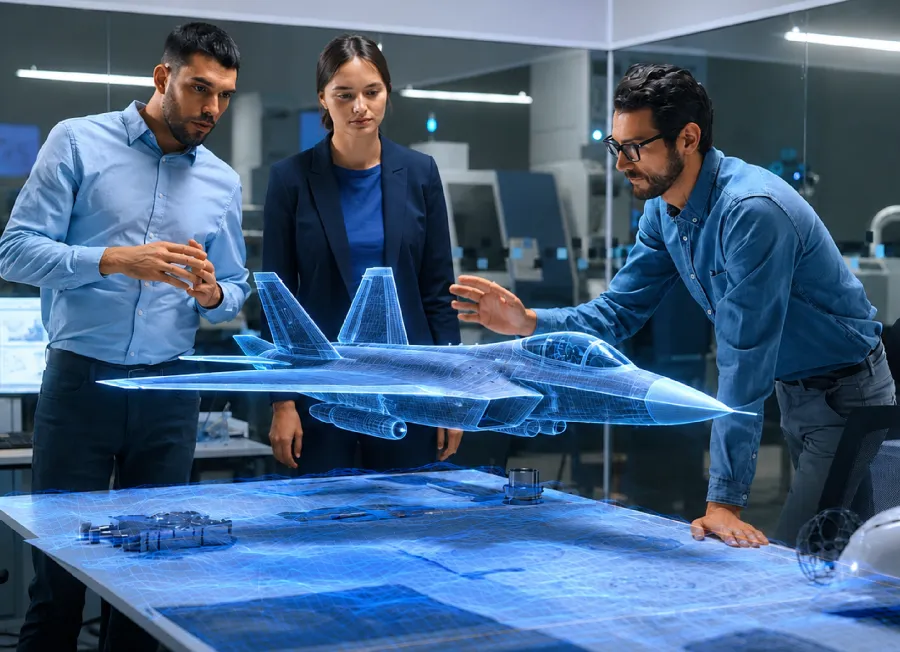
Today's aerospace programs extend far beyond simulation. They require connected digital workflows that integrate requirements, engineering, verification, and operational intelligence.
CADFEM combines MBSE, Digital Thread, AI-assisted engineering, Digital Twins, and workflow automation to create a collaborative engineering ecosystem where teams can evaluate more design alternatives, improve traceability, and make better decisions throughout the product lifecycle.
Simulation enables virtual validation of aircraft, spacecraft, defence systems, and autonomous platforms, reducing physical testing, accelerating development, and improving reliability.
Mission Engineering connects platform performance with operational objectives, allowing engineers to simulate complete mission scenarios involving air, land, sea, space, and cyber assets.
MBSE creates a connected digital engineering workflow by linking requirements, system architecture, simulation, verification, and lifecycle data, improving traceability and reducing development risk.
Yes. CADFEM supports the development and validation of UAVs, sensor fusion, radar, EO/IR systems, AI-enabled perception, and mission planning through advanced simulation.
CADFEM offers solutions including Ansys STK, ModelCenter, Fluent, Mechanical, HFSS, LS-DYNA, SCADE, medini analyze, Sherlock, Twin Builder, and AVxcelerate Sensors.