ANALYSIS TYPE / 02
Improving Heat Distribution and Efficiency
Overview
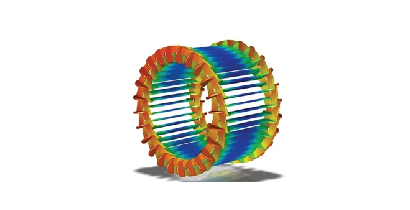
Thermal management refers to the techniques, strategies, and technologies used to control and regulate temperature levels within systems to optimize performance, efficiency, reliability, and safety. CFD simulations predict and prevent overheating, thermal stress, and component failure in electronic devices, mechanical systems, vehicles, industrial processes, and energy systems. Conjugate Heat Transfer (CHT) refers to the analysis of heat transfer phenomena where both fluid flow and solid conduction are considered simultaneously — crucial in systems like electronic cooling where heat generated by solid components must be dissipated efficiently through both fluid and solid materials.
Industries Served
Deliverables
Other CFD Services
Multi Phase & Multi SpeciesThermal ManagementExternal & Internal AerodynamicsSubsonic / Transonic / Supersonic FlowsAero-Vibro AcousticsBattery Management SystemsFluid-Structure InteractionHydraulic & TurbomachineryCombustion & Reaction ChemistryPolymer & Metal ProcessingCustomized Functional DevelopmentKey Aspects
Simultaneously solving fluid flow and solid conduction to accurately predict temperature distributions in systems where both modes of heat transfer are significant.
Simulating airflow and heat dissipation in electronic enclosures, PCB assemblies, and power modules — ensuring components operate within safe thermal limits.
Modelling heat generation, cooling channel design, and thermal runaway risk in EV battery packs — optimising cooling strategy for performance and safety.
Evaluating heat transfer effectiveness, pressure drop, and fouling effects in shell-and-tube, plate, and finned heat exchangers for HVAC, automotive, and industrial applications.
Connect with our CFD engineering team to discuss the right approach for your application.