ANALYSIS TYPE / 10
Flow Molding and Filling
Overview
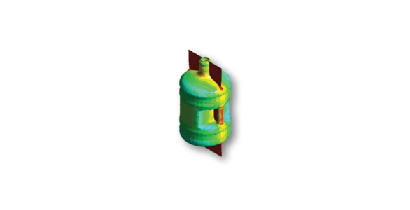
Polymer and Metal Processing involves the analysis of fluid flow, heat transfer, and material behavior during manufacturing processes such as injection molding, extrusion, casting, and metal forming. CFD simulations are used to model the flow of molten polymer, predict temperature distributions, optimize cooling strategies, and analyze material behavior during shaping and solidification. This helps in designing efficient molds, reducing cycle times, minimizing defects, and improving the mechanical properties of polymer products. Non-Newtonian fluid models capture the complex viscosity behavior of molten materials during processing.
Industries Served
Deliverables
Other CFD Services
Multi Phase & Multi SpeciesThermal ManagementExternal & Internal AerodynamicsSubsonic / Transonic / Supersonic FlowsAero-Vibro AcousticsBattery Management SystemsFluid-Structure InteractionHydraulic & TurbomachineryCombustion & Reaction ChemistryPolymer & Metal ProcessingCustomized Functional DevelopmentKey Aspects
Simulating cavity filling, pack, and hold phases of injection moulding — predicting weld lines, air traps, short shots, and sink marks to optimise gate location and process parameters.
Modelling polymer flow through extrusion dies to achieve uniform velocity and pressure distributions — eliminating melt fracture and ensuring dimensional stability of the extrudate.
Analysing cooling channel layout and coolant flow to achieve uniform mould surface temperature — reducing cycle time and minimising part warpage and residual stress.
Applying Carreau, Cross, or power-law viscosity models to accurately capture the shear-thinning and viscoelastic behaviour of polymer melts during processing.
Connect with our CFD engineering team to discuss the right approach for your application.