Where Engineering Meets Precision Simulation
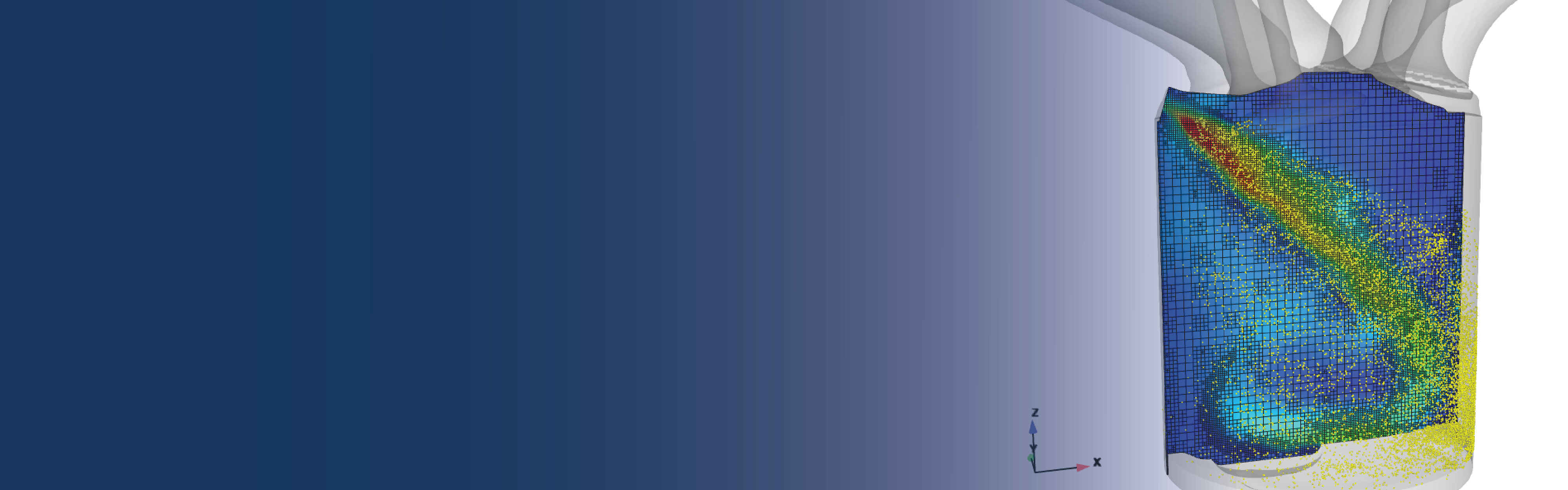
Computational Fluid Dynamics (CFD) is a branch of fluid mechanics that utilises numerical methods and algorithms to analyse and solve problems involving fluid flow. A powerful tool for engineers to simulate and understand the behaviour of fluids in virtually any scenario — from cooling and aerodynamics to combustion and multi-phase processing.
What We Deliver
Our CFD team covers 11 specialist analysis types — from single-phase thermal management to complex multi-phase, reacting flows and fluid-structure interaction. We work with industry-leading solvers and partner with your engineering teams to deliver CFD results that directly drive design decisions.
Whether you need a quick parametric study of cooling channel geometry or a full-system transient thermal runaway simulation, we select and configure the right approach for your specific physics and timeline.
Key Problems We Solve
11 Analysis Types
Select an analysis type to explore the methodology, deliverables, and tools in detail.
ANALYSIS TYPE / 01
phase separation · spray · mass transfer
Multi-phase and multi-species CFD models simultaneous flow of liquids, gases, and solid particles along with chemical reactions and mass transfer — essential for spray systems, boiling, sloshing, phase separation, and industrial process equipment.
Key Aspects
Modelling interpenetrating fluid phases — liquid-gas, liquid-liquid, or solid-liquid — using volume-fraction transport equations for applications like bubble columns, fluidised beds, and separators.
Tracking individual droplets, particles, or bubbles through a continuous carrier phase — used for spray injection, particle deposition, and erosion prediction.
Capturing the dynamic interface between immiscible fluids using Volume of Fluid (VoF) — applied to tank sloshing, fuel slosh dynamics, and wave impact on marine structures.
Solving conservation equations for multiple chemical species to model mixing, dilution, and chemical conversion in reactors, combustors, and industrial process equipment.
ANALYSIS TYPE / 02
heat transfer · cooling strategy · electronics thermal
Thermal management CFD covers conduction, convection, and radiation to optimise cooling strategies for electronics, EV battery packs, powertrains, and HVAC systems — ensuring safe operating temperatures throughout the product lifecycle.
Key Aspects
Predicting heat dissipation from power electronics, CPUs, and battery cells — optimising heatsink geometry, cold plate channels, airflow paths, and TIM selection to meet junction temperature targets.
Solving coupled conduction in solids and convection in fluids simultaneously — capturing the true temperature distribution in components where both are important.
Including thermal radiation between surfaces and through participating media using Discrete Ordinates (DO) or S2S methods — critical for high-temperature processes and solar loading.
Modelling cabin airflow, thermal comfort, dehumidification, and defrost performance in automotive and building HVAC systems — evaluating comfort metrics against passenger and energy targets.
ANALYSIS TYPE / 03
drag · lift · ventilation · airflow design
Aerodynamic CFD simulates the flow around and through objects — from vehicle external aerodynamics and wind loads on structures to internal channel flows — enabling drag reduction, lift optimisation, and ventilation design.
Key Aspects
Full-vehicle or component-level simulation to predict drag coefficient, lift force, yaw moment, and surface pressure distribution — supporting design optimisation for fuel efficiency and stability.
Predicting wind-induced pressure distributions, velocity profiles, and vortex shedding frequencies on buildings, bridges, and towers — providing loading data for structural analysis.
Optimising pressure drop, velocity uniformity, and flow distribution in internal passages — applied to inlet systems, battery cooling channels, heat exchanger passages, and ventilation ducts.
Simulating heat exchanger inlet conditions, ram air cooling, and component thermal environment in vehicle underhood — ensuring cooling system performance at all speed and load conditions.
ANALYSIS TYPE / 04
compressible flow · shock waves · wave drag
Compressible flow CFD covers the full speed range from subsonic to supersonic and hypersonic regimes — capturing shock waves, expansion fans, and wave drag effects in aerospace propulsion, nozzles, and high-speed vehicle design.
Key Aspects
Accurately resolving normal, oblique, and bow shocks with density-based solvers and appropriate flux limiters — critical for supersonic inlet design and nozzle performance.
Predicting shock-induced boundary layer separation and buffet onset in transonic flight — enabling wing geometry optimisation to push the drag-divergence Mach number higher.
Simulating internally and externally expanding nozzle flows, jet plumes, and thrust coefficient — including over- and under-expansion effects and base drag.
Modelling stagnation-point heating, dissociation, and real gas effects at hypersonic speeds — informing thermal protection system design for re-entry vehicles.
ANALYSIS TYPE / 05
flow-induced noise · cavity tones · fan acoustics
Aero-vibro acoustic CFD couples flow simulation with structural dynamics and acoustic propagation to predict flow-induced noise and vibration — critical for cabin comfort, duct noise, fan acoustics, and wind buffeting.
Key Aspects
Using LES or DES to resolve turbulent eddies that generate broadband noise — identifying tonal and broadband acoustic sources on surfaces and in wakes.
Projecting near-field acoustic sources to far-field observers using Ffowcs Williams-Hawkings (FWH) acoustic analogy — computing A-weighted SPL at defined receiver positions.
Predicting blade-passing frequency tones, broadband noise, and rotor-stator interaction noise in fans, pumps, and compressors.
Simulating flow over open sunroofs, door gaps, and open cavities to predict buffeting frequency and amplitude — guiding geometry modifications to suppress resonance.
ANALYSIS TYPE / 06
electrochemical · thermal · safety simulation
Battery CFD models the coupled electrochemical, thermal, and fluid behaviour in lithium-ion cells and battery packs — supporting thermal runaway prevention, cooling system design, and pack-level performance optimisation.
Key Aspects
Simulating charge-discharge cycling, internal resistance, and heat generation within individual cells using equivalent circuit or Newman P2D electrochemical models.
Predicting temperature distribution across the battery pack under drive cycle and fast-charge conditions — identifying hotspots and evaluating cell-to-cell thermal uniformity.
Comparing cooling architectures — cold plate, immersion, air cooling — and optimising channel geometry, coolant flow rate, and inlet temperature for target thermal performance.
Simulating the onset and propagation of thermal runaway between adjacent cells — evaluating the effectiveness of thermal barriers and vent paths in limiting cascade failure.
ANALYSIS TYPE / 07
two-way coupling · flexible structures · aeroelasticity
Fluid-structure interaction (FSI) simulation captures the two-way coupling between fluid forces and structural deformation — essential for flexible pipes, heart valves, wind-loaded structures, marine risers, and bio-mechanical applications.
Key Aspects
Transferring fluid pressure loads to a structural model for stress and deformation analysis — appropriate when structural deformation is small enough not to significantly affect the flow field.
Iteratively solving the fluid and structural domains simultaneously — capturing the mutual influence of structural deformation on flow and fluid forces on structure in each time step.
Predicting flutter, divergence, and vortex-induced vibration (VIV) in aerodynamic structures — aircraft wings, wind turbine blades, bridge decks, and overhead cables.
Modelling blood flow interactions with arterial walls, heart valves, and medical devices — capturing wall shear stress distributions relevant to disease progression and device design.
ANALYSIS TYPE / 08
pumps · turbines · compressors · cavitation
Turbomachinery CFD simulates rotating equipment — pumps, compressors, turbines, and fans — as well as valve and hydraulic circuit behaviour, predicting efficiency, pressure rise, cavitation, and rotordynamic forces.
Key Aspects
Resolving the flow in rotating and stationary blade rows using MRF (frozen rotor) or sliding mesh approaches — predicting stage efficiency, pressure ratio, and loading distribution.
Simulating vapour bubble formation and collapse in pumps and hydraulic valves — identifying cavitation-prone regions and evaluating design modifications to raise the cavitation-free operating range.
Generating characteristic curves (Q-H, Q-P, Q-η) across the full operating range — identifying surge, stall, and choke margins and their sensitivity to geometry changes.
Extracting fluid-induced radial and axial forces on rotating components — providing inputs for rotor-bearing dynamic analysis and seal design.
ANALYSIS TYPE / 09
reacting flows · emissions · instability
Combustion CFD models the chemistry, heat release, and species transport in internal combustion engines, gas turbines, industrial burners, and chemical reactors — supporting fuel efficiency improvement and emissions reduction.
Key Aspects
Capturing the interaction between turbulence and chemistry using flamelet, EDM, or PDF transport approaches — predicting flame shape, temperature, and heat release distribution.
Modelling pollutant formation — thermal and prompt NOx, soot nucleation and surface growth, and CO oxidation — to guide combustor design for regulatory compliance.
Simulating fuel spray atomisation, evaporation, and combustion — optimising injector geometry, injection timing, and spray pattern for fuel efficiency and emission targets.
Predicting combustion-driven pressure oscillations that can cause structural damage in lean-premixed gas turbine combustors — guiding geometry or fuel staging changes to suppress instability.
ANALYSIS TYPE / 10
injection moulding · extrusion · casting
Processing CFD simulates polymer injection moulding, extrusion, blow moulding, and metal casting flows — predicting fill patterns, weld lines, shrinkage, and residual stresses to optimise tooling and process parameters before physical trials.
Key Aspects
Simulating melt flow through runners and cavity during fill, pack, and cooling phases — predicting short shots, air traps, weld line positions, and fibre orientation in the final part.
Computing thermally-induced volumetric shrinkage and the resulting warpage of the moulded part — enabling tool compensation to achieve dimensional targets.
Optimising die land geometry to achieve uniform velocity and pressure at the die exit — eliminating flow imbalance that causes profile distortion in plastic and rubber extrusions.
Simulating metal flow, thermal gradients, and solidification in sand, die, and investment casting — predicting porosity and shrinkage defect locations and optimising gating and risering.
ANALYSIS TYPE / 11
UDFs · custom workflows · post-processing automation
We develop custom CFD workflows, user-defined functions, and post-processing scripts tailored to unique application requirements — extending standard solver capabilities to address non-standard physics, proprietary materials, and specialised output formats.
Key Aspects
Writing C/C++ UDFs and Scheme macros for Ansys Fluent and CFX to implement non-standard boundary conditions, source terms, material properties, and custom solvers.
Implementing proprietary constitutive relations — non-Newtonian rheology, viscoelastic models, and complex thermophysical property correlations — within the solver framework.
Building Python, Journal, or script-based automation for parametric geometry variation, mesh generation, solver execution, and results extraction — enabling design space exploration at scale.
Developing custom post-processing scripts that extract required quantities, generate standard plots, and produce formatted engineering reports automatically from each simulation run.
Connect with our CFD team to discuss the right analysis approach for your application and timeline.