ANALYSIS TYPE / 03
Understanding Design Efficiency
Overview
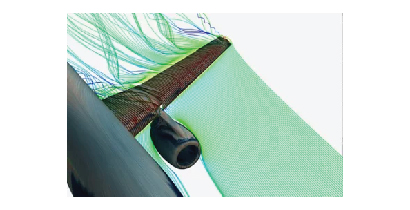
External Aerodynamics deals with airflow around external surfaces of vehicles, aircraft, buildings, and other structures. Internal Aerodynamics focuses on airflow within ducts, pipes, engines, and HVAC systems. CFD simulations are used to analyze aerodynamic performance, drag reduction, and airflow optimization in these applications. External aerodynamics covers lift/drag computation, wake analysis, and flow separation prediction. Internal aerodynamics covers pressure drop, velocity distributions, and flow uniformity within enclosed passages — both critical for design optimization across automotive, aerospace, and industrial applications.
Industries Served
Deliverables
Other CFD Services
Multi Phase & Multi SpeciesThermal ManagementExternal & Internal AerodynamicsSubsonic / Transonic / Supersonic FlowsAero-Vibro AcousticsBattery Management SystemsFluid-Structure InteractionHydraulic & TurbomachineryCombustion & Reaction ChemistryPolymer & Metal ProcessingCustomized Functional DevelopmentKey Aspects
Computing drag, lift, and pressure distribution over vehicle bodies, aircraft, and structures — enabling shape optimisation and aerodynamic performance improvement.
Modelling turbulent wake structures, vortex shedding, and separated flow regions — critical for stability, buffeting, and aeroacoustic noise prediction.
Analysing velocity profiles, pressure losses, and flow uniformity within intake systems, HVAC ducts, and internal combustion engine air paths.
Computing mean and fluctuating aerodynamic loads on buildings, bridges, and structures for wind engineering and structural load definition.
Connect with our CFD engineering team to discuss the right approach for your application.