ANALYSIS TYPE / 06
Ensure Superior Performance, Safety & Efficient Operation with Ansys
Overview
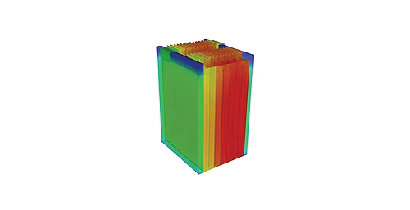
Battery Management Systems (BMS) involve the monitoring and control of batteries' temperature, state of charge, and health. CFD simulations are used to analyze thermal behavior, optimize cooling strategies, and improve the overall efficiency and safety of battery systems in electric vehicles, energy storage systems, and portable electronics. Simulations predict cell-level temperature distributions, identify hot spots, evaluate cooling channel geometries, and model thermal runaway propagation — ensuring battery packs meet performance, safety, and longevity requirements throughout their operational lifetime.
Industries Served
Deliverables
Other CFD Services
Multi Phase & Multi SpeciesThermal ManagementExternal & Internal AerodynamicsSubsonic / Transonic / Supersonic FlowsAero-Vibro AcousticsBattery Management SystemsFluid-Structure InteractionHydraulic & TurbomachineryCombustion & Reaction ChemistryPolymer & Metal ProcessingCustomized Functional DevelopmentKey Aspects
Simulating heat generation from electrochemical reactions within individual cells and predicting temperature gradients across the cell stack under charge and discharge cycles.
Evaluating liquid cooling plate geometry, air cooling channel design, and refrigerant-based thermal management architectures for target temperature uniformity.
Modelling heat propagation from a single cell failure to adjacent cells — predicting thermal runaway onset, spread rate, and the effectiveness of thermal barriers.
Using temperature cycling simulation results to estimate capacity fade, cycle life, and degradation patterns — informing BMS control strategy and maintenance schedules.
Connect with our CFD engineering team to discuss the right approach for your application.