Finite Element Analysis for Complex Mechanical Assemblies
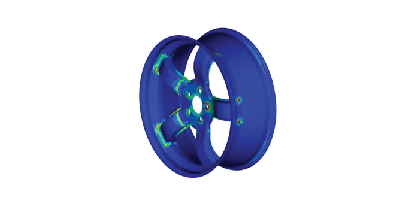
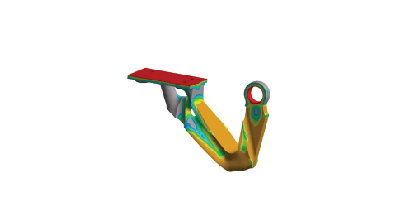
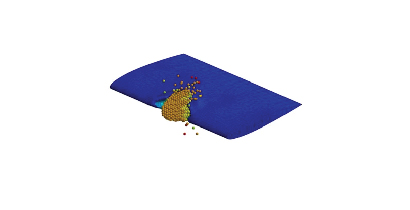
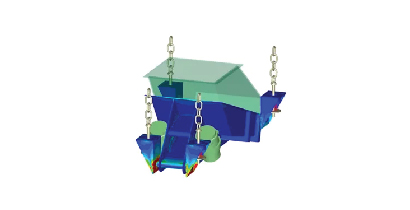
Structural analysis enables engineers to predict the actual behaviour of complex mechanical assemblies using the Finite Element Method. Real-life loads and boundary conditions are applied to accurately perform computer-aided simulation — revealing stress distributions, dynamic response, fatigue life, and failure modes before a single prototype is built.
What We Deliver
Our structural analysis team covers the full spectrum of finite element simulation — from static stress and non-linear contact to explicit crash, fatigue life, NVH, and topology optimisation. We work with leading FEA solvers to deliver accurate, actionable results that directly inform design decisions.
Whether you need linear statics for a component qualification or full-vehicle crash simulation for regulatory compliance, our engineers select and configure the right analysis approach for your specific challenge.
Key Problems We Solve
10 Analysis Types
Select an analysis type to explore the methodology, deliverables, and tools in detail.
ANALYSIS TYPE / 01
geometric · material · contact non-linearity
Non-linear static analysis accounts for geometric, material, and contact non-linearities to predict the true structural behaviour of components under real-world loading — going beyond the limits of classical linear assumptions and revealing the actual load path, deformation, and failure mechanism.
Key Aspects
Large deformation and large rotation effects where the stiffness matrix changes with displacement — critical for thin shells, snap-through, and post-buckling behaviour.
Capturing plasticity, hyperelasticity, creep, and damage — including rate-dependent and anisotropic material models for metals, composites, and elastomers.
Modelling contact interactions between components — frictionless, frictional, rough, and bonded — including gap opening, closure, and sliding under load.
Configuring solver settings, substep controls, and stabilisation to ensure reliable convergence for highly non-linear problems without masking physical instabilities.
ANALYSIS TYPE / 02
modal · frequency response · transient
Linear dynamic analysis covers modal analysis, harmonic response, random vibration, and transient simulations to understand how structures respond to time-varying loads, vibrations, and shock events within the linear elastic regime.
Key Aspects
Computing natural frequencies and mode shapes to understand the fundamental dynamic characteristics of the structure and identify resonance risk with excitation frequencies.
Calculating the steady-state amplitude and phase of structural response to sinusoidal excitation as a function of frequency — used for NVH and vibration compliance.
Evaluating structural response to broadband random excitation defined by a Power Spectral Density — applicable to aerospace, electronics, and automotive durability.
Simulating structural response to time-dependent loading events — impact impulses, step loads, and seismic excitation — using implicit or explicit time integration.
ANALYSIS TYPE / 03
explicit FEA · energy absorption · crashworthiness
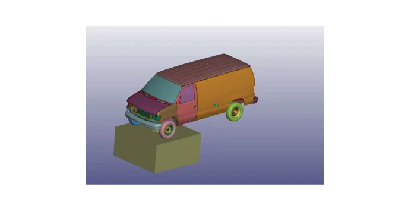
Impact and crash simulations use explicit finite element methods to evaluate structural integrity, energy absorption, and occupant safety during high-speed collision events across automotive, aerospace, and consumer product applications.
Key Aspects
Using explicit FEA to simulate the rapid, large-deformation structural response during impact and crash events with accurate contact, failure, and fragmentation modelling.
Optimising crush zone geometry, trigger mechanisms, and material selection to achieve target energy absorption levels while controlling peak deceleration.
Running standardised crash tests — frontal, side, rear, rollover, pedestrian — to virtual-certify performance against NCAP, FMVSS, ECE, and Euro NCAP requirements.
Coupling vehicle structural response with occupant restraint models to predict injury risk metrics (HIC, chest deflection, femur load) for driver and passenger.
ANALYSIS TYPE / 04
structure-borne · airborne · transfer path
NVH analysis identifies and mitigates unwanted noise and vibration in mechanical systems. Simulations cover structure-borne and airborne noise paths, resonance characterisation, and design optimisation to meet stringent acoustic targets across automotive, appliance, and industrial applications.
Key Aspects
Identifying the dominant noise and vibration transfer paths from source to receiver — quantifying the contribution of each path to the total acoustic response at the target location.
Shifting natural frequencies away from excitation frequencies through mass, stiffness, or damping changes — detuning resonances that amplify vibration at the driver or occupant position.
Identifying which body panels contribute most to interior noise levels — directing acoustic treatment and stiffening investments to the highest-impact locations.
Evaluating the frequency-dependent dynamic stiffness of mounts, bushings, and brackets — ensuring isolation performance across the full operating frequency range.
ANALYSIS TYPE / 05
solder joint fatigue · drop · vibration
PCB reliability analysis evaluates solder joint fatigue, board-level drop impact, vibration-induced failure, and thermal cycling performance — ensuring electronic assemblies meet qualification standards throughout their operational lifetime.
Key Aspects
Simulating thermal cycling-induced plastic strain accumulation in solder joints using viscoplastic material models — predicting cycles to crack initiation and propagation.
Explicit FEA simulation of high-g drop events to predict maximum solder joint stress and identify the most vulnerable components and pad locations.
Computing vibration-induced solder joint fatigue life under random vibration PSD profiles per IEC 60068 or JEDEC standards — for automotive, aerospace, and industrial qualification.
Predicting PCB and package warpage during reflow and thermal cycling — identifying conditions that cause solder joint bridging, opens, or insufficient standoff.
ANALYSIS TYPE / 06
topology · shape · parametric optimisation
Robust design optimisation combines topology optimisation, shape optimisation, and parametric studies to identify the most efficient structural configurations — reducing mass while maintaining strength, stiffness, and durability requirements.
Key Aspects
Computationally distributing material within a design domain to minimise compliance or mass subject to stress and manufacturing constraints — delivering the optimum structural layout.
Refining the outer boundary of an existing design to reduce stress concentrations and improve fatigue life — using gradient-based or adjoint sensitivity methods.
Quantifying how performance metrics respond to design parameter variation — identifying critical dimensions and guiding tolerance allocation for robust performance.
Balancing competing objectives — mass, stiffness, NVH performance, and cost — using Pareto-front methods to identify designs that represent the best trade-off.
ANALYSIS TYPE / 07
kinematics · joint loads · system response
Multi-body dynamics (MBD) simulates the motion, forces, and interactions of interconnected rigid and flexible bodies in mechanical systems — enabling early prediction of loads, wear, and system-level dynamic behaviour before detailed FEA is performed.
Key Aspects
Computing positions, velocities, and accelerations of all bodies in the mechanism as a function of time or driver input — verifying range of motion and identifying interference.
Computing joint forces and moments under operating loads — providing realistic boundary conditions for subsequent component-level FEA and fatigue analysis.
Replacing rigid bodies with flexible representations (Craig-Bampton modes) to capture the coupled effect of structural compliance on system-level dynamic response.
Generating time-history loading at critical attachment points from MBD under representative drive cycle and road surface inputs — feeding fatigue life predictions.
ANALYSIS TYPE / 08
forming · welding · additive · casting simulation
Manufacturing simulation covers stamping, casting, welding, additive manufacturing, and assembly process modelling — predicting springback, residual stresses, distortion, and forming defects to optimise tooling and process parameters before physical trials.
Key Aspects
Simulating deep drawing, stamping, and hydroforming to predict thinning, wrinkling, springback, and fracture — enabling die and blank optimisation before tooling is cut.
Modelling temperature history, residual stress, and distortion during welding and heat treatment — predicting final part shape and informing fixturing and sequence strategies.
Simulating metal flow, solidification, porosity, and shrinkage in sand, die, and investment casting — predicting defect locations and optimising gating and risering design.
Simulating layer-by-layer thermal cycling, residual stress, and distortion in powder bed fusion and directed energy deposition — enabling support structure and scan strategy optimisation.
ANALYSIS TYPE / 09
long-term durability · damage accumulation · safe life
Fatigue and creep analysis predicts the safe life and damage accumulation of components subjected to cyclic mechanical or thermal loads over time — enabling engineers to design for target durability requirements and identify critical failure locations early in the programme.
Key Aspects
High-cycle fatigue life prediction using S-N curves and mean stress correction (Goodman, Gerber, Soderberg) for components loaded below the yield stress.
Low-cycle fatigue analysis for components that experience local plasticity — using Coffin-Manson and Morrow relationships for accurate life prediction under high-strain loading.
Simulating time-dependent plastic deformation at elevated temperature using Norton, Bailey, or Garofalo creep laws — predicting creep strain accumulation and rupture life.
Coupled thermal-mechanical fatigue for components subject to simultaneous cycling of temperature and mechanical load — critical for engine components, turbine blades, and exhaust systems.
ANALYSIS TYPE / 10
structure-borne noise · sound radiation · TL
Vibro-acoustic simulation analyses the coupling between structural vibrations and acoustic fields to predict radiated noise, interior sound pressure levels, and transmission loss — supporting design decisions to achieve noise targets efficiently without physical prototype builds.
Key Aspects
Computing the acoustic field radiated from vibrating structural surfaces using BEM or FEM/BEM coupling — predicting sound power levels and directivity patterns.
Modelling enclosed acoustic cavities coupled to structural enclosures — predicting interior SPL, resonance modes, and the effect of acoustic treatment on sound quality.
Evaluating the sound insulation performance of panels, walls, and composites — predicting TL as a function of frequency and guiding layup and damping treatment selection.
Modelling frequency-dependent acoustic absorption and damping materials (foam, felt, viscoelastic layers) using Biot and transfer matrix methods.
Connect with our structural simulation team to discuss the right approach for your application.