ANALYSIS TYPE / 09
Determine the Long-Term Behaviour of Your Product
Overview
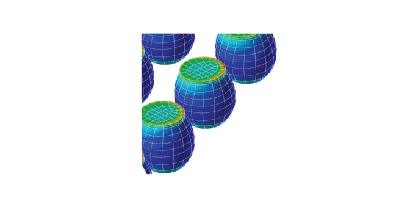
The interaction of stress and temperature causes creep and fatigue, two types of material failure mechanisms. Creep occurs when a material permanently deforms over time, usually at high temperatures, while fatigue occurs when cracks propagate over time due to repeated loading and unloading cycles. Fatigue and creep analysis predicts the safe life and damage accumulation of components subjected to cyclic mechanical or thermal loads over time — enabling engineers to design for target durability requirements and identify critical failure locations early in the programme. Material properties, surface finish, and loading conditions are all factors that contribute to these failure modes.
Industries Served
Deliverables
Key Aspects
High-cycle fatigue life prediction using S-N curves and mean stress correction (Goodman, Gerber, Soderberg) for components loaded below the yield stress.
Low-cycle fatigue analysis for components that experience local plasticity — using Coffin-Manson and Morrow relationships for accurate life prediction under high-strain loading.
Simulating time-dependent plastic deformation at elevated temperature using Norton, Bailey, or Garofalo creep laws — predicting creep strain accumulation and rupture life.
Coupled thermal-mechanical fatigue for components subject to simultaneous cycling of temperature and mechanical load — critical for engine components, turbine blades, and exhaust systems.
Connect with our structural simulation team to discuss the right approach for your application.