ANALYSIS TYPE / 03
Precision in Motion: Engineering Tomorrow's Safety Today
Overview
Impact and crash simulations are computational tools used to model and analyze the behavior of systems or structures under conditions involving sudden forces or collisions. These simulations are valuable for predicting how objects will behave in real-world scenarios without the need for physical testing. Impact simulations focus on modeling the effects of one object colliding with another, commonly used to assess the performance of components during accidents or high-energy events. Crash simulations specifically deal with vehicle collision scenarios, crucial in automotive engineering for designing safer vehicles and improving occupant protection systems.
Industries Served
Deliverables
Key Aspects
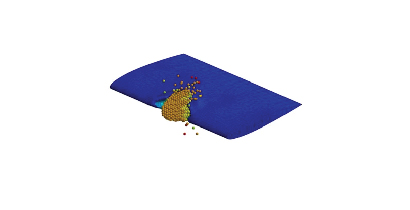
Using explicit FEA to simulate the rapid, large-deformation structural response during impact and crash events with accurate contact, failure, and fragmentation modelling.
Optimising crush zone geometry, trigger mechanisms, and material selection to achieve target energy absorption levels while controlling peak deceleration.
Running standardised crash tests — frontal, side, rear, rollover, pedestrian — to virtual-certify performance against NCAP, FMVSS, ECE, and Euro NCAP requirements.
Coupling vehicle structural response with occupant restraint models to predict injury risk metrics (HIC, chest deflection, femur load) for driver and passenger.
Connect with our structural simulation team to discuss the right approach for your application.