ANALYSIS TYPE / 05
In the Era of Growing Demand, Analyzing PCB Reliability is of Great Importance
Overview
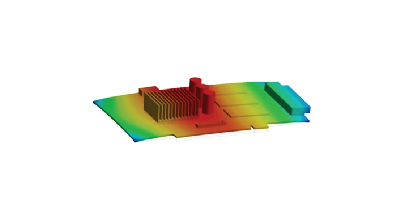
Printed Circuit Boards (PCBs) are the core of modern electronics, powering nearly every electronic device we use. The reliability of these PCBs is very important, as a small failure may cause minor inconveniences to critical system failures. PCB reliability refers to the ability of a printed circuit board to consistently perform its intended function over its operational lifetime under various environmental and operational conditions like thermal shock, mechanical shock, vibration, and humidity. Ansys Sherlock is a physics-based reliability analysis tool which can predict failure on electronic component and system level for different thermal and mechanical events during a system's lifetime.
Industries Served
Deliverables
Key Aspects
Simulating thermal cycling-induced plastic strain accumulation in solder joints using viscoplastic material models — predicting cycles to crack initiation and propagation.
Explicit FEA simulation of high-g drop events to predict maximum solder joint stress and identify the most vulnerable components and pad locations.
Computing vibration-induced solder joint fatigue life under random vibration PSD profiles per IEC 60068 or JEDEC standards — for automotive, aerospace, and industrial qualification.
Predicting PCB and package warpage during reflow and thermal cycling — identifying conditions that cause solder joint bridging, opens, or insufficient standoff.
Connect with our structural simulation team to discuss the right approach for your application.