ANALYSIS TYPE / 05
Assessing Noise Generation Combining Multiple Physics: DAVA Approach
Overview
Aero-Vibro Acoustics is a multidisciplinary field that combines principles from aerodynamics, structural dynamics, and acoustics to study the generation, propagation, and control of noise and vibrations in aerospace and mechanical systems. It is applicable in aerospace, automotive, and industrial settings where reducing noise and controlling vibrations are critical for performance and comfort. The Decoupled Aero-Vibro-Acoustic (DAVA) approach integrates aerodynamic excitation, structural response, and acoustic radiation into a single simulation workflow to accurately predict airborne and structure-borne noise.
Industries Served
Deliverables
Other CFD Services
Multi Phase & Multi SpeciesThermal ManagementExternal & Internal AerodynamicsSubsonic / Transonic / Supersonic FlowsAero-Vibro AcousticsBattery Management SystemsFluid-Structure InteractionHydraulic & TurbomachineryCombustion & Reaction ChemistryPolymer & Metal ProcessingCustomized Functional DevelopmentKey Aspects
Identifying turbulence-generated and vortex-induced noise sources from CFD data using acoustic analogies — quantifying sound power levels from each region of the geometry.
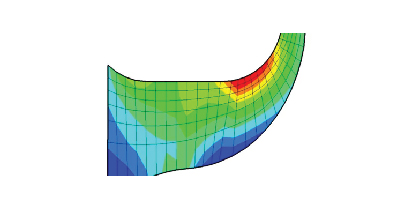
Computing the structural dynamic response to unsteady aerodynamic pressure loads — predicting panel vibration amplitudes and fatigue from flow-induced excitation.
Propagating structural vibration into the surrounding acoustic field using BEM or FEM — predicting far-field sound pressure levels and directivity patterns.
Evaluating aerodynamic shape changes, damping treatments, and acoustic liners — quantifying noise reduction benefit before any hardware is fabricated.
Connect with our CFD engineering team to discuss the right approach for your application.