Why do many structural failures occur even when stress levels appear acceptable in simulation? The answer often lies at the interfaces between components. Bolted joints can lose preload, gears continuously change contact locations, seals may separate under pressure, and assembled parts can slide, stick, or re-contact during operation. These interface interactions significantly influence stress distribution, load transfer, deformation, and overall structural durability.
Traditional linear analysis assumes permanently connected interfaces and constant stiffness throughout loading. While suitable for many preliminary studies, this assumption often fails to represent how real assemblies behave in service. Contact nonlinear analysis addresses this challenge by accurately modelling separation, sliding, friction, sticking, and re-contact between interacting surfaces.
Section 01Why Contact Nonlinearity Matters
Contact nonlinearity occurs whenever the interaction between two surfaces changes during loading. Common behaviours include opening and closing of interfaces, sliding due to friction, separation and re-contact, and local sticking behaviour. These changing contact conditions continuously alter the stiffness and load path of a structure.
Consider a bolted flange exposed to thermal cycling. A linear analysis may predict a stable connection, while the actual assembly experiences preload loss, local separation, and stress redistribution. Similarly, gear systems constantly undergo changing contact regions that influence load transfer and wear characteristics. Ignoring such effects can lead to:
- Underpredicted stresses
- Incorrect deformation behaviour
- Unrealistic stiffness estimation
- Failure-critical regions being overlooked
If your design contains bolted joints, press fits, bearings, gaskets and seals, gear contacts, snap-fit assemblies, or impact-loaded structures — contact nonlinearity should be strongly considered. In these applications, interface behaviour often governs structural performance more than the material itself.
Section 02Contact Types in Ansys Mechanical
Ansys Mechanical provides several contact formulations to represent different physical interactions between components:
- Bonded — No sliding or separation; surfaces behave as glued. Used for welded joints, adhesives, rigid assemblies.
- Frictional — Separation and sliding with friction. Used for bolted joints, brake systems.
- Frictionless — Separation and frictionless sliding allowed. Used for bearings, assembly interfaces.
- No Separation — Sliding allowed, separation prevented. Used for sliding plates, wiper systems.
- Rough — Separation allowed, no sliding. Used for press fits, constrained joints.
- Bonded Initial — Maintains initial contact state. Used for preassembled structures.
- No Separation – Penetration Only — Initial penetration allowed, no separation. Used for preloaded interfaces.
Selecting the appropriate contact type is critical for achieving realistic simulation results and ensuring physical behaviour is accurately represented.
Section 03Workflow in Ansys Mechanical
1. Geometry Preparation
Successful nonlinear contact analysis begins with a clean and well-prepared geometry. Recommended steps include removing unnecessary small features, eliminating sliver surfaces, ensuring proper alignment of contact regions, and simplifying geometry where possible. Good geometry preparation significantly improves solution stability and convergence.
2. Contact Definition
After geometry preparation, contact and target surfaces are defined to represent physical interfaces. Engineers typically define contact behaviour, assign friction coefficients, and select appropriate contact algorithms. Common contact algorithms include:
- Augmented Lagrange — Widely used due to its strong balance between accuracy and numerical stability
- Penalty Method
- MPC Contact
3. Mesh Considerations
Mesh quality plays a major role in contact accuracy. Best practices include refining the mesh near contact regions, maintaining acceptable aspect ratios, minimizing skewness, and using contact sizing where necessary. Poor mesh quality may result in excessive penetration, stress oscillations, convergence difficulties, and inaccurate contact pressure predictions.
7
contact types available
Aug. Lagrange
recommended algorithm
Auto
time stepping for convergence
4. Solver Controls & Results
Since contact conditions continuously evolve throughout loading, appropriate nonlinear solver settings are essential. Recommended practices include automatic time stepping, smaller initial substeps, large deformation settings when required, and convergence monitoring throughout the solution.
After solving, engineers evaluate:
- Equivalent stress
- Contact pressure
- Penetration and sliding distance
- Contact status
Section 04Industrial Applications
Contact nonlinear analysis is widely used in industries where interface behaviour directly affects performance and reliability:
- Bolted joint analysis — Preload loss, separation, and stress redistribution
- Gasket and seal evaluation — Sealing performance under pressure and temperature
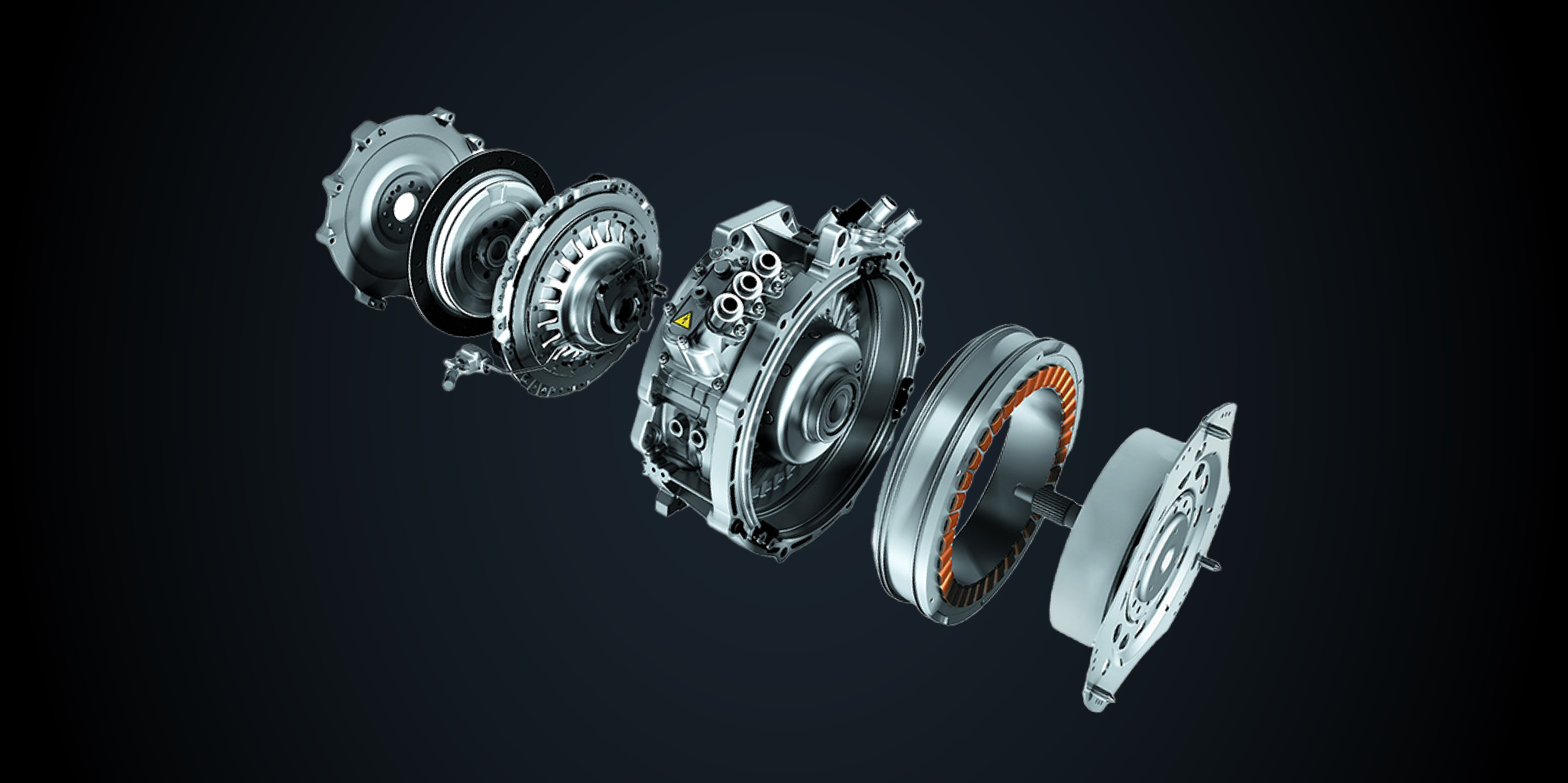
- Gear contact analysis — Changing contact regions and load transfer
- Bearing simulations — Rolling contact stress and life estimation
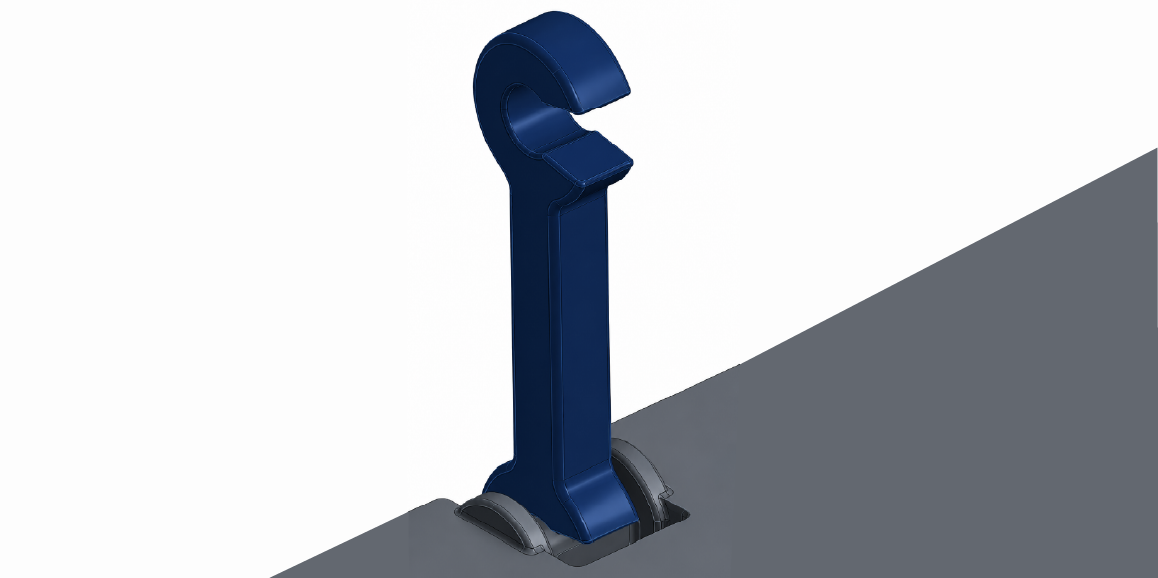
- Snap-fit assemblies — Assembly force, retention, and stress during snap-through
- Impact and drop testing — Re-contact and energy absorption
Conclusion
Many structural failures originate not from material limitations, but from the way components interact with one another. Contact nonlinearity enables engineers to capture realistic behaviours such as separation, sliding, friction, sticking, and load redistribution — phenomena that are often responsible for critical failure mechanisms.
By moving beyond idealized assumptions, engineers gain a deeper understanding of how assemblies behave under real operating conditions. Modern simulation tools such as Ansys Mechanical provide robust capabilities for solving complex contact problems with high accuracy and efficiency.
As products continue to become lighter, smarter, and more optimized, contact nonlinear analysis will remain a critical tool for predicting performance, reducing development costs, and improving design reliability before the first prototype is ever built.
Found this useful? Share it