Enhancing Services through Advanced Simulation
What We Do
Advanced simulation techniques for PCB and IC package signal integrity — covering SERDES channel validation, reflection characterisation, and crosstalk mitigation. Our Centre of Excellence team delivers precise analysis to ensure robust, high-performance electronic designs from schematic through to final board verification.
Analysis Types
4 Analysis Types
Select an analysis type to explore the methodology, deliverables, and tools in detail.
ANALYSIS TYPE / 01
Enhancing Services through Advanced Simulation
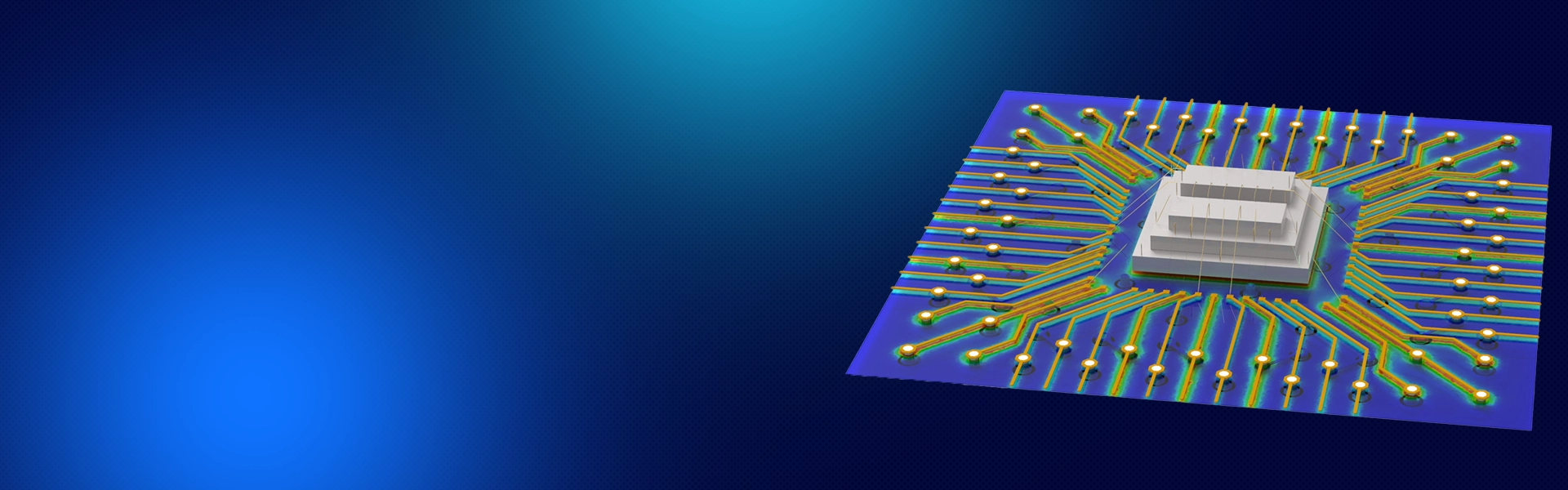
Ansys provides advanced simulation tools for DDR, LPDDR, and GDDR memory technologies, essential for ensuring optimal performance and reliability. For DDR, Ansys enables detailed signal and power integrity analysis, crucial for high-speed applications. LPDDR simulations focus on power efficiency and thermal management, ideal for mobile devices. GDDR simulations address high data rates and thermal challenges, perfect for GPUs. Ansys ensures accurate predictions, comprehensive analysis, and optimization of memory designs, helping engineers enhance performance, reduce power consumption, and improve thermal management efficiently.
Key Aspects
Ansys enables detailed signal and power integrity analysis for DDR memory, ensuring reliable high-speed data communication and compliance across voltage and timing corners.
LPDDR simulations focus on power efficiency and thermal management, optimizing memory designs for mobile devices where battery life and heat dissipation are critical.
GDDR simulations address high data rates and thermal challenges for GPU applications, ensuring reliable performance and signal integrity at extreme bandwidths.
ANALYSIS TYPE / 02
Enhancing Services through Advanced Simulation
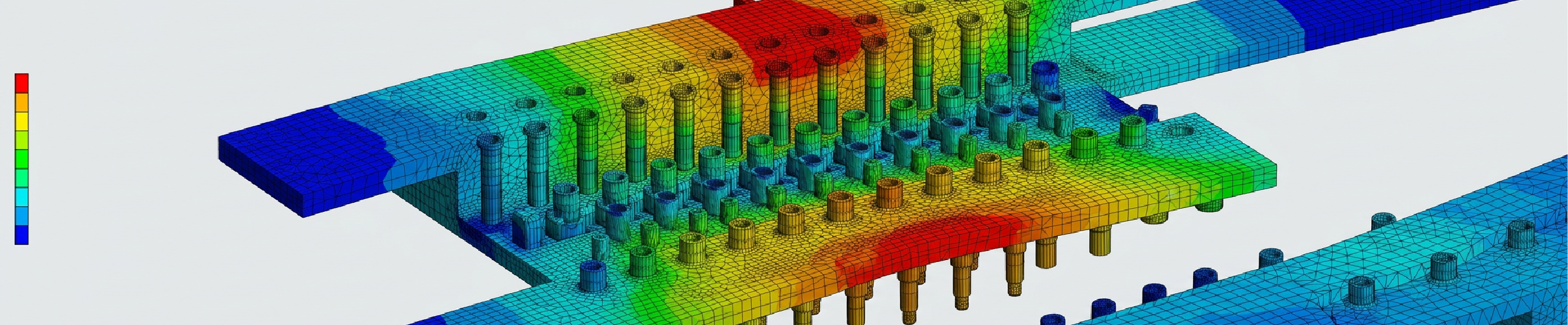
Ansys provides comprehensive simulation tools for SerDes (Serializer/Deserializer) technology, crucial for high-speed data communication. These tools enable detailed analysis of signal integrity, jitter, and crosstalk, ensuring reliable performance in high-frequency environments. Ansys simulations help optimize the design of SerDes interfaces, addressing challenges such as impedance matching and eye diagram analysis. By leveraging Ansys, engineers can predict and mitigate potential issues early in the design process, leading to robust, high-performance SerDes systems essential for applications in telecommunications, data centers, and high-speed computing.
Key Aspects
Detailed analysis of signal integrity, jitter, and crosstalk ensures reliable performance of SerDes interfaces in high-frequency environments and at multi-GHz data rates.
Ansys simulations help optimize the design of SerDes interfaces, addressing challenges such as impedance matching and eye diagram analysis for specification compliance.
By leveraging Ansys, engineers can predict and mitigate potential issues early in the design process, leading to robust, high-performance SerDes systems.
ANALYSIS TYPE / 03
Enhancing Services through Advanced Simulation
Reflection analysis is crucial for evaluating signal integrity in electronic systems. It assesses signal reflections resulting from impedance mismatches along transmission lines. These reflections can degrade signal quality, leading to data errors and performance issues. By identifying and mitigating impedance mismatches, reflection analysis ensures optimal signal integrity, minimizing signal degradation and improving system reliability. Engineers use reflection analysis to characterize signal paths, optimize trace layouts, and design proper termination schemes, ultimately ensuring robust signal transmission in high-speed digital and analog circuits.
Key Aspects
Reflection analysis assesses signal reflections resulting from impedance mismatches along transmission lines that degrade signal quality and cause data errors.
Engineers use reflection analysis to characterize signal paths, optimize trace layouts, and design proper termination schemes for optimal signal integrity.
By identifying and mitigating impedance mismatches, reflection analysis minimizes signal degradation and improves system reliability in high-speed digital and analog circuits.
ANALYSIS TYPE / 04
Enhancing Services through Advanced Simulation
Cross-talk analysis is essential for assessing and mitigating interference between adjacent signal traces in electronic circuits. It examines the phenomenon where signals on one trace induce unwanted signals on neighboring traces, known as aggressor and victim signals. This interference can lead to signal distortion, data errors, and degraded system performance. By quantifying cross-talk effects and identifying potential aggressor-victim pairs, engineers can implement design strategies such as proper trace spacing, shielding, and signal routing techniques to minimize cross-talk and ensure reliable signal transmission.
Key Aspects
Crosstalk analysis identifies how signals on one trace induce unwanted signals on neighboring traces, mapping aggressor-victim pairs that cause interference.
By quantifying cross-talk effects, engineers understand interference patterns that lead to signal distortion, data errors, and degraded system performance.
Engineers implement design strategies such as proper trace spacing, shielding, and signal routing techniques to minimize cross-talk and ensure reliable signal transmission.
Talk to our Centre of Excellence team about SERDES simulation, reflection analysis, or crosstalk in your high-speed PCB or IC package design.