ANALYSIS TYPE / 06
Combiner · Waveguide · Eye-Box · Image Quality
Overview
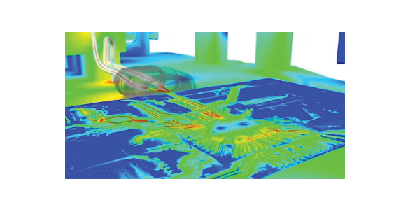
HUD simulation models the combiner optics, waveguide, and projection system to ensure correct image placement, eye-box coverage, luminance uniformity, and distortion control in automotive and aviation head-up display systems. System-level simulation enables the trade-off between eye-box size and image distortion to be quantified early in the design — guiding combiner curvature, screen position, and pre-distortion in the image generator before physical prototypes are manufactured.
Industries Served
Deliverables
Key Aspects
Computing the region in 3D space within which the virtual image is visible and undistorted — optimising combiner curvature and screen position to meet the eye-box size requirement for all occupant positions.
Evaluating the geometric distortion, colour aberration, and astigmatism of the projected virtual image — guiding corrective pre-distortion in the image generator and optic design.
Computing the virtual image luminance and contrast ratio against the real-world background at different solar loading and ambient conditions — verifying daytime and night-time readability.
Analysing the uniformity of the exit pupil expander (EPE) and fold grating in waveguide AR-HUD designs — minimising brightness roll-off and rainbow artefacts across the FOV.
Connect with our optics & photonics simulation team to discuss the right approach for your application.