Automotive
Optimize chassis, BIW structures, battery enclosures, suspension systems, and crash structures.

Advanced Structural Simulation Software for Faster, Smarter Engineering Decisions
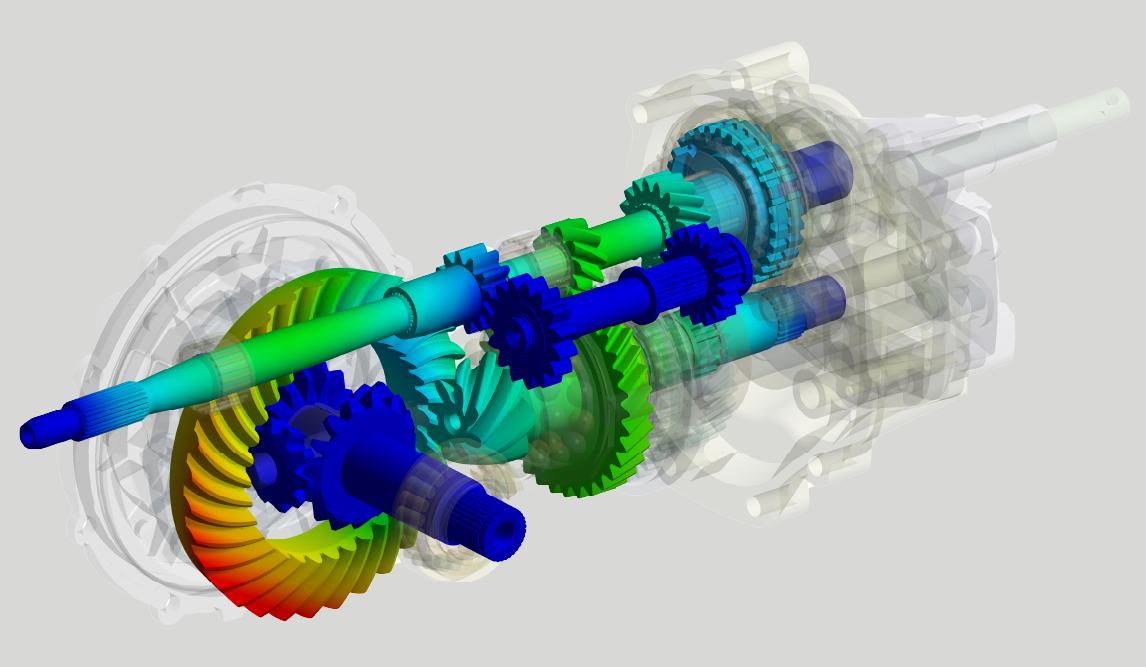
Every engineering decision impacts product safety, durability, performance, and cost. Traditional physical testing alone can no longer keep pace with today's compressed development timelines and increasingly complex products.
Ansys Mechanical enables engineers to predict real-world structural performance through advanced finite element analysis (FEA), helping teams identify potential design issues long before manufacturing begins. From static stress analysis and nonlinear behaviour to vibration, fatigue, fracture mechanics, and thermal-structural interactions, Ansys Mechanical provides a comprehensive structural simulation environment that accelerates product development while improving engineering confidence.
At CADFEM, we help organisations maximise the value of Ansys Mechanical through implementation, consulting, automation, optimisation, and engineering support, allowing engineering teams to innovate faster while reducing development risks.
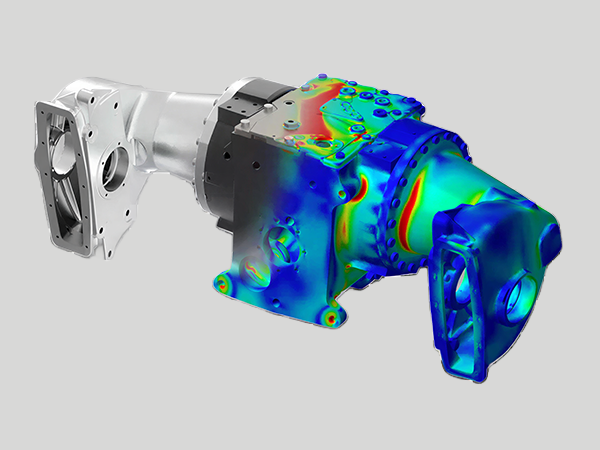

Choosing Ansys Mechanical is only the first step. Real engineering value comes from applying simulation effectively throughout the product development process.
CADFEM combines decades of simulation expertise with deep industry knowledge to help organisations successfully deploy Ansys Mechanical across engineering teams. From software implementation and customised training to consulting, workflow automation, optimisation, and digital engineering services, we work alongside your engineers to solve complex structural challenges faster and more efficiently.
Our team supports organisations in building simulation-driven development processes that improve collaboration, reduce engineering iterations, and accelerate innovation.
Engineering teams in every sector rely on Ansys Mechanical to validate designs before they are built.
Optimize chassis, BIW structures, battery enclosures, suspension systems, and crash structures.
Develop lightweight airframes, propulsion systems, composite structures, and mission-critical components.
Improve the reliability of pumps, valves, compressors, rotating equipment, and heavy machinery.
Validate turbines, pipelines, pressure vessels, heat exchangers, and renewable energy systems.
Assess structural integrity of PCBs, electronic assemblies, and thermal stresses affecting reliability.
Develop safe, lightweight medical devices, implants, and surgical equipment.
Ansys Mechanical is a structural simulation software used to perform finite element analysis (FEA) for evaluating stresses, deformation, vibration, fatigue, fracture mechanics, and thermal-structural interactions before physical testing.
It is widely used across automotive, aerospace, defence, industrial equipment, electronics, healthcare, energy, and manufacturing industries.
Yes. It supports advanced nonlinear simulations including contact, plasticity, hyperelastic materials, large deformation, creep, and composite behavior.
Yes. Engineers can perform fatigue and durability analysis to predict product life under repeated loading conditions.
Yes. It integrates seamlessly with major CAD platforms, allowing engineers to update simulation models as designs evolve.
Ansys Mechanical is primarily used for implicit structural analysis, while Ansys LS-DYNA specializes in highly nonlinear explicit dynamics such as crash, impact, blast, and penetration simulations.
Yes. It integrates with Ansys Fluent to perform Fluid-Structure Interaction (FSI) and coupled thermal-structural analyses.
CADFEM provides software implementation, consulting, customized training, technical support, workflow automation, optimization, and digital engineering services to help engineering teams maximize simulation productivity.
Ansys Mechanical supports static, dynamic, nonlinear, thermal, fatigue, vibration, buckling, contact, composite, and structural optimization analyses, along with multiphysics simulations such as fluid-structure interaction (FSI).
Structural simulation helps engineers validate product performance early, reduce physical prototyping, optimize designs, improve reliability, and accelerate time-to-market while lowering development costs.
Evaluate structural strength before manufacturing using accurate stress and deformation analysis.
Identify natural frequencies, resonance, and vibration modes through advanced modal and harmonic analysis.
Optimize material usage through topology optimization and design exploration.
Predict fatigue life and durability under real operating conditions.
Analyze thermal expansion, thermal stress, and coupled multiphysics interactions.
Simulate transient events and integrate with Ansys LS-DYNA for highly dynamic crash and impact applications.
Analyze vibration and dynamic behavior with modal, harmonic, response spectrum, and random vibration analysis. Predict resonance, noise, and structural response under real-world operating conditions for improved product reliability.
Simulate complex material behavior including plasticity, hyperelasticity, large deformations, and nonlinear contacts. Capture real-world structural performance beyond linear assumptions.
Model interactions between multiple components with bonded, frictional, sliding, and separating contacts. Accurately predict load transfer, joint behavior, and assembly performance under operating loads.
Optimize product designs using parametric, shape, and topology optimization to reduce weight, improve performance, and accelerate innovation. Create manufacturable designs with fewer iterations and lower material usage.
Evaluate heat transfer through conduction, convection, and radiation while assessing the resulting thermal stresses and deformations. Integrate CFD and electromagnetic simulation results for accurate multiphysics analysis.
Simulate a wide range of material behaviors, including metals, plastics, composites, rubber, concrete, soils, and shape-memory alloys. Access comprehensive material databases and custom material models for accurate structural predictions.
Design, analyze, and optimize layered and short-fiber composite structures with advanced layup modeling and failure prediction. Evaluate manufacturing effects, curing behavior, residual stresses, and structural performance.
Assess wave, wind, and current loads on offshore and marine structures including ships, floating platforms, renewable energy systems, and subsea equipment. Improve structural stability, safety, and operational performance.
Analyze the interaction between fluids and structures through one-way or fully coupled two-way simulations. Evaluate pressure, thermal loading, deformation, and structural response for realistic multiphysics behavior.
Automate repetitive simulation tasks using scripting, journaling, and customized workflows. Improve engineering productivity, standardize processes, and reduce manual effort across simulation projects.
Scale structural simulations with secure, on-demand cloud HPC directly from Ansys Mechanical. Solve larger, more complex models faster without investing in dedicated computing infrastructure.
Ansys Mechanical becomes even more powerful when connected with other Ansys solutions.
Ansys Mechanical supports structural simulation across virtually every engineering discipline.
Virtually evaluate structural performance before manufacturing.
Ensure compliance with industry standards while improving safety.
Predict fatigue performance and structural reliability of welded assemblies.
Accurately model preload and connection behavior.
Evaluate structural performance under accidental drops and impact events.
Reduce weight while maintaining performance.
Analyze advanced lightweight materials used across aerospace and automotive industries.
Study temperature-induced deformation and stress.
Analyze rotating machinery including shafts, turbines, compressors, and motors.
Validate equipment subjected to earthquakes, explosions, and operational shock loading.