
The UAV ecosystem is evolving at high speed — tighter weight targets, aggressive performance demands, new materials, and shrinking development timelines. For startups like TaraUAV, making the right engineering decisions early is no longer optional. Safe flight behavior, material innovation, structural reliability, and cost-efficient design all depend on understanding how the vehicle will behave long before a prototype flies. In such a competitive space, simulation has become indispensable — enabling smarter design choices, validating novel composites, reducing weight without compromising strength, and cutting development costs through predictive, data-driven engineering.
Company Description
TaraUAV is redefining unmanned autonomous capabilities through precision engineering and sophisticated materials innovation. Their work goes far beyond traditional drones—delivering next-generation UAVs designed for stealth, endurance, and unmatched operational reliability. Serving defence, maritime, and commercial missions, TaraUAV is shaping the next era of autonomous aviation.
Business Challenges
- Optimizing Product Development
Balancing multiple critical criteria such as weight reduction, life cycle, and stress concentrations while ensuring design feasibility. - Advancing Research & Development
Developing new stack-up sequences or materials tailored to perform optimally under specific loading conditions, requiring extensive simulation and experimentation.
Engineering Solution
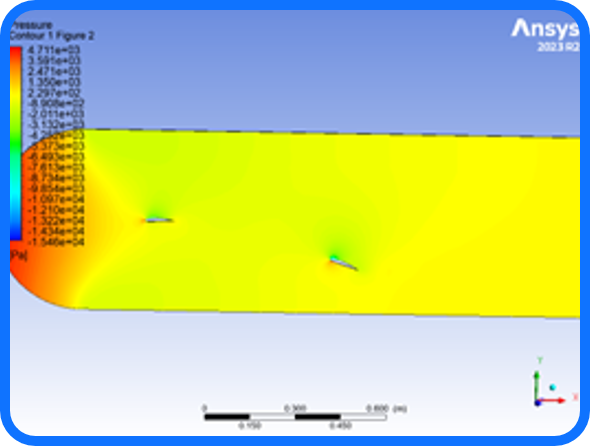
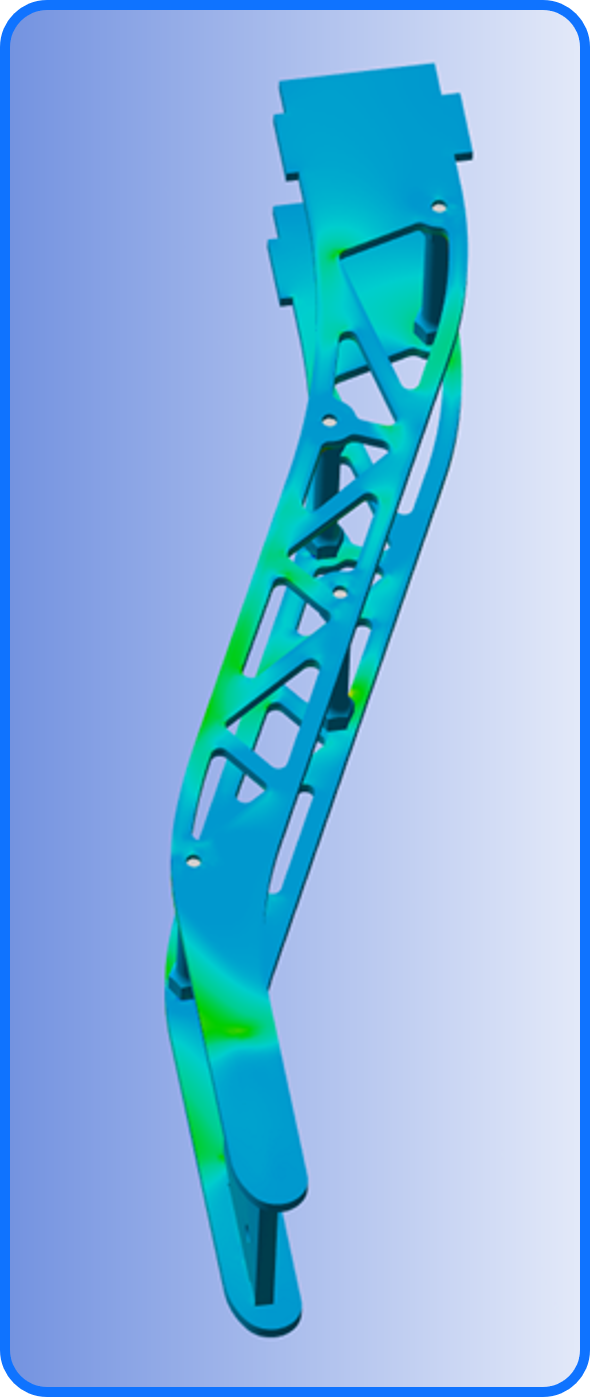
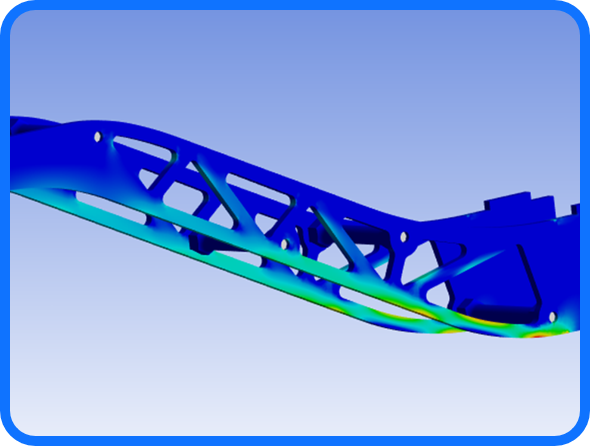
- Ansys static structural module was used in almost all use cases for estimating the life cycle under a static loading condition
- Ansys Modal and Harmonic were used to estimate the natural frequencies, harmonic excitations and counter measures over a range of operating frequencies
- Ansys ACP – Pre/Post was used in understanding the detailed failure of composite laminates and sandwich structures. This was most useful in research and development process to come up with innovative solutions for our structures
- LS Dyna was used to study the impact behavior of the structures through our own materials research.
Benefits
By using Ansys tools used, it helped them to
- Reduce time by 15%
- Decrease stress concentration by 26%
"Ansys composite, structural, and explicit solvers, backed by CADFEM's expert guidance have transformed how we design and validate our UAV platforms. From tailoring custom composite stack-ups in ACP to predicting vibration behaviour in Mechanical APDL and evaluating impact survival with LS-DYNA, simulation now drives our decisions with clarity and confidence. We can foresee risks earlier, optimize structures faster, and build lighter, stronger airframes with far greater precision. This partnership has significantly elevated the technical depth and reliability of our UAV solutions.