What Is a Battery Management System? Guide for Automotive Applications
Read the CADFEM guide to smart BMS functions, automotive thermal management, centralized vs. modular architectures, and Ansys simulation
Read Article →
See how Ansys STK Astrogator transforms Sun–Earth L1 mission planning — from orbital injection and halo orbit refinement to station-keeping dynamics — entirely in simulation before launch.
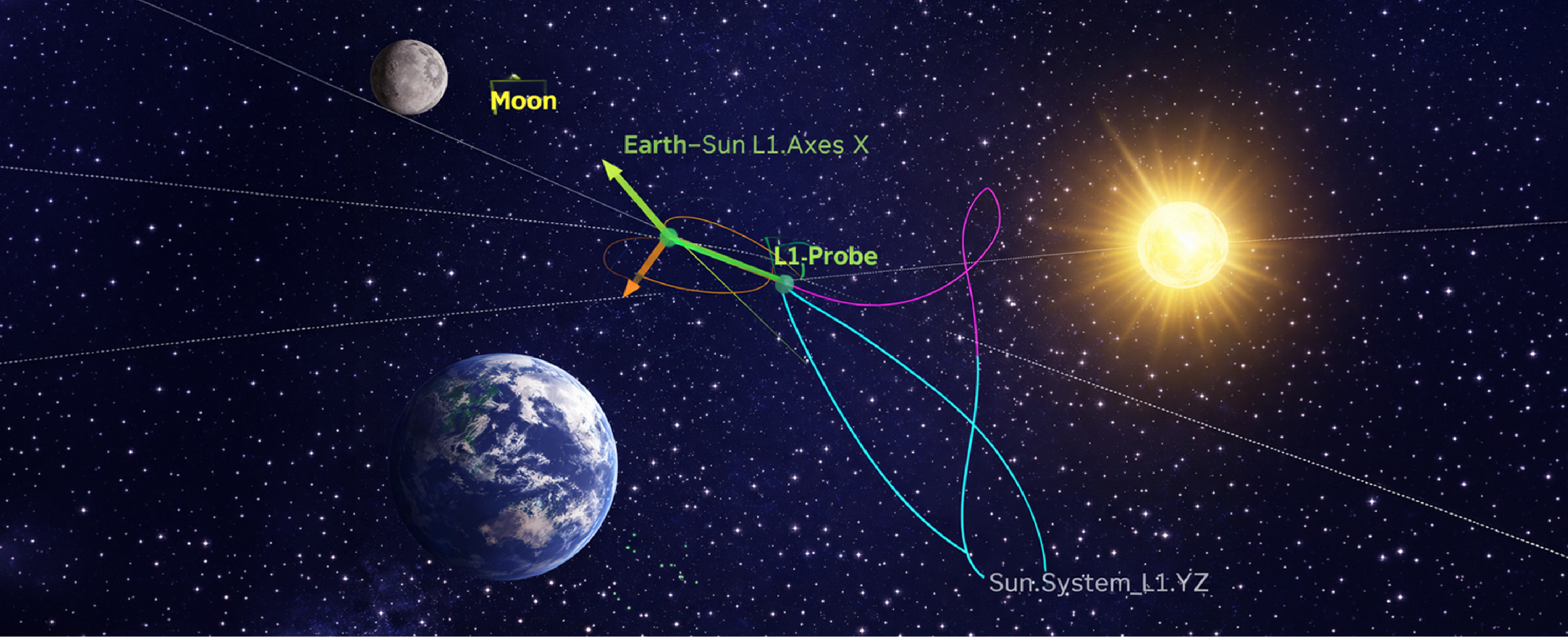
Space mission planning was an ordeal that once took many days of mathematical analysis and manual plotting. Today, advanced software such as Ansys STK — especially its Astrogator module — lets analysts watch the mechanics take place right in front of them. This article walks through how a spacecraft flight to the Sun–Earth L1 Lagrange point can be simulated, end-to-end.
About 1.5 million kilometres away from Earth in the direction of the Sun is L1 — a point where gravitational forces and orbital motion balance, holding a spacecraft in a stable position relative to both bodies.
A satellite stationed at L1 would have a clear, unobstructed view of the Sun's surface, which makes it ideal as a solar observatory or a spacecraft that monitors space weather — SOHO and DSCOVR being the classic examples.
However, maintaining a position at L1 is not easy. Even a small change in velocity can make the spacecraft drift away from its position; L1 is dynamically unstable.
Before there is any mention of propulsion burns, there are simulations. STK provides a virtual sandbox where all mission aspects can be tested — from orbital mechanics to communication geometry — without leaving your desk.
A typical L1 mission concept development looks like this:
From this moment onwards, your simulation starts to resemble reality.
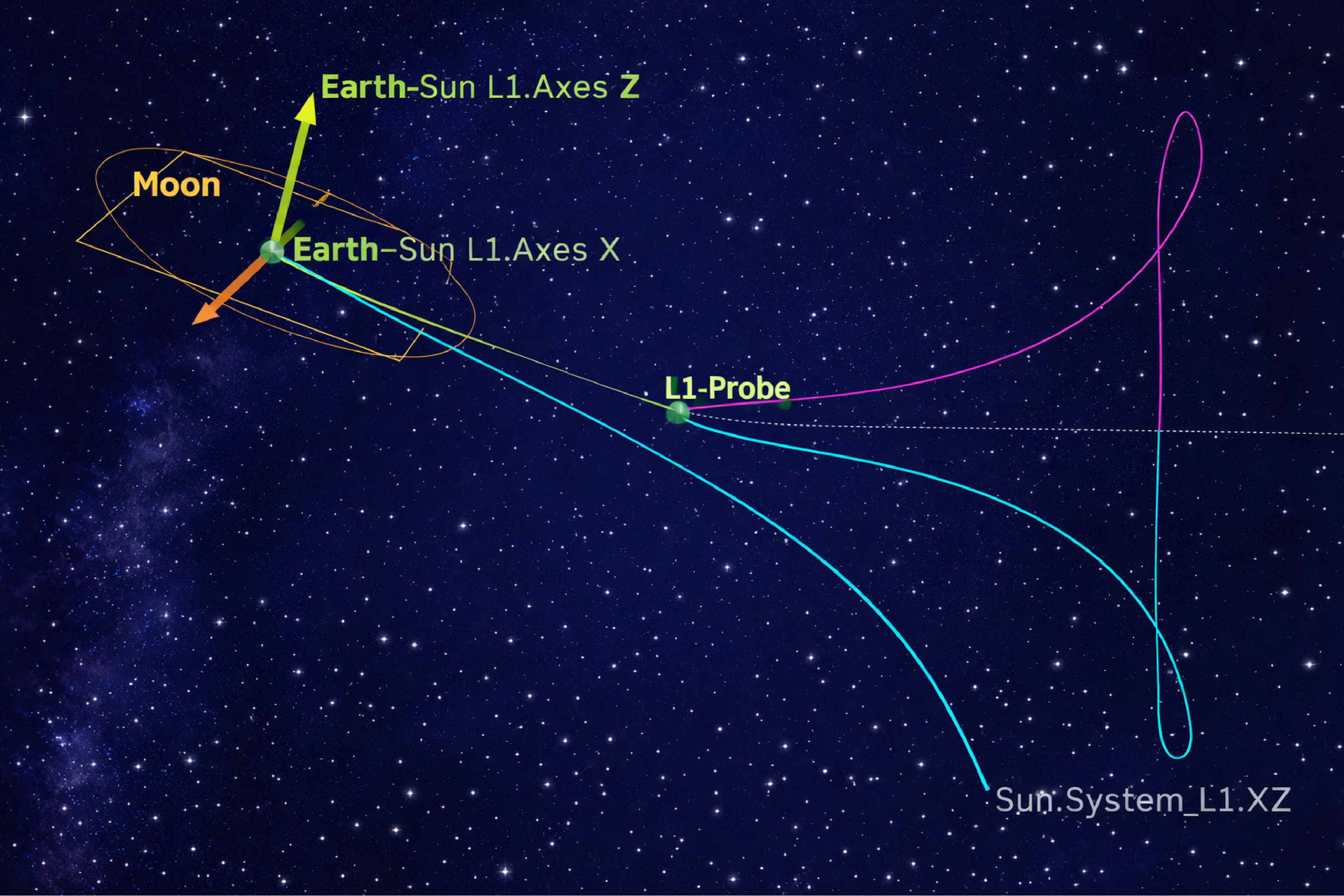
A spacecraft leaving LEO must perform a precise procedure to escape Earth's gravitational field and arrive at L1. In STK Astrogator, the process is represented graphically:
Unlike stationary orbits, Lagrange-point transitions are very delicate and sensitive to initial parameters. Even minor variations in launch time can result in a completely different trajectory — a textbook example of nonlinear orbital mechanics.
L1 is merely the beginning. The location itself acts as an unstable equilibrium, comparable to balancing a ball on a mountain peak. Left unchecked, the satellite will drift off course — either back toward Earth or out into space.
To maintain a stationary position relative to L1, a halo or Lissajous orbit model needs to be constructed. In STK, this entails:
Each iteration in Astrogator amounts to a computational experiment of orbital mechanics.
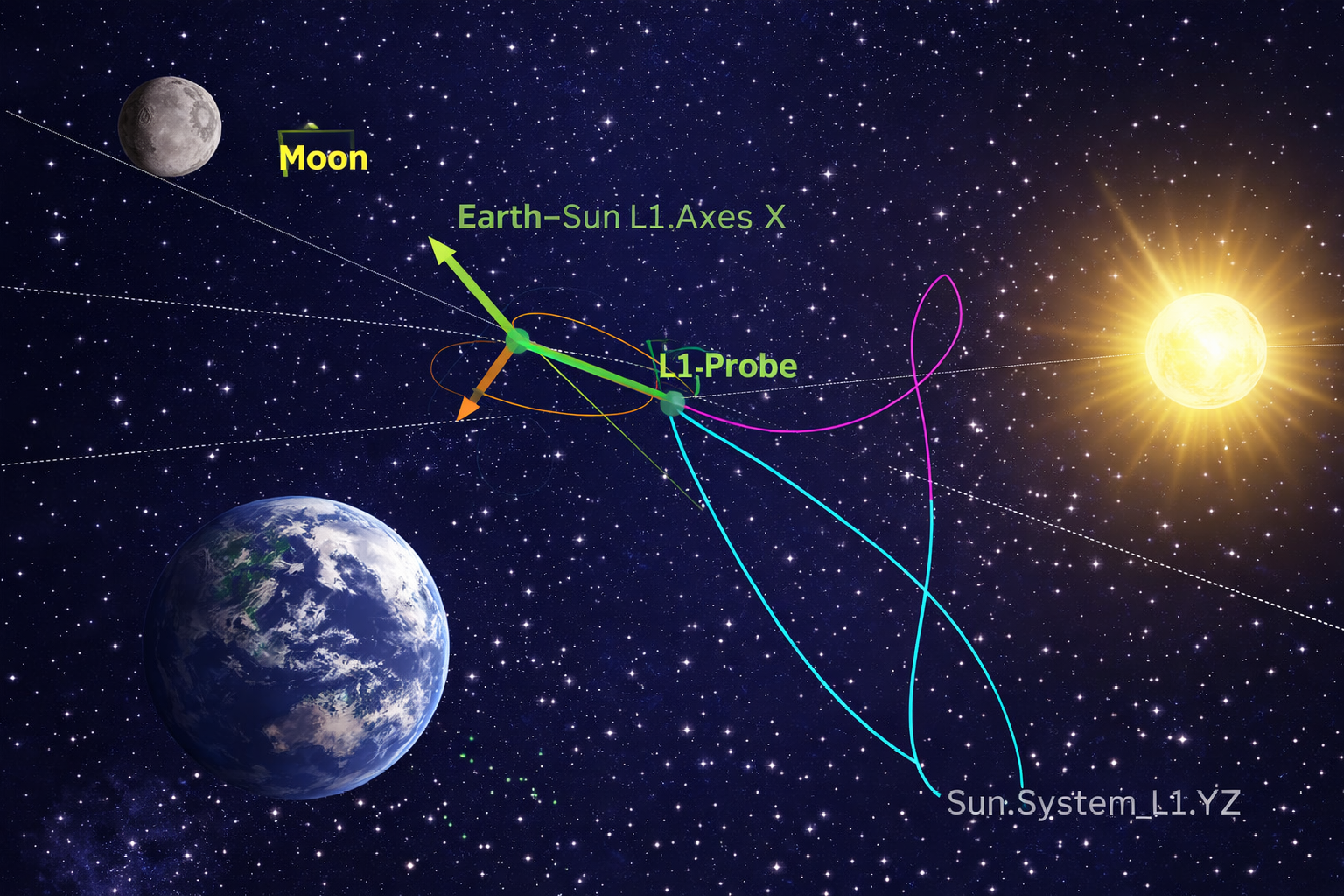
Once operational, the spacecraft conducts periodic adjustments every few weeks or months to counteract perturbing forces — Moon gravity, solar radiation pressure and the inherent instability of the L1 zone.
With Astrogator you can:
For long-range mission planning, these manoeuvres are what determine whether the project is a one-year test run or a ten-year operation.
Amidst all the numerical instability of the Sun–Earth transit route, there exists one of the most stable concepts in engineering today — the concept of simulation. — Abhishek Jain, CADFEM Digital Mission Engineering
It is not simply the fact that STK can plot trajectories — but the insights generated from them:
This gives a full understanding of the spacecraft's behaviour, longevity and communications capabilities — even before it leaves the ground.
A mission design for Sun–Earth L1 is an example of the elegance of orbital dynamics: gravitational equilibrium, precise navigation, and human innovation.
The use of modern software such as STK Astrogator does not detract from physics — rather, it enhances it by translating formulas into three-dimensional models where mission designers can play, visualize and tweak their designs long before any propulsion systems are ignited.
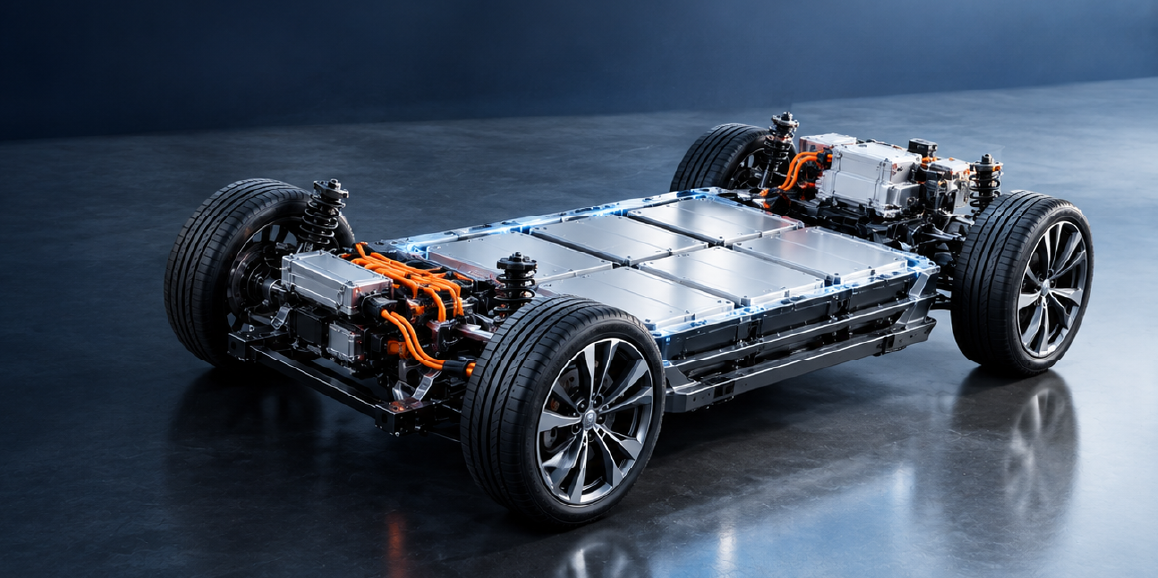 Multi Physics
Read the CADFEM guide to smart BMS functions, automotive thermal management, centralized vs. modular architectures, and Ansys simulation
Read Article →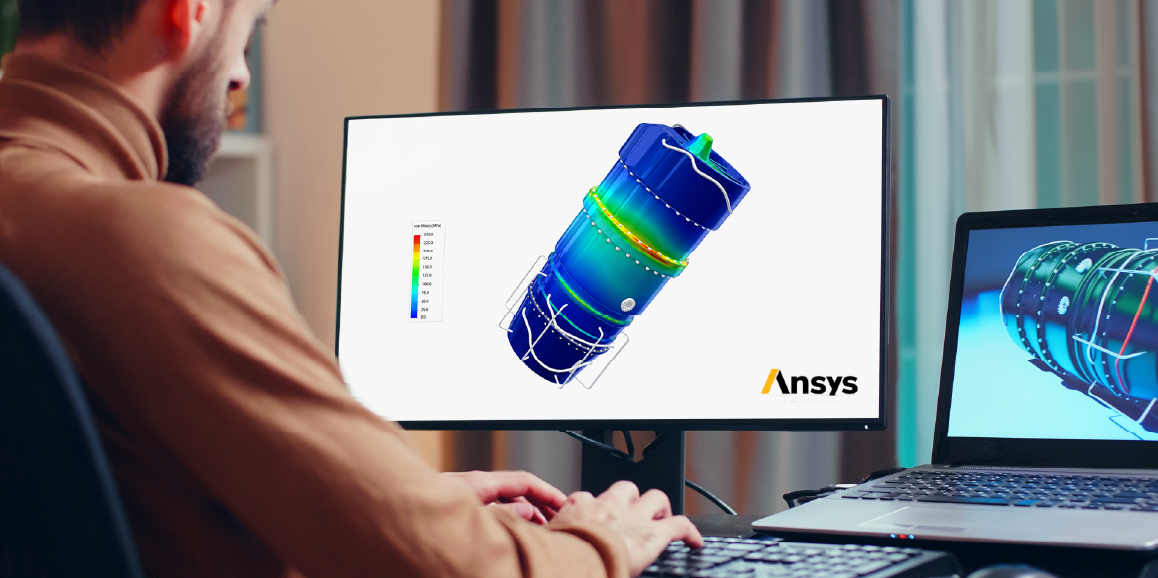 Structures
Di tengah pesatnya perkembangan teknologi rekayasa, adopsi CAE di Indonesia menjadi kunci utama dalam meningkatkan efisiensi dan produktivitas berbagai sektor industri.
Read Article →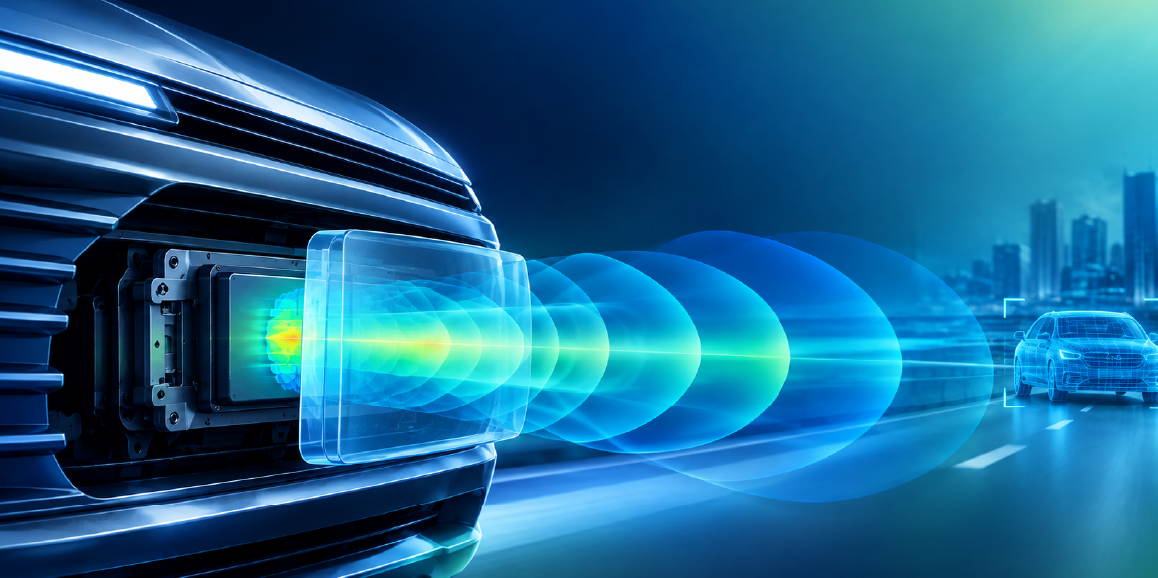 Electronics
Learn how to use Ansys HFSS SBR+ for 77 GHz automotive radar simulation, evaluating radome effects, antenna performance, radiation patterns, and installation.
Read Article →Connect with CADFEM experts for advanced simulation, automation, and engineering solutions tailored to your industry.