Optics in Automotive Innovation: How Simulation Ensures Safety, Performance, and Compliance
From adaptive headlights to augmented reality displays, optics play a pivotal role in shaping the future of mobility — and simulation with Ansys SPEOS validates them before physical prototypes are built.
DS
Dhanush Samarla
Jun 20, 20256 min read
Modern vehicles are undergoing a revolution in safety, comfort, and autonomy—all powered by advancements in optical engineering. From adaptive headlights that enhance nighttime visibility to augmented reality displays that keep drivers informed without distraction, optics play a pivotal role in shaping the future of mobility.
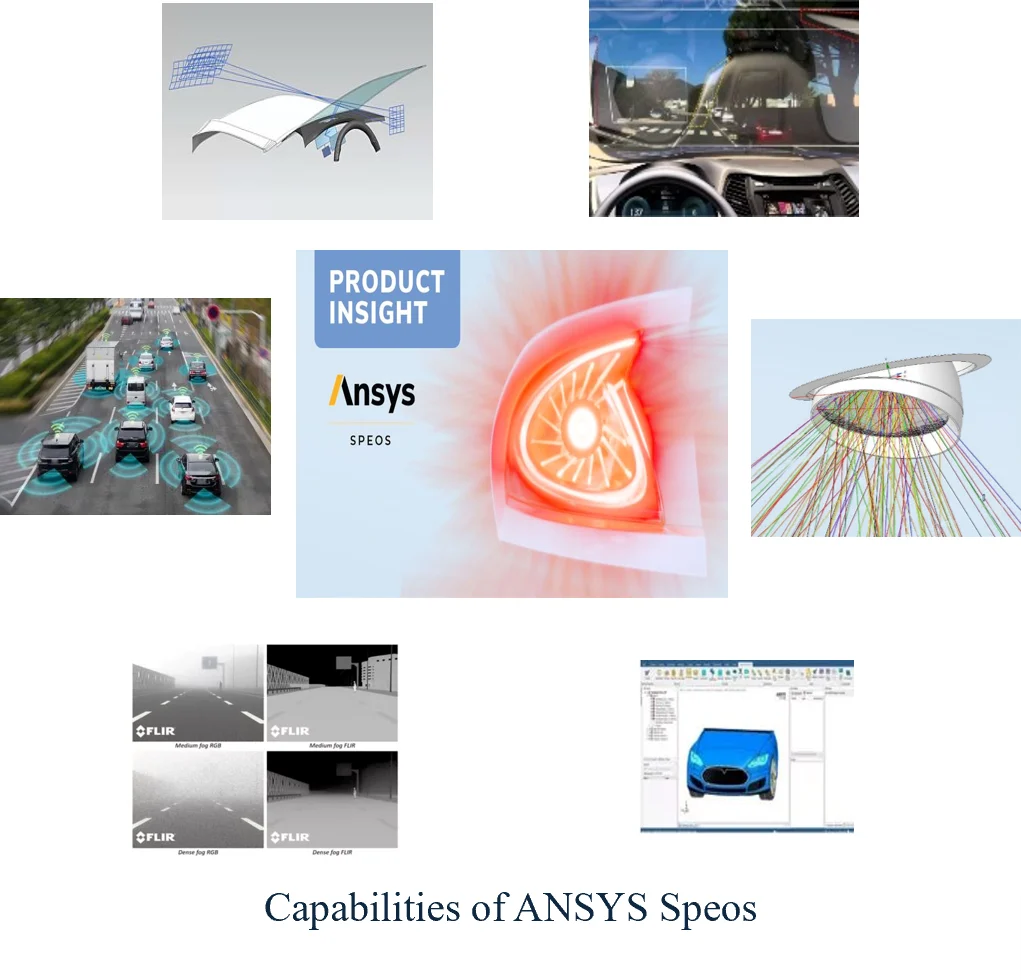
However, developing these systems requires more than just innovative design—it demands rigorous validation to ensure performance, safety, and reliability. Before physical prototypes are built, engineers rely on advanced simulation tools like Ansys SPEOS to model light behaviour, optimize materials, and validate compliance with regulatory standards.
This virtual testing reduces development time, minimizes costly redesigns, and ensures that optical systems perform flawlessly in real-world conditions.
1. The Science Behind Modern Headlight Design: How Optics Enhance Night Driving Safety
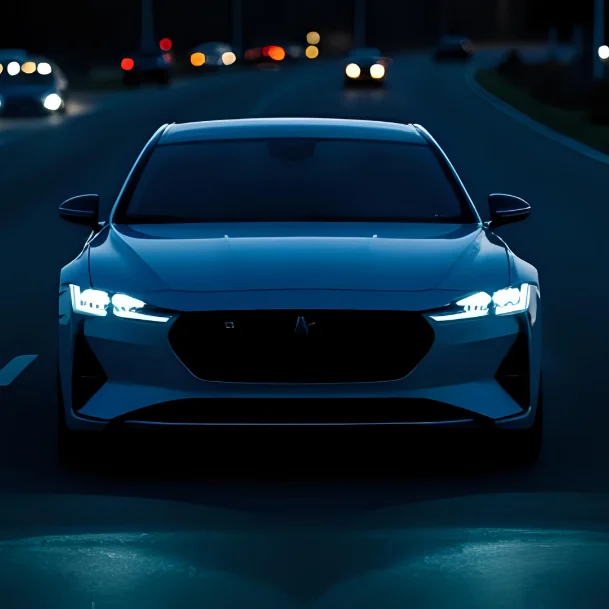
Driving at night requires clear, reliable illumination to ensure safety and visibility. Today's automotive headlights are no longer simple bulbs—they must be precision-engineered systems.
Early headlights relied on basic halogen bulbs, providing limited brightness and efficiency. However, modern systems—including LED, adaptive matrix, and laser headlights—use sophisticated optical engineering to maximize light output while minimizing glare and energy consumption. Advanced Optics help to reach properly engineered headlights:
Improve road visibility without blinding oncoming drivers.
Enhance energy efficiency, especially in electric vehicles where power conservation is critical.
Adapt to driving conditions (e.g., adaptive beams that adjust to curves, weather, and traffic).
The next time you drive at night, remember that your headlights are the result of meticulous optical engineering—balancing performance, safety, and efficiency. As automotive lighting continues to evolve, innovations in optics will play an even greater role in shaping the future of nighttime driving.
2. The Evolution of Automotive Interior Lighting: Where Technology Meets Emotion
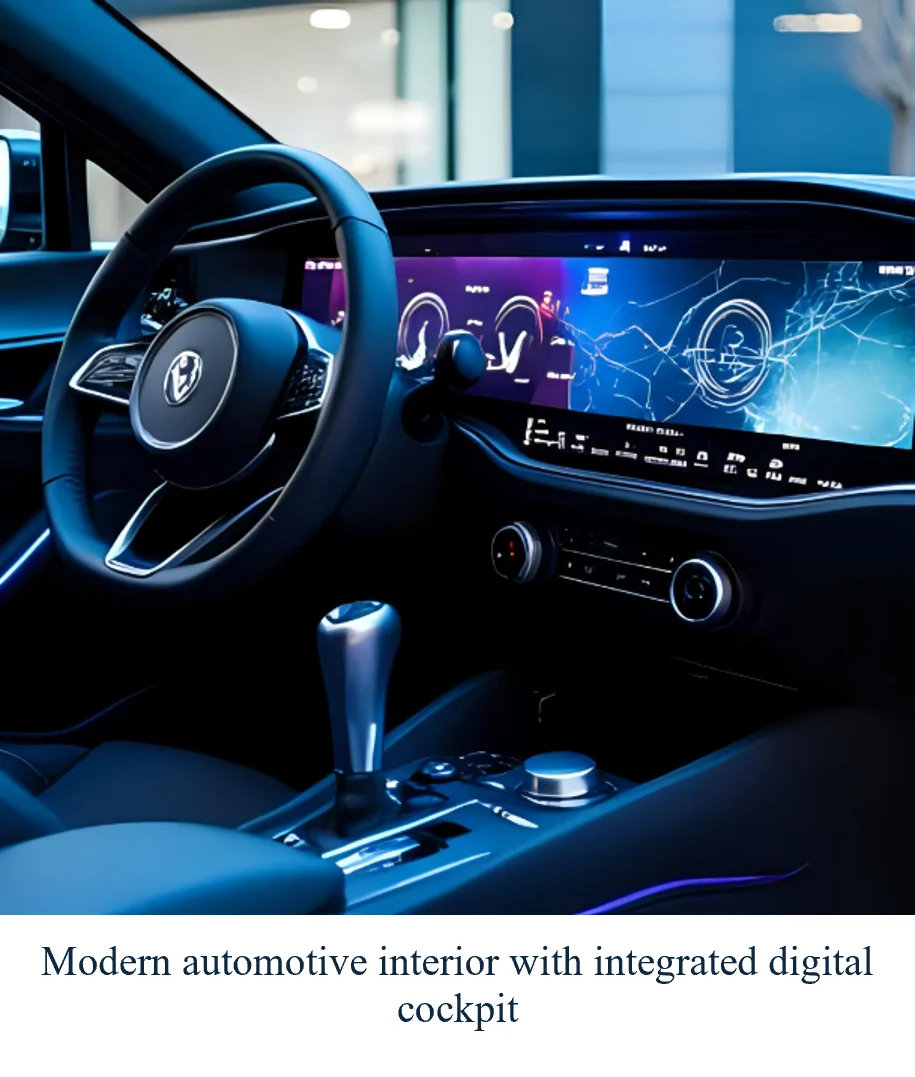
Modern vehicles are no longer about transportation—they are about experience. One of the most transformative yet often overlooked advancements is automotive interior lighting, which has evolved from basic functionality to an immersive, adaptive, and even health-conscious feature.
Gone are the days when cabin lighting merely served practical purposes. Today, it enhances:
Personalization – Customizable ambient lighting that adapts to driver preferences.
Mood & Comfort – Dynamic color temperatures that align with circadian rhythms (e.g., warm tones at night, cooler hues by day).
Functionality – Precision task lighting for controls, displays, and storage areas.
As cars become more connected and autonomous, interior lighting will play an even bigger role in:
Enhancing user experience.
Improving well-being
Enabling brand differentiation
Automotive interior lighting is no longer about visibility—it is about emotion, comfort, and innovation. With advancements in optical engineering and smart technology, the cabin of the future will be as visually engaging as it is functional.
3. The Critical Role of Optics in ADAS and Autonomous Driving
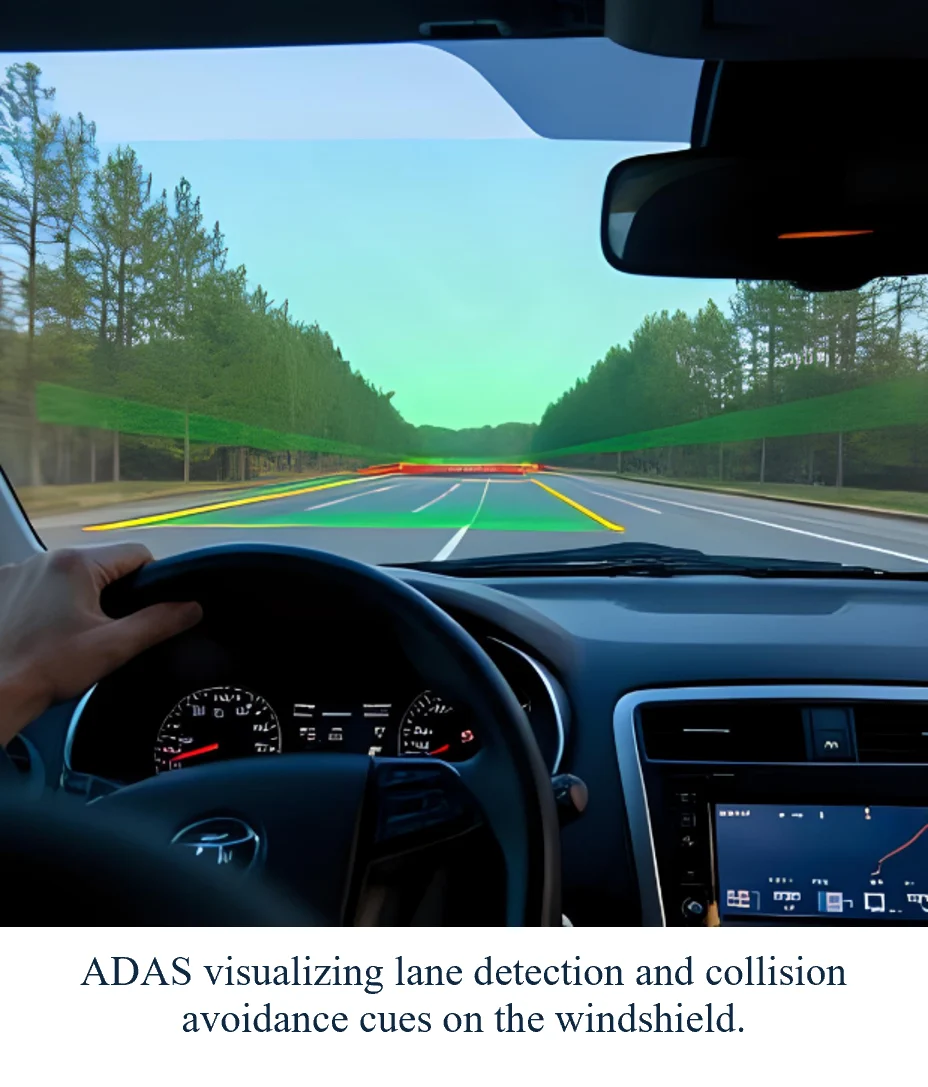
As vehicles become smarter and more autonomous, Advanced Driver Assistance Systems (ADAS) are revolutionizing road safety. At the heart of these systems lies optical technology—enabling cars to see, interpret, and react to their surroundings with remarkable precision.
Modern ADAS relies on three key optical sensing technologies:
High-Resolution Cameras – The Vehicle's Eyes
LiDAR – Mapping the World in 3D.
Infrared & Night Vision – Seeing Beyond Human Limits
Ensure reliability, ADAS optical systems must overcome key technical hurdles:
Precision Alignment - Sensors must be perfectly calibrated to avoid misreadings.
Environmental Robustness - Optics must perform flawlessly in rain, snow, glare, and extreme temperatures.
Sensor Fusion – Combining camera, LiDAR, radar, and ultrasonic data for right decision-making.
ADAS does not just enhance driving—it redefines it. And without advanced optics, none of it would be possible. From collision avoidance to self-parking, optical sensors are the foundation of next-generation vehicle safety. As technology evolves, so too will the sophistication of automotive vision systems—bringing us closer to fully autonomous, accident-free roads.
4. Head-Up Displays (HUDs): The Future of Driver Information Systems
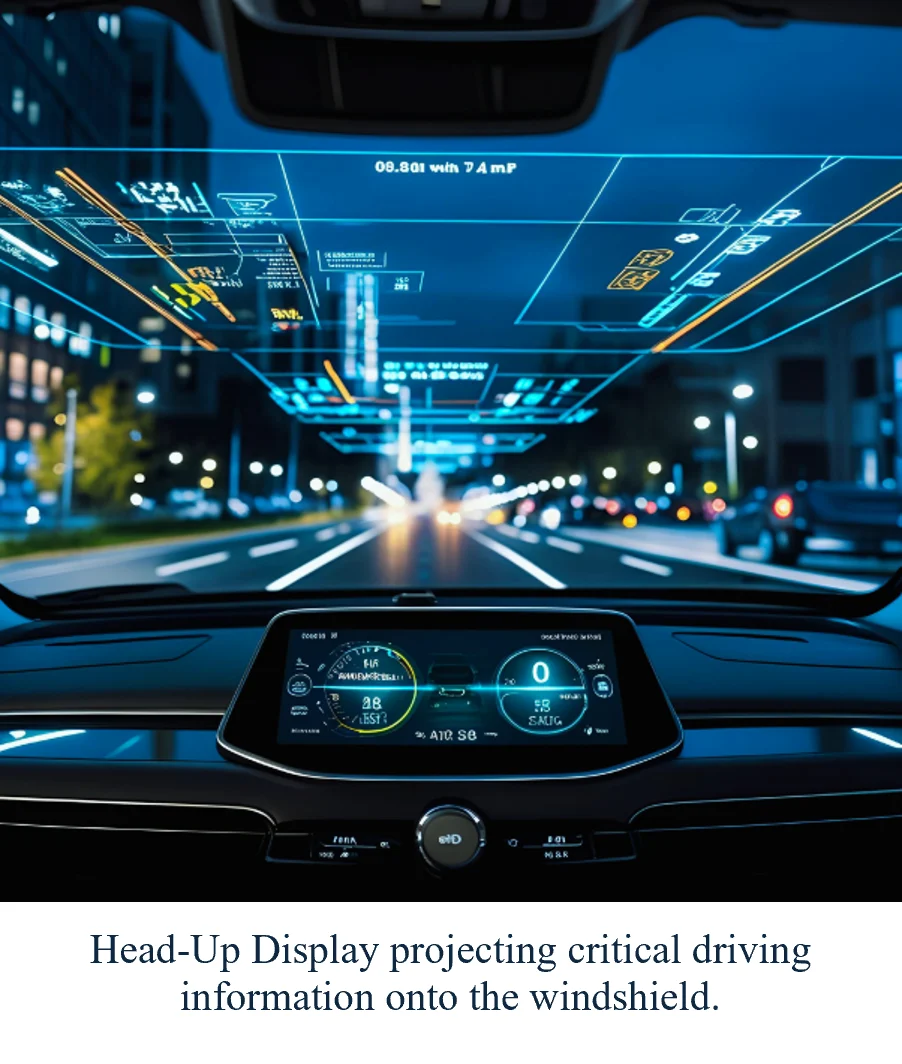
Modern vehicles are transforming driver interfaces with Head-Up Displays (HUDs)—advanced optical systems that project critical information directly into the driver's line of sight. By displaying speed, navigation, and alerts as if floating above the hood, HUDs cut the need to glance down at instrument clusters, significantly improving safety and situational awareness.
Creating an effective HUD requires solving complex optical challenges:
Image Clarity
Brightness Balance
Environmental Adaptability
Human Factors Engineering
As vehicles become more connected and autonomous, HUD technology will evolve to:
Integrate with ADAS - Displaying real-time safety alerts more intuitively.
Expand field of view - Covering wider areas of the windshield.
Incorporate 3D elements - Adding depth perception to augmented displays.
Head-Up Displays are more than just convenience—they are a critical safety innovation made possible by advanced optical engineering. As this technology continues to mature, it will play an increasingly vital role in creating safer, more intuitive driving experiences, bridging the gap between digital information and the real world.
5. Optics in Advanced Parking Assistance: Seeing the Unseen
As vehicles evolve toward autonomy, one of the most immediate benefits to drivers has been the rise of intelligent parking assistance systems. These technologies leverage advanced optical engineering to simplify one of driving's most frequent stress points: parking. Whether navigating tight urban spaces or avoiding hidden obstacles, optics form the foundation of modern parking aid solutions.
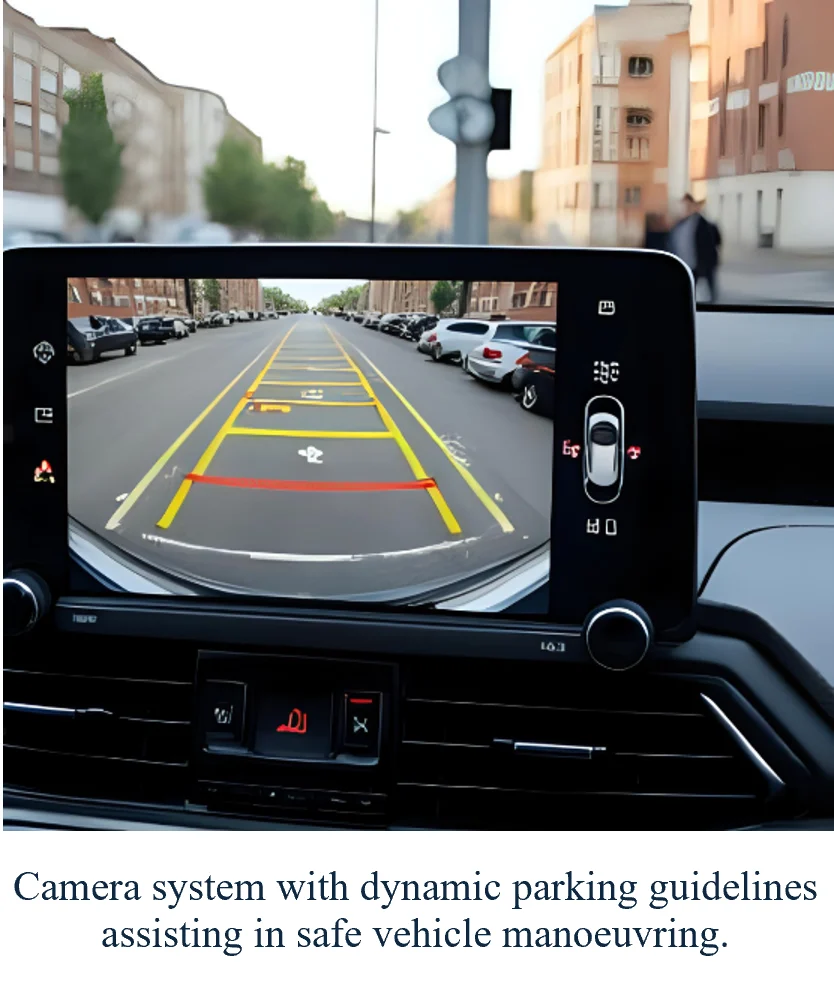
Most modern vehicles now feature four or more wide-angle cameras placed around the vehicle (front, rear, and under the side mirrors). These images are stitched together to create a seamless bird's-eye view. Rear-view cameras have become a regulatory requirement in many countries. Their optics are carefully tuned to deliver maximum coverage, even in poor lighting conditions.
Parking assistance is no longer about beeping sensors — it is a highly visual, optical problem solved with wide-angle lenses, computer vision, and optical calibration. The result is greater safety, convenience, and driver confidence in dense urban environments.
From adaptive headlights to AR HUDs, optical systems are redefining automotive safety and user experience. However, their complexity demands rigorous testing before physical production.
Conclusion
In today's fast-paced automotive landscape, simulation is not optional—it's essential. Ansys SPEOS empowers engineers to design safe, compliant, and cost-effective optical systems by identifying issues early, ensuring regulatory adherence, and validating real-world performance. As the industry moves toward smarter and more complex lighting technologies, simulation ensures innovation doesn't come at the cost of safety, time, or budget. With Ansys SPEOS, automakers can move forward with confidence—delivering reliable optical systems right the first time.
Found this useful? Share it
Continue Reading
More from our engineers.
If this article was useful, these picks up where it leaves off — practical reads from the CADFEM engineering practice.