What Is a Battery Management System? Guide for Automotive Applications
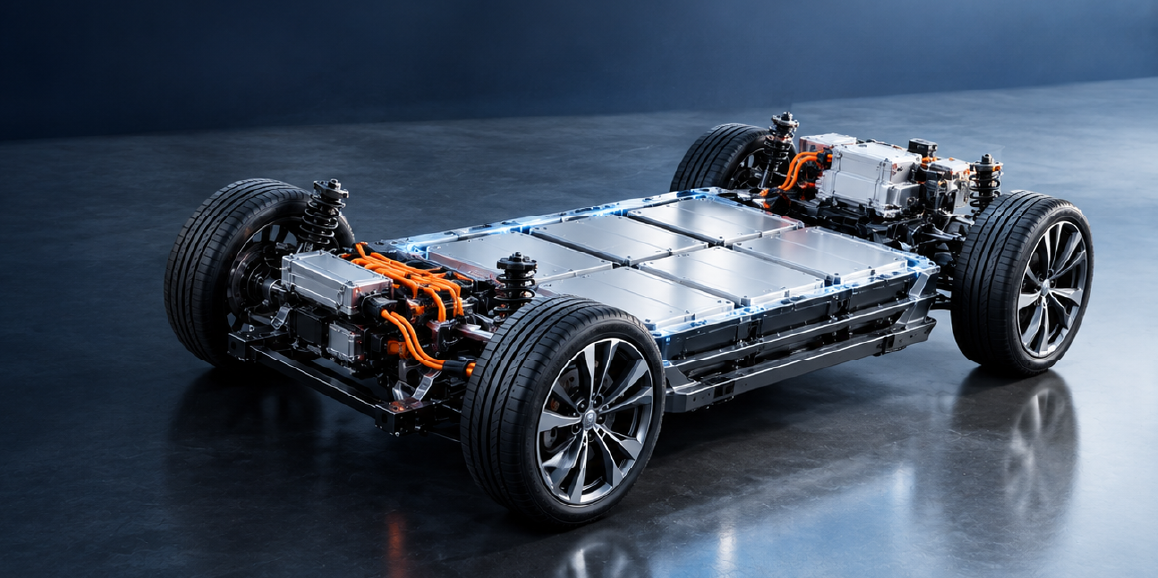
Read the CADFEM guide to smart BMS functions, automotive thermal management, centralized vs. modular architectures, and Ansys simulation
Read Article →
How Ansys SPEOS and Zemax OpticStudio power end-to-end virtual validation of logo projection systems — optimizing brightness, sharpness and real-world performance before any physical prototype is built.
In today's competitive landscape, branding has evolved far beyond static displays and traditional advertising. Organizations are increasingly seeking innovative ways to create immersive and memorable visual experiences, and logo projection systems are emerging as a powerful solution. From automotive welcome lighting to retail and architectural applications, these systems are transforming how brands engage with their audiences, turning light into a dynamic communication medium.
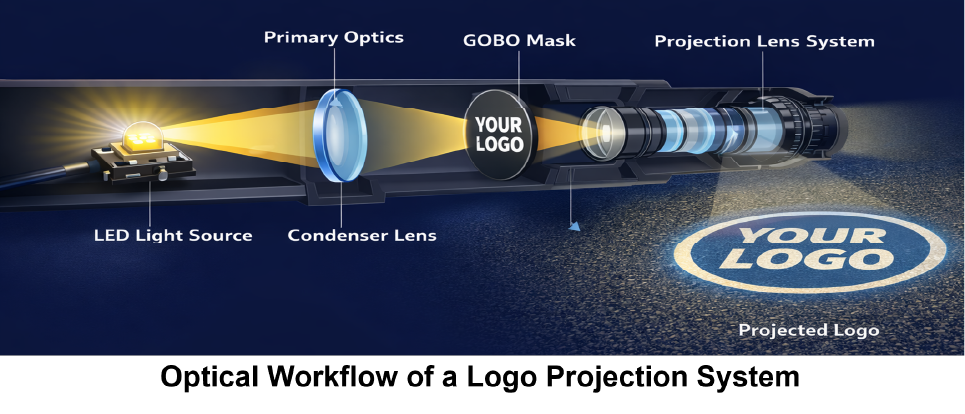
What makes logo projection systems unique is their ability to use light to display clear, sharp, and eye-catching. However, achieving this clarity is complex, requiring careful consideration of factors such as lens design, light distribution, and image consistency under varying conditions. Even small design errors can result in blur, distortion, or uneven brightness.
To address these challenges, virtual design and performance validation have become essential. Advanced simulation tools such as Ansys SPEOS and Zemax allow engineers to model optical behaviour, optimize lens systems, and validate image quality before building physical prototypes. By leveraging these platforms, designers can predict real-world performance, identify potential issues early, and accelerate development ensuring that logo projection systems consistently deliver striking visual experiences.
Logo projection systems are widely adopted across multiple industries for branding, safety, and user interaction.
Key applications include:

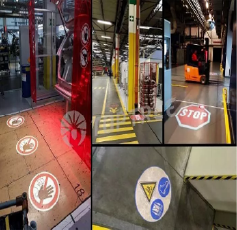
Advanced optical simulation tools like Ansys Speos and Zemax Optic Studio play a crucial role in the virtual design and performance validation of logo projection systems.
Zemax OpticStudio is used for precise optical design:
Engineers can simulate how light propagates through lenses and optical elements with high precision.
Ansys Speos focuses on system-level simulation:
Ansys Speos and Zemax Opticstudio together enable a complete virtual workflow from precise optical design to real-world performance validation ensuring high-quality, reliable logo projection systems before physical production.
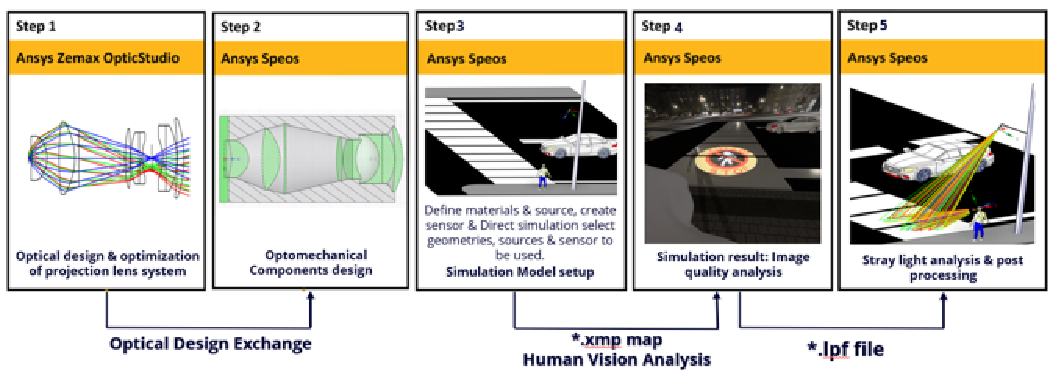
Video Link: Logo Projector Speos Model Setup
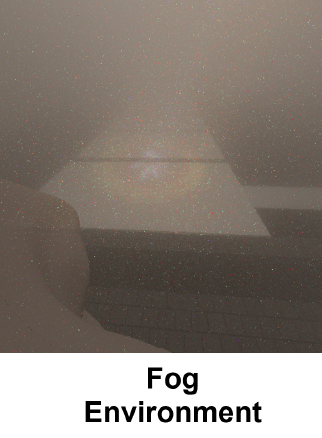
Ansys Speos Labs provides a comprehensive set of tools for extracting both quantitative and visual outputs from optical simulations, including those for logo projectors. It enables analysis of illuminance maps for brightness, intensity profiles for uniformity, perform colorimetric analysis, and visualize image sharpness and edge details. Additionally, Speos support's stray light analysis, which is essential for detecting artifacts such as ghost images.
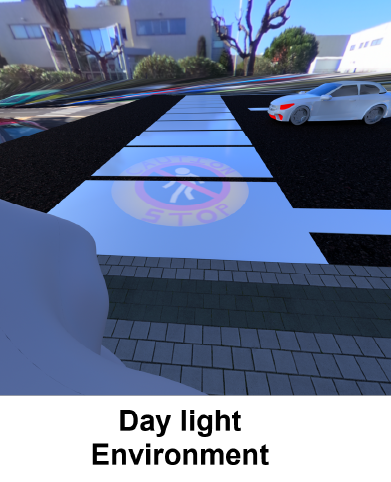
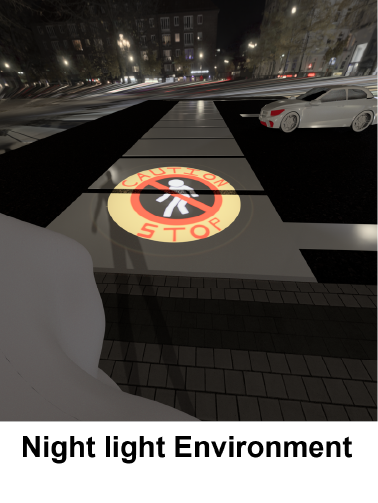
Video Link: Post processing in Speos
Logo projection systems represent a shift from conventional lighting to experience-driven optical engineering, where light becomes a medium for communication, branding, and safety. Delivering a sharp, uniform, and reliable projection under real-world conditions requires precise control over optics, materials, and environmental interactions. By leveraging a virtual workflow with tools like Ansys Speos and Zemax OpticStudio, engineers can seamlessly move from optical design to system-level validation. This integrated approach enables accurate prediction of performance, early identification of design limitations, and efficient optimization without extensive physical prototyping.
Ultimately, virtual validation transforms the development process reducing iterations, accelerating time-to-market, and ensuring that logo projection systems consistently deliver high-quality visual performance. The result is not just illumination, but a precisely engineered projection that enhances both functionality and brand identity.
 Multi Physics
Read the CADFEM guide to smart BMS functions, automotive thermal management, centralized vs. modular architectures, and Ansys simulation
Read Article → Structures
Di tengah pesatnya perkembangan teknologi rekayasa, adopsi CAE di Indonesia menjadi kunci utama dalam meningkatkan efisiensi dan produktivitas berbagai sektor industri.
Read Article → Electronics
Learn how to use Ansys HFSS SBR+ for 77 GHz automotive radar simulation, evaluating radome effects, antenna performance, radiation patterns, and installation.
Read Article →Connect with CADFEM experts for advanced simulation, automation, and engineering solutions tailored to your industry.