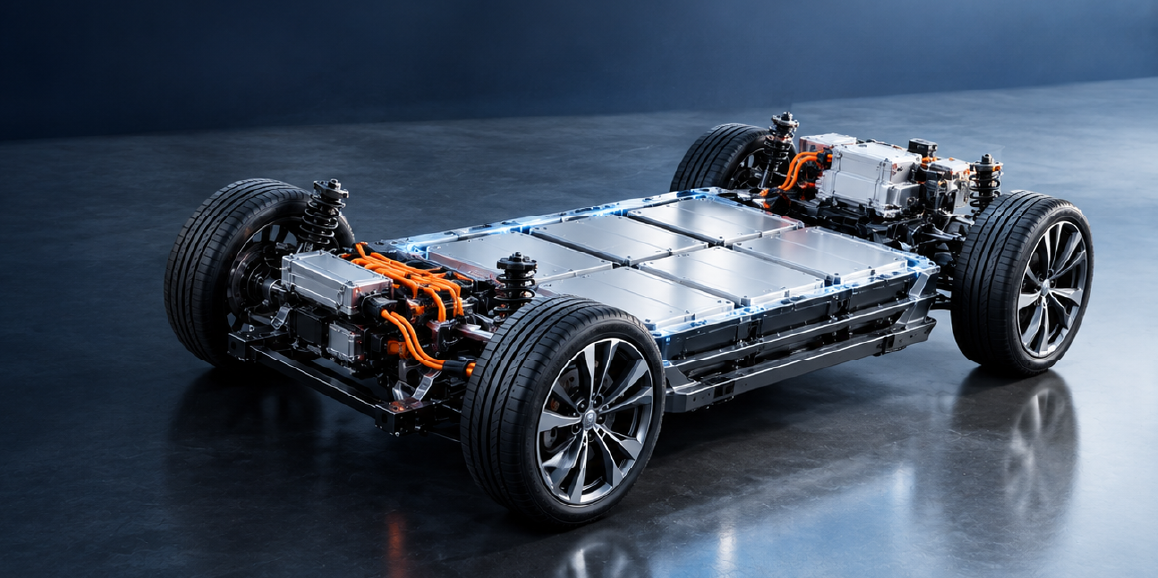
What Is a Battery Management System? Guide for Automotive Applications
Read the CADFEM guide to smart BMS functions, automotive thermal management, centralized vs. modular architectures, and Ansys simulation
Read Article →
Antenna design is critical to next-generation communication systems, ensuring optimal performance in extreme environments like space, battlefields, and dense urban areas.
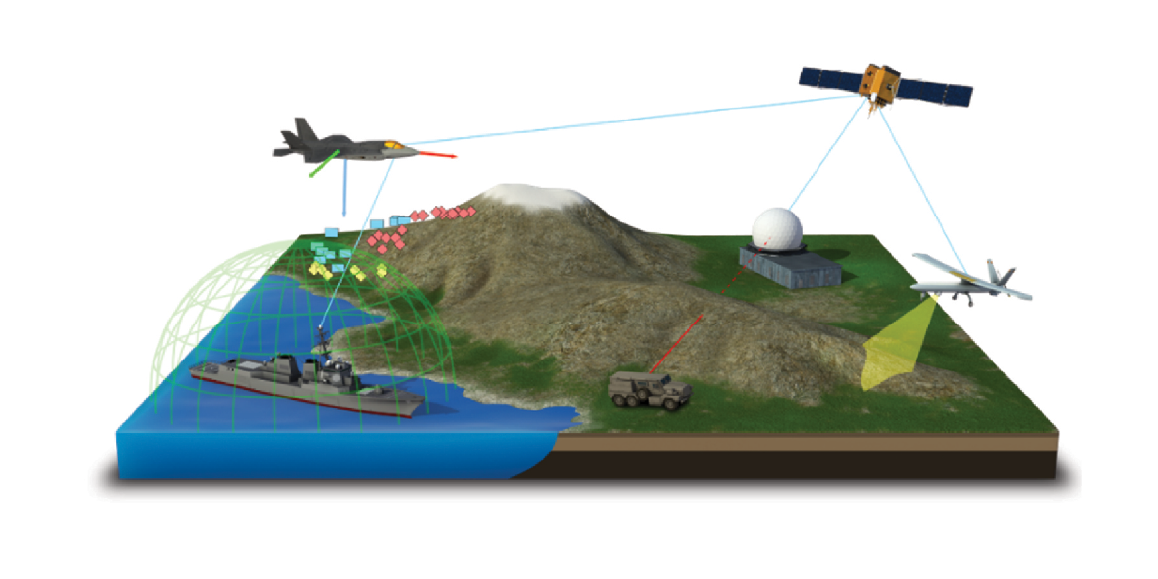
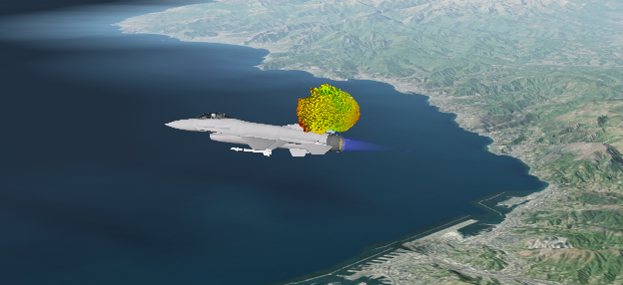
Antenna design is critical to next-generation communication systems, ensuring optimal performance in extreme environments like space, battlefields, and dense urban areas. This dynamic field drives breakthroughs in satellite networks and radar tech. Engineers use advanced tools like STK (Systems Tool Kit) and HFSS (High-Frequency Structure Simulator) to craft efficient, resilient antennas with precision. These tools simulate real-world conditions, enabling engineers to minimize interference, extend range, and enhance operational efficiency. This article explores how integrating STK and HFSS revolutionizes antenna design for high stakes missions.
In advanced applications ranging from satellite communications to defense systems, antenna performance is the foundation of reliable communication. Whether transmitting data to a satellite or detecting targets with radar, antennas must perform with minimal interference, maximum efficiency, and over extended ranges.
STK (Systems Tool Kit) is a sophisticated simulation platform widely used in aerospace, defense, and satellite communications. It allows engineers to model and analyse complex systems, from satellite orbits to ground networks, while factoring in real-world conditions. STK plays a crucial role in mission-critical applications, driving innovation and optimizing modern communication systems for maximum efficiency and reliability.
Key benefits include:
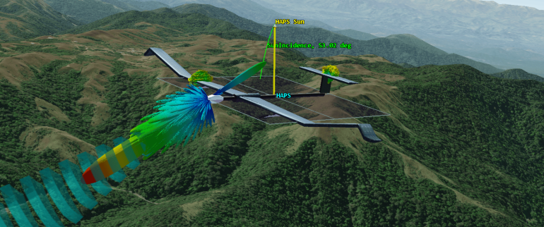
HFSS is an industry-leading electromagnetic simulation tool for high-frequency applications, including antennas, waveguides, and microwave circuits. It employs the Finite Element Method (FEM) to model the interaction of electromagnetic waves with structures. The SBR+ (Shooting and Bouncing Rays) Solver uses ray-tracing techniques to model wave propagation in complex environments, making it ideal for antenna design, radar systems, and satellite communications. HFSS enables engineers to optimize antenna parameters for superior performance in critical applications.
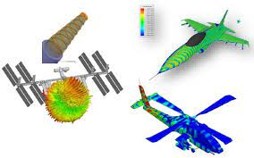
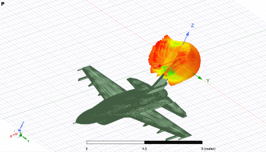
The integration of STK and HFSS transforms antenna design by combining mission-level modelling with precise electromagnetic simulations. This approach enables engineers to develop high-performance antennas, meeting evolving technical requirements while enhancing efficiency and innovation in communication technologies.
HFSS generates highly detailed electric field data, providing real and imaginary components for precise antenna radiation analysis. This data ensures accuracy and consistency, making it ideal for integration with STK for mission-based simulations. This data can be imported as a .ffd file into tools like STK to visualize antenna radiation in realistic environments.
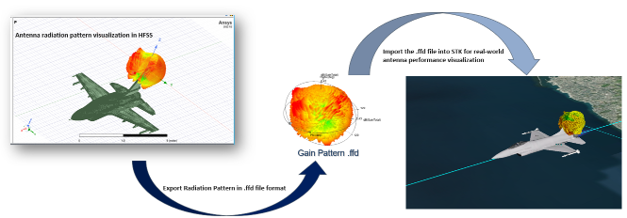
The integration of STK and HFSS enhances performance in mission-critical applications:
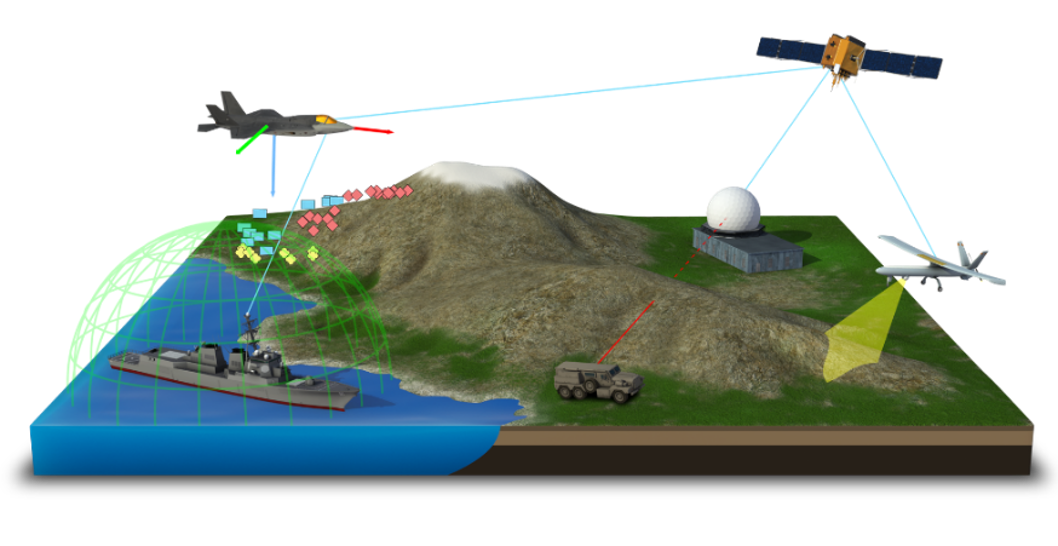
The Integration of STK and HFSS delivers an innovative solution for designing high-performance antennas in mission-critical applications. By merging system-level simulations with advanced electromagnetic modelling, engineers can refine designs for superior performance, speed, and cost-efficiency. This integration accelerates innovation in aerospace, defense, and telecommunications, shaping the future of scalable, high-performance communication systems.
 Multi Physics
Read the CADFEM guide to smart BMS functions, automotive thermal management, centralized vs. modular architectures, and Ansys simulation
Read Article → Structures
Di tengah pesatnya perkembangan teknologi rekayasa, adopsi CAE di Indonesia menjadi kunci utama dalam meningkatkan efisiensi dan produktivitas berbagai sektor industri.
Read Article → Electronics
Learn how to use Ansys HFSS SBR+ for 77 GHz automotive radar simulation, evaluating radome effects, antenna performance, radiation patterns, and installation.
Read Article →Connect with CADFEM experts for advanced simulation, automation, and engineering solutions tailored to your industry.