Digitizing CFD: How PyFluent is Transforming Simulation Workflows
How PyFluent brings Python automation, customization and AI/ML-driven optimization to Ansys Fluent CFD workflows.
GV
Gopi Raju Velpula
Apr 7, 20255 min read
In today's era of digitalization, technology continues to transform how we approach engineering challenges, and Computational Fluid Dynamics (CFD) is no exception. Traditional CFD workflows, while effective, often involve repetitive tasks, manual interventions, and limited automation. To address these challenges, advanced programming approaches have emerged, revolutionizing the way simulations are conducted. Python, with its versatility and rich ecosystem, has become a key enabler in this transformation.
Section 01What is PyFluent?
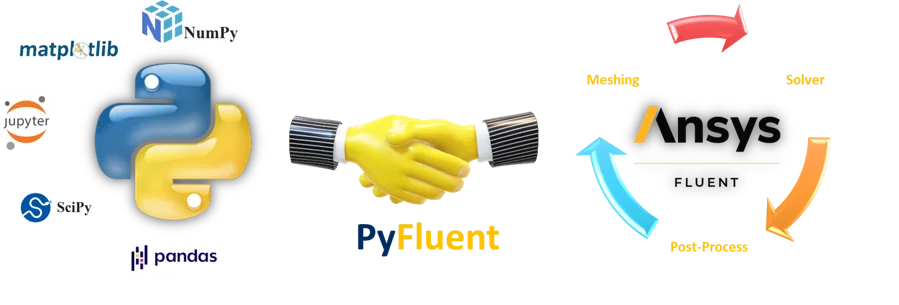
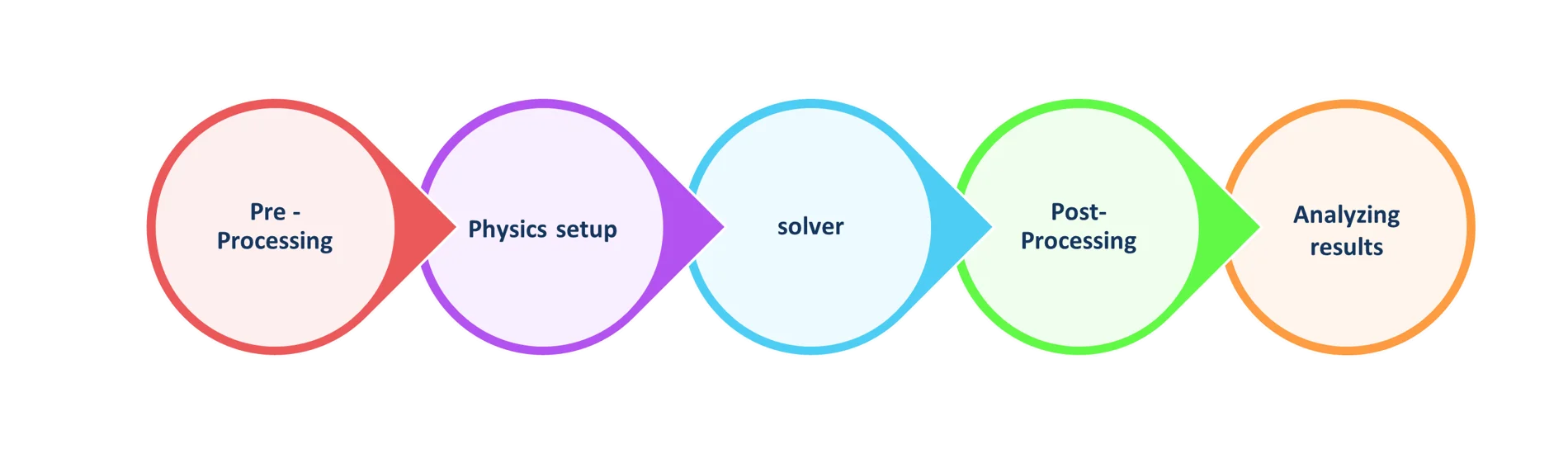
PyFluent is a powerful Python-based interface that brings a new dimension to CFD simulations. By leveraging PyFluent, engineers can streamline their workflows, automate repetitive tasks, and customize processes like never before. From pre-processing and setup to solving and post-processing, PyFluent integrates seamlessly with Ansys Fluent, providing an intuitive, flexible, and highly efficient way to perform simulations.
Fig 1 · PyFluent bridges the Python ecosystem and Ansys Fluent
Whether you're an experienced CFD practitioner or just starting out, PyFluent empowers you to push the boundaries of simulation capabilities. By embracing these advanced programming techniques, engineers can not only save time but also enhance accuracy, scalability, and collaboration in their projects.
Section 02How it Works
PyFluent is part of the PyAnsys ecosystem that lets you use Fluent within a Python environment of your choice in conjunction with other PyAnsys libraries and external Python libraries.
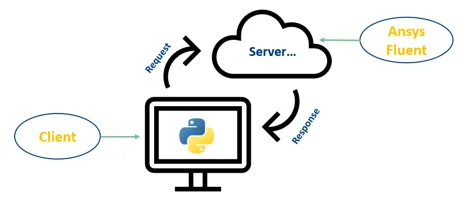
PyFluent implements a client-server architecture.
It uses Google remote procedure calls, or gRPC interfaces.
It allows you to launch or connect with a running Fluent process as a server.
Fig 2 · PyFluent client-server architecture
Section 03PyFluent Unique Features
1. Streamlining & Automation
As PyFluent continues to revolutionize the way we conduct CFD simulations, its wide range of features is essential in transforming traditional workflows into streamlined and efficient processes. One of PyFluent's key advantages is its ability to automate repetitive and tedious simulation tasks. In the past, setting up and running simulations often required considerable manual repetition. PyFluent eliminates this bottleneck, enabling users to automate these workflows, which saves valuable time and allows simulations to be executed with minimal intervention. This automation not only frees engineers to concentrate on more critical tasks but also reduces the likelihood of human error.
Fig 3 · End-to-end CFD workflow automated with PyFluent
2. Customization
Customizability is a key feature of PyFluent. It enables users to adjust Ansys Fluent's behaviour to meet specific needs, providing the flexibility to implement custom boundary conditions, modify solvers, and automate complex tasks that were previously cumbersome. This level of control ensures that PyFluent adapts to the unique requirements of each project, rather than forcing users to adapt to the software.
3. Integration & Data Processing
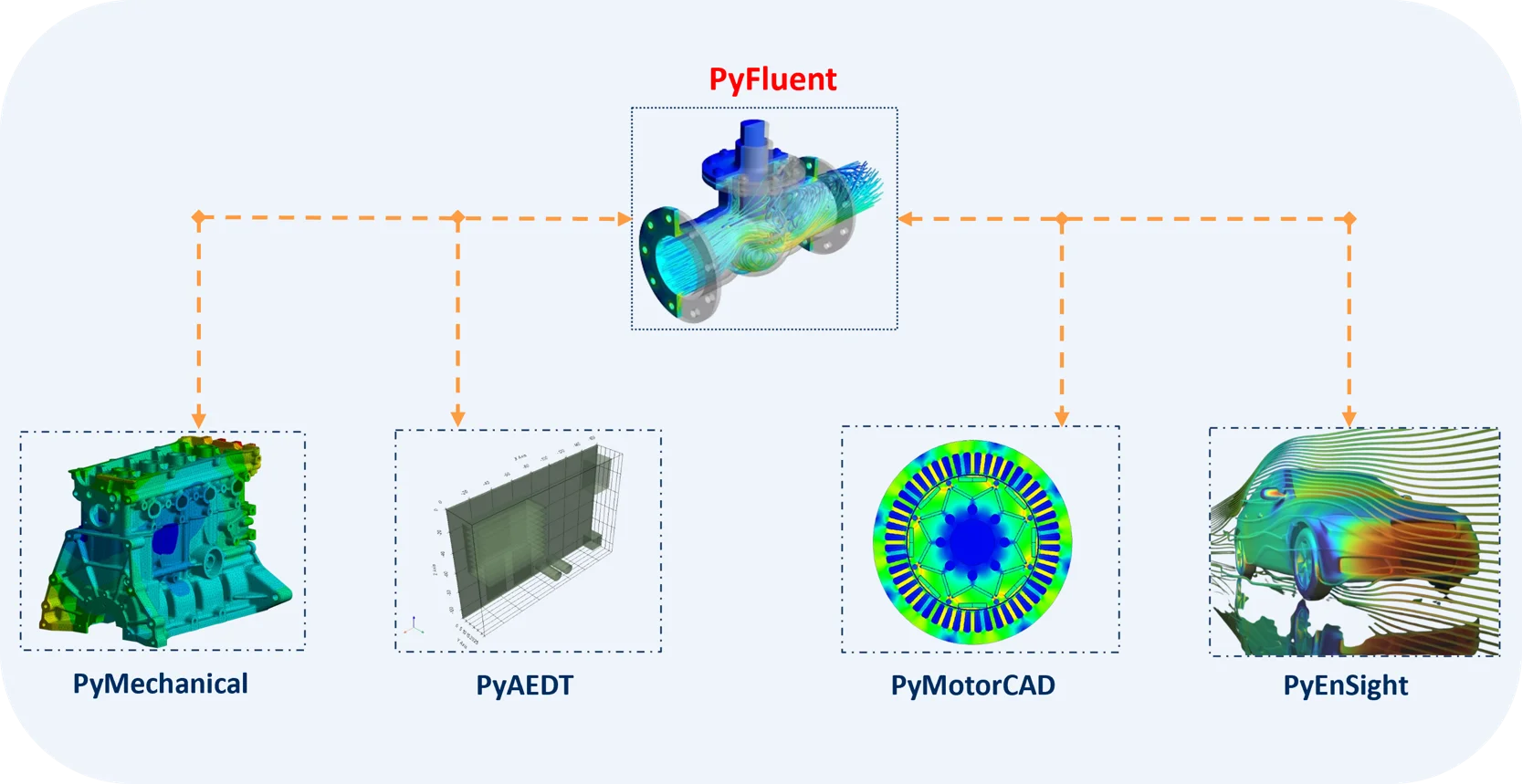
PyFluent integrates smoothly with other Ansys tools, allowing for automated multiphysics simulations. It facilitates effective communication between Computational Fluid Dynamics (CFD), structural, thermal, and electromagnetic analyses. This flexibility improves both efficiency and innovation in simulation workflows. With PyFluent, users can easily exchange data between Fluent and Python, providing straightforward access to simulation results. They can process and visualize data using Python libraries like Matplotlib and Pandas without relying on the Fluent graphical user interface (GUI). This capability enhances flexibility for advanced post-processing and visualization.
Fig 4 · PyFluent integration with other PyAnsys libraries
4. Web Applications
PyFluent makes the CFD workflow easier by using web applications. With PyFluent, you can run simulations with a single click from a simple web interface, without opening Ansys Fluent. This setup helps teams work together better, share simulation results, and interact with data in ways that were only possible through traditional desktop programs. You can run simulations in the cloud and see the results right in the web interface.
5. Batch Submission and Optimization (AI/ML)
Batch processing in simulation workflows enhances efficiency by enabling both parallel and sequential execution of multiple cases. It is particularly effective for large-scale parameter sweeps and optimization studies. By integrating AI and machine learning algorithms, simulation processes gain advanced predictive and optimization capabilities. The seamless fusion of simulation data with intelligent techniques leads to more precise and efficient outcomes, accelerating design iterations and improving decision-making. PyFluent serves as a powerful tool in this context, offering robust automation and AI-driven enhancements for computational simulations.
Conclusion
PyFluent's advanced automation and customization capabilities are revolutionizing the field of computational fluid dynamics (CFD). By leveraging parametric scripting, automated workflows, and seamless integration with Fluent's solver, we can push beyond traditional boundaries and achieve superior simulation results. This comprehensive control over the entire process, from pre-processing to post-processing, ensures that our simulations are not only accurate but also highly efficient.
As we continue to explore and utilize these powerful tools, we are setting the stage for future innovations and optimizations in CFD. PyFluent is not just enhancing our current capabilities; it is paving the way for a new era of simulation excellence.
Found this useful? Share it
Continue Reading
More from our engineers.
If this article was useful, these picks up where it leaves off — practical reads from the CADFEM engineering practice.