Optimization of Cold Chain Logistics using Ansys Fluent
Maintaining product integrity from origin to destination is business-critical for perishable foods, pharmaceuticals and vaccines. See how Ansys Fluent simulates and optimizes the thermal performance of cold chain systems.
AP
Arindam Pal
May 2, 20255 min read
In today's rapidly evolving logistics landscape, maintaining product integrity from origin to destination is more crucial than ever. This is especially true for temperature-sensitive goods such as perishable foods, pharmaceuticals, and vaccines. For these sectors, cold chain logistics isn't just a best practice—it's a business-critical process. Ensuring products remain within strict temperature ranges throughout transport and storage is a complex challenge, and this is where Ansys Fluent emerges as a game-changer.
The Growing Importance of Cold Chain Logistics
With the surge in e-commerce and quick delivery platforms across Bharat, the demand for efficient and reliable cold chain logistics has skyrocketed. Both B2C and B2B companies in the FMCG and biopharma sectors are under immense pressure to preserve product quality while reducing waste and cost. Traditional methods of testing and validating cold chain packaging solutions can be time-consuming, expensive, and often insufficient to cover every real-world scenario.
Enter digital simulation.
How Ansys Fluent Enhances Cold Chain Optimization
Ansys Fluent, a leading computational fluid dynamics (CFD) tool, provides the capability to simulate and optimize the thermal performance of cold chain systems. Whether it's a refrigerated truck, a warehouse, or a portable cold box, Fluent enables engineers to create accurate virtual prototypes that predict thermal behavior under various conditions.
Key Objectives of Cold Chain Simulation:
Maintain accurate temperature levels
Ensure effective thermal insulation
Prevent airflow starvation
Maintain optimal humidity (when required)
These objectives are essential for preserving product quality throughout the logistics journey.
Components of Cold Chain Logistics
Cold chain logistics typically involve the following elements:
Cold Storage Warehouses: These use electrically powered HVAC systems to maintain controlled temperatures.
Refrigerated Transportation: Trucks and containers equipped with active cooling systems.
Portable Cold Boxes: Rely on insulation and passive cooling methods like ice packs or phase change materials.
In each of these scenarios, Ansys Fluent is adept at handling complex conjugate heat transfer problems and simulating real-time environmental interactions.
Capabilities of Ansys Fluent in Cold Chain Applications
Ansys Fluent excels in both steady-state and transient thermal analyses. It can model:
Sub-zero temperature environments
Temperature gradients over time and across volumes
Airflow movement and stagnation zones
Performance of insulation materials of varying thicknesses and compositions
Furthermore, it allows detailed thermal and fluid flow analysis of key HVAC components, such as:
Compressors
Evaporators
Condensers
Cooling pipes
These simulations are vital for optimizing system performance, reducing energy consumption, and improving overall product design. Global HVAC manufacturers already rely on Ansys Fluent to innovate and validate their solutions.
Simulation Inputs and Setup
To accurately simulate cold chain environments, engineers must consider:
Ansys Fluent Meshing Tool simplifies the pre-processing stage. Its advanced mosaic technology ensures optimal mesh quality for complex geometries like cold storage units and portable boxes. This reduces computation time and increases simulation accuracy.
Real-World Example: Cold Box Simulation
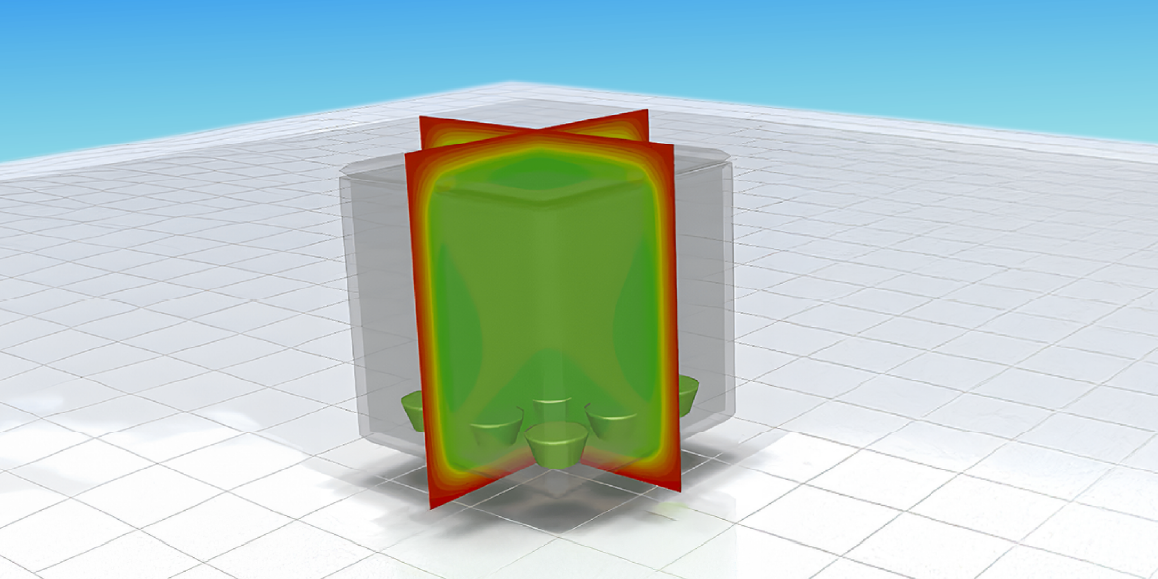
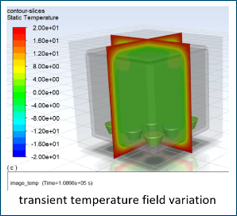
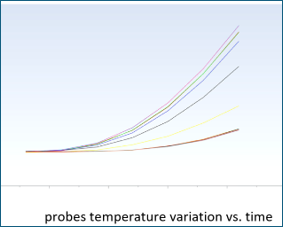
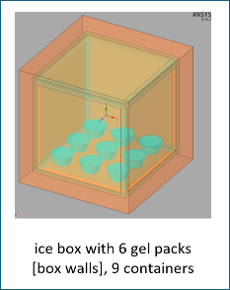
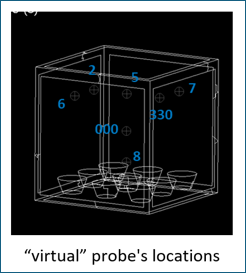
Following is an example of cold box simulation, where transient thermal analysis of an ice box was done to observe the change in temperature gradient with respect to time, across the cross-section of the box. Temperature at multiple probe locations were monitored as well.
The 3D model (as shown below) was created using computer aided design technology.
The Competitive Advantage
Startups and enterprises alike are turning to Ansys Fluent to shorten development cycles and bring optimized cold chain solutions to market faster. The benefits include:
Reduced prototyping costs
Accelerated product validation
Improved compliance with regulatory standards
Enhanced product reliability and customer satisfaction
Conclusion
In a world where timing and precision are everything, especially in sectors dealing with perishable and sensitive products, the role of simulation in cold chain logistics cannot be overstated. Ansys Fluent empowers businesses to predict, optimize, and perfect their cold chain systems—all in a virtual environment. This not only saves time and resources but also ensures a higher standard of safety and efficiency.
For companies navigating the complexities of cold chain logistics, adopting Ansys Fluent isn't just a smart move—it's a strategic imperative.
Found this useful? Share it
Continue Reading
More from our engineers.
If this article was useful, these picks up where it leaves off — practical reads from the CADFEM engineering practice.