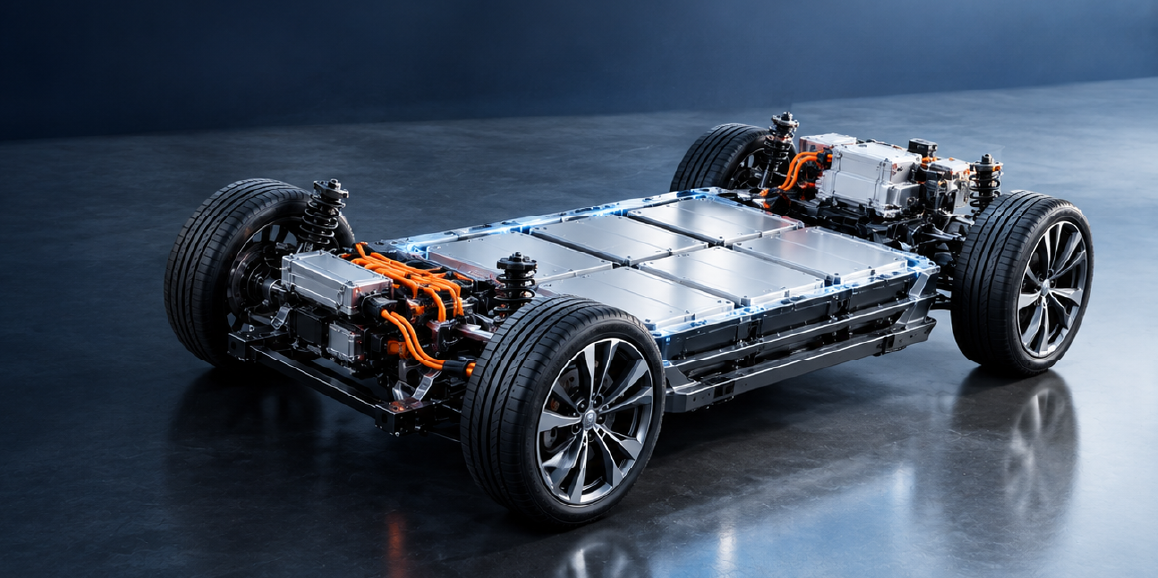
What Is a Battery Management System? Guide for Automotive Applications
Read the CADFEM guide to smart BMS functions, automotive thermal management, centralized vs. modular architectures, and Ansys simulation
Read Article →
The rapid advancement of autonomous vehicles (AVs) and Advanced Driver Assistance Systems (ADAS) is transforming the future of mobility.
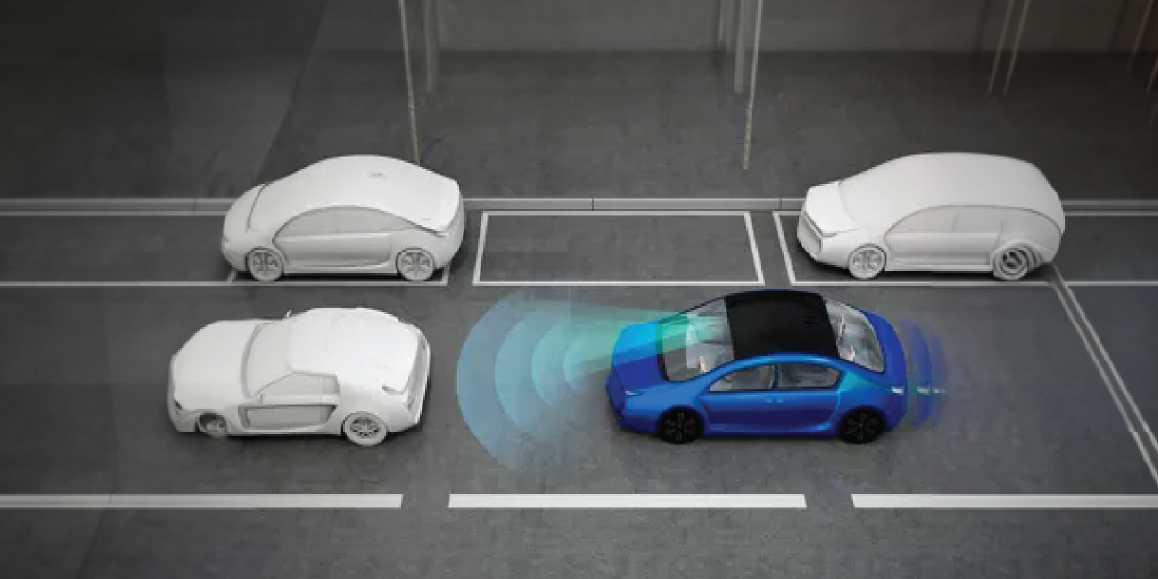
The rapid advancement of autonomous vehicles (AVs) and Advanced Driver Assistance Systems (ADAS) is transforming the future of mobility. As vehicles become increasingly automated, ensuring their safety, reliability, and performance in real-world conditions is paramount. However, traditional road testing is no longer sufficient due to high costs, safety risks, and the sheer complexity of testing all possible scenarios. The industry is now shifting towards simulation-driven validation, enabling scalable and efficient testing in controlled environments.
One of the key challenges in AV validation is achieving realistic sensor simulation that accurately reflects the uncertainties of real-world driving conditions. Ansys AVxcelerate, a powerful physics-based simulation tool, provides high-fidelity sensor modeling and scenario-based testing—crucial for validating L2+ and higher-level autonomy. In this blog, we explore the key trends in autonomous systems testing, the limitations of ideal sensor outputs, and how Ansys AVxcelerate bridges the gap to enable safer and more reliable autonomous vehicle deployments.
Autonomous vehicle validation is transitioning from costly and time-intensive real-world tests to simulation-based methodologies. This shift is crucial to accelerating ADAS development while ensuring compliance with ISO 26262 and other safety standards. The three primary approaches driving this transformation include:
By leveraging these virtual testing techniques, AV developers can accelerate time-to-market while maintaining high safety and compliance standards.
L2+ autonomous functions require extensive testing across thousands of real-world scenarios, including complex urban environments, highways, and unpredictable edge cases. Some of the most challenging scenarios include:
Simulation-based testing allows AVs to be trained and validated in a safe, controlled, and repeatable environment before real-world deployment. This approach significantly reduces risks and ensures the system can handle edge cases that are difficult to test in real-life settings.
Traditional AV simulations often assume ideal sensor data, which does not account for real-world sensor limitations. However, perception accuracy is significantly impacted by environmental factors and sensor-specific challenges, including:
These limitations highlight the need for high-fidelity sensor simulation to ensure AV perception models are robust and capable of handling real-world driving complexities.
Ansys AVxcelerate delivers industry-leading sensor simulation by incorporating physics-based modeling for all major sensor modalities:
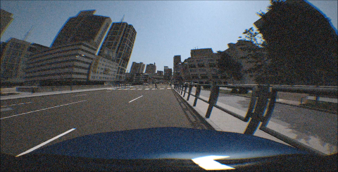
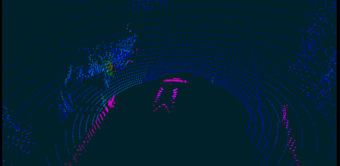
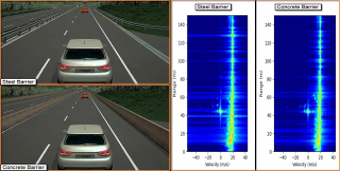
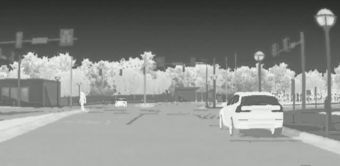
By accurately simulating sensor imperfections, Ansys AVxcelerate ensures that AI perception models are trained on realistic data, leading to improved real-world performance.
Ansys AVxcelerate seamlessly integrates with leading simulation tools like Carla, IPG CarMaker, and other driving simulators, enabling diverse scenario-based testing. This allows AV developers to validate critical ADAS functions, including:
By supporting real ECU and sensor hardware integration, Ansys AVxcelerate creates a seamless bridge between virtual testing and physical deployment. This ensures that autonomous systems perform as expected in real-world conditions, reducing the risk of failures post-deployment.
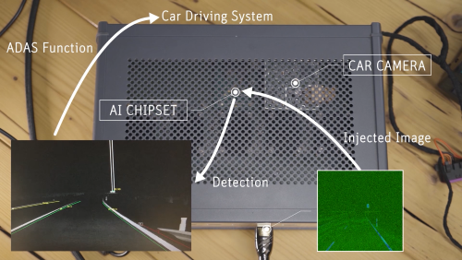
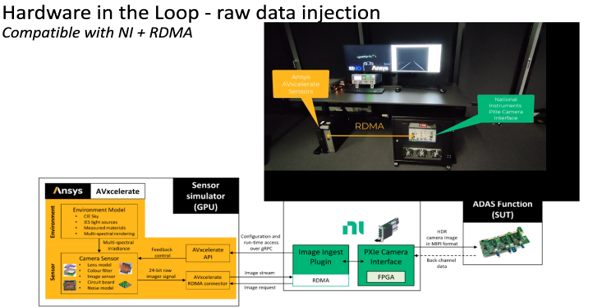
With stochastic sensor behavior modeling, Ansys AVxcelerate enables more robust AI perception training. By exposing machine learning models to real-world sensor variations, it significantly improves resilience to sensor noise, environmental distortions, and edge cases, reducing failure rates during actual driving.
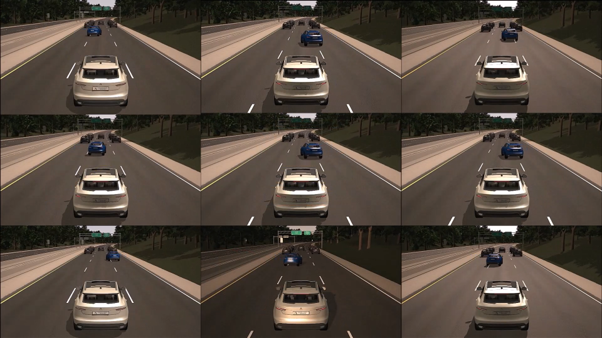
As L2+ and higher-level autonomous systems become more prevalent, the need for real-world stochastic sensor validation grows. Traditional simulations that assume ideal sensor performance are no longer sufficient. Ansys AVxcelerate bridges this gap with its physics-based sensor modeling, scalable scenario testing, and regulatory compliance validation, making it an essential tool for the future of autonomous vehicle testing.
By adopting advanced simulation-driven methodologies, AV developers can ensure safer, more reliable, and highly efficient autonomous systems, ultimately accelerating the deployment of next-generation mobility solutions.
 Multi Physics
Read the CADFEM guide to smart BMS functions, automotive thermal management, centralized vs. modular architectures, and Ansys simulation
Read Article →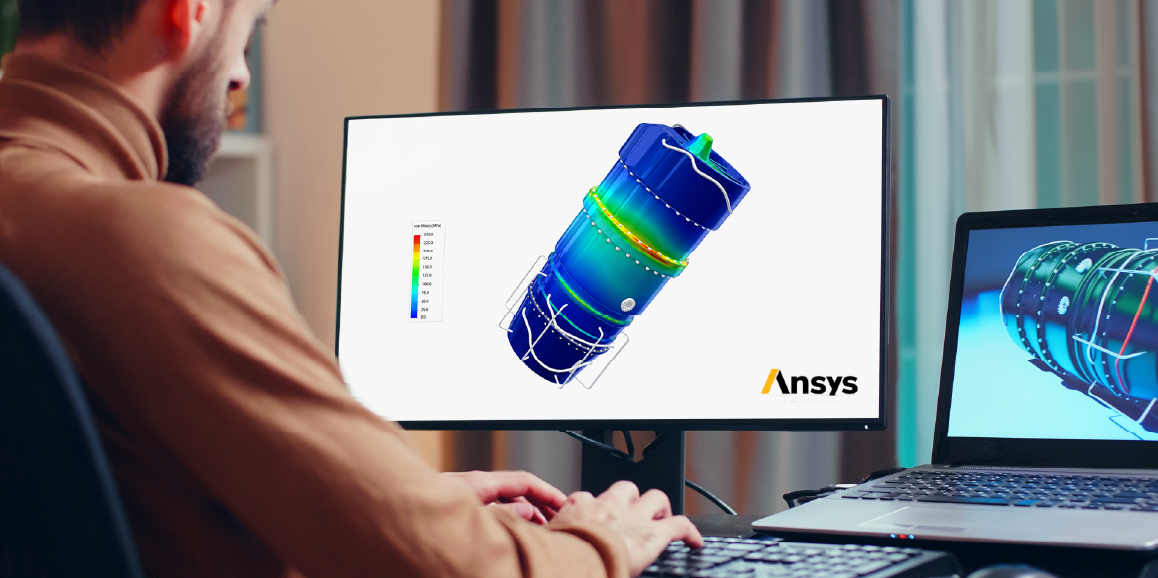 Structures
Di tengah pesatnya perkembangan teknologi rekayasa, adopsi CAE di Indonesia menjadi kunci utama dalam meningkatkan efisiensi dan produktivitas berbagai sektor industri.
Read Article → Electronics
Learn how to use Ansys HFSS SBR+ for 77 GHz automotive radar simulation, evaluating radome effects, antenna performance, radiation patterns, and installation.
Read Article →Connect with CADFEM experts for advanced simulation, automation, and engineering solutions tailored to your industry.