

QARDYNE is an Indian technology company developing smart electric vehicles focused on space efficiency and intelligent design. Its flagship QARGOS F9 is a compact EV built to maximize usable storage and utility without proportionally increasing its footprint — an architecture that introduces significantly higher structural and payload demands, especially as the vehicle operates across varied real-world conditions, from daily commuting to urban mobility and lifestyle use.
To address these challenges efficiently, QARDYNE adopted a simulation-driven engineering approach, combining real-world vehicle testing, Road Load Data Acquisition (RLDA), and Ansys LS-DYNA explicit dynamics simulations.
Company Description
QARDYNE INDIA PRIVATE LIMITED builds smart electric vehicles centered on intelligent architecture, space efficiency, and practical utility. Its flagship QARGOS F9 is a compact EV engineered to maximize usable storage, developed and validated through vehicle testing, Road Load Data Acquisition, CAE, and nonlinear simulation. QARDYNE's vision is a continuous engineering loop: real-world data drives simulation, simulation drives design, and better designs drive performance. As QARGOS scales toward commercial deployment, this foundation extends into connected-vehicle analytics, fleet intelligence, and predictive engineering.
Business Challenges
- As the vehicle architecture evolved to provide greater usable storage and payload capability, QARDYNE needed to ensure that the structure could withstand the resulting loads throughout its operating life.
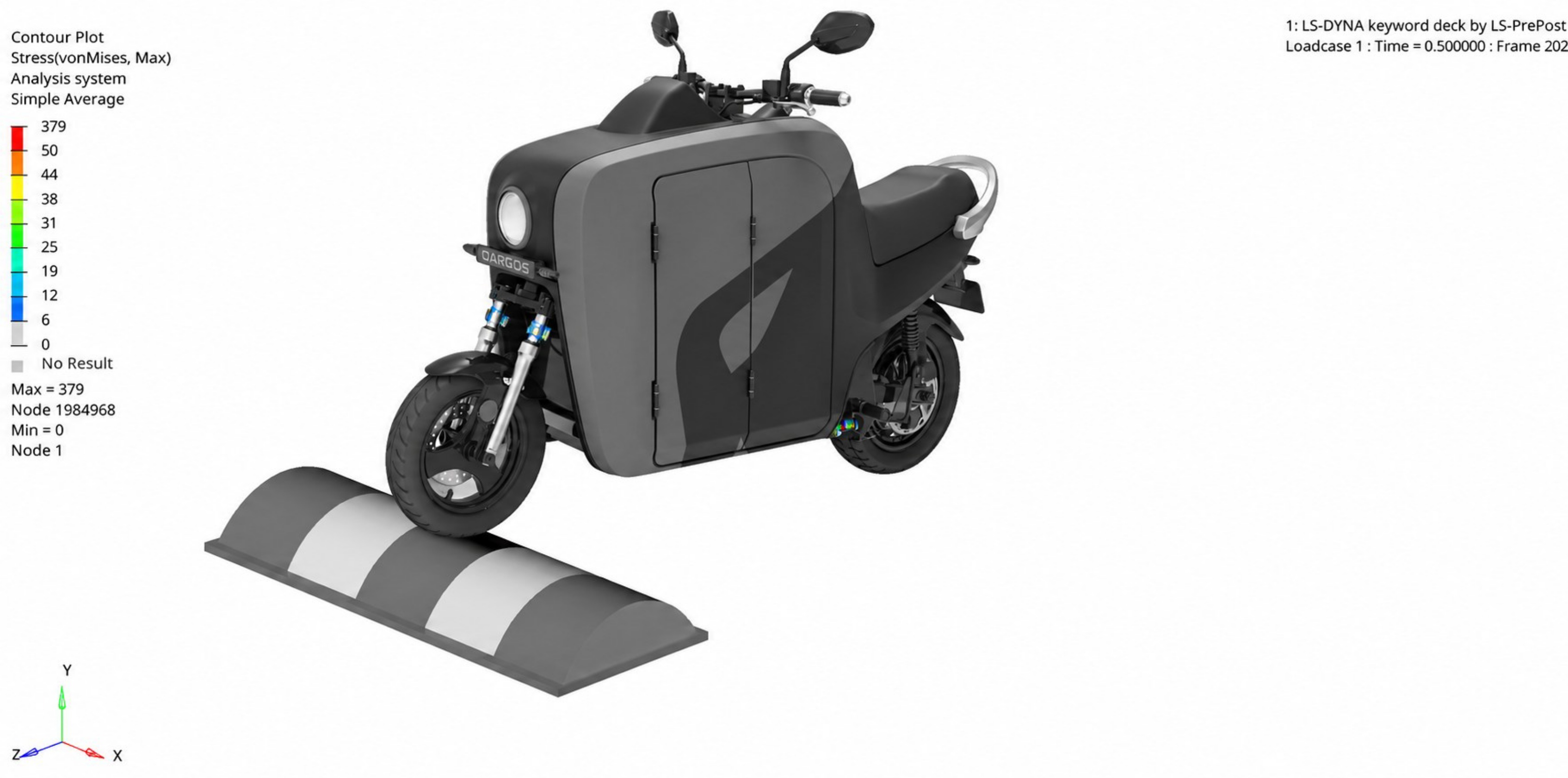
- The vehicle experiences highly variable loading conditions, including speed breakers, potholes, rumble strips, curb or footpath impacts and other severe road conditions. Traditionally, evaluating each structural design would require physical prototypes followed by testing and redesign, creating a potentially lengthy development cycle.
- QARDYNE therefore needed a simulation solution capable of accurately representing nonlinear structural behaviour, transient dynamic loading and crashworthiness scenarios while allowing multiple design configurations and load cases to be evaluated efficiently.
Engineering Solutions
QARDYNE uses Ansys LS-DYNA as its central platform for nonlinear explicit dynamics simulation.
How the process works:
- Real-world data collection where an actual vehicle was instrumented with accelerometers, strain gauges, LVDTs, and a data acquisition system
- Severe test conditions captured, including:
- High-speed speed-breaker crossings with a 100 kg payload
- Footpath and curb jumps
- Rumble strips at varying speeds
- Pothole-affected roads
- Controlled impact events
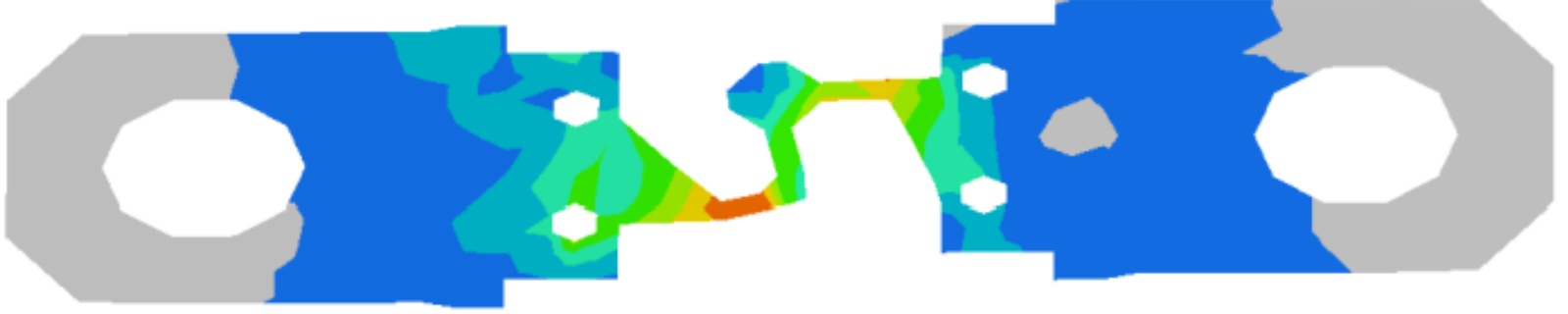
- Data-driven simulation inputs using the measured vehicle data converted into representative load cases and fed into LS-DYNA explicit transient simulations
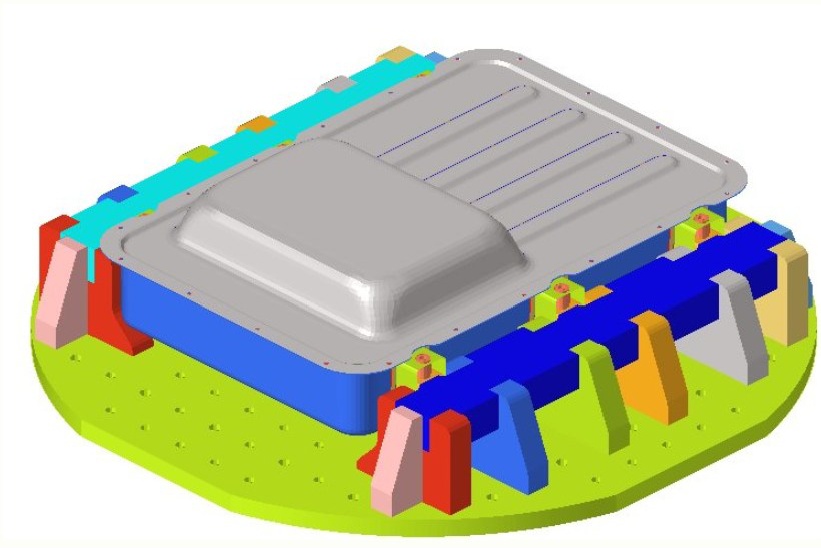
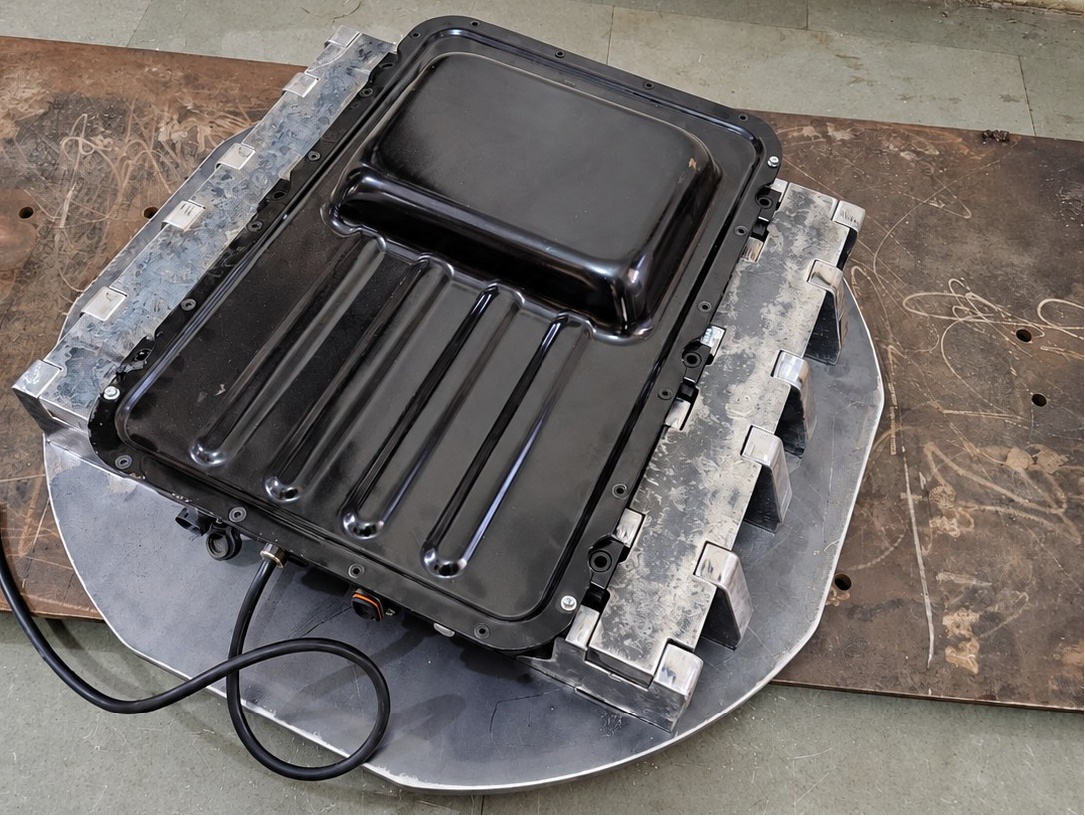
- Extended to crashworthiness studies, covering low-speed frontal impact and side-drop scenarios
- Connects physical and virtual engineering — structural behaviour can be evaluated and optimized in simulation before physical validation
Benefits
Engineering simulation has helped QARDYNE shift from a mostly prototype-driven approach to a simulation-driven development process.
- Fewer physical prototypes where instead of building and testing every structural design, the team evaluates configurations virtually and only validates the most promising designs physically
- More design iterations in the same development window, with less engineering effort and shorter development time
- Broader testing coverage as different load cases and vehicle configurations can be evaluated without building every physical variant
- Faster, larger-scale simulations with Ansys LS-DYNA combined with scalable HPC infrastructure. It removed the limits of local workstation capacity, enabling computationally intensive simulations to run efficiently
- Greater simulation capacity overall where beyond speed, the team can run more load cases and design iterations whenever needed
"CADFEM & Ansys solutions have enabled us to bring real-world vehicle testing and virtual engineering together, allowing our team to evaluate more design configurations and make faster, more informed engineering decisions.