From Experimentation to Innovation: Simulation's Role in Academic Research
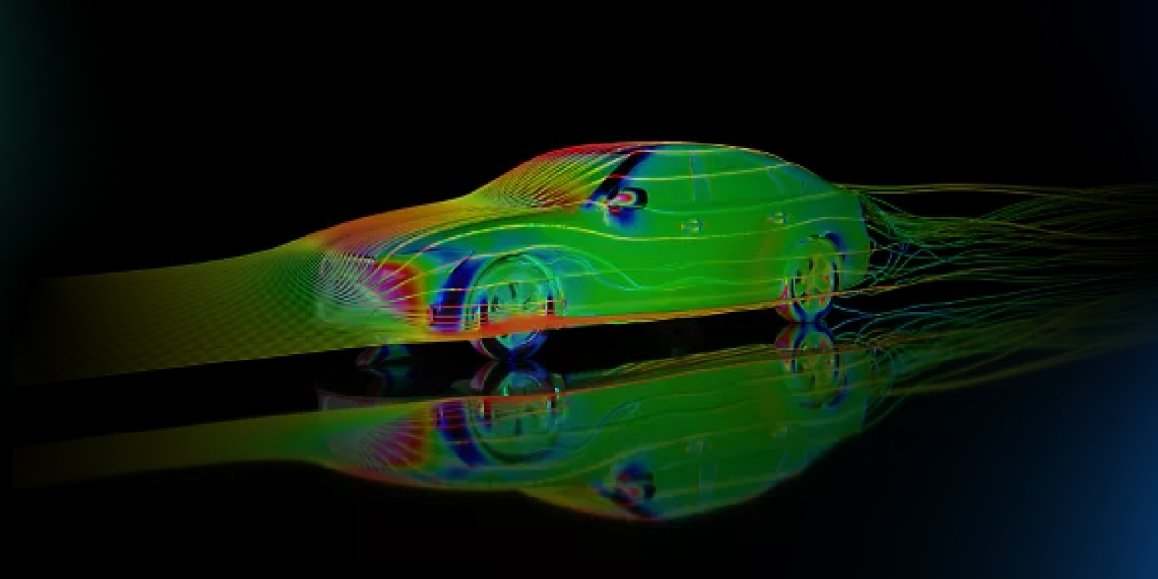
This blog explores how Indian academia is shifting gears — from experimentation to innovation — powered by advanced simulation tools.
VP
Venkateswaran Pedinti Sankaran
Jun 27, 20255 min read
Introduction
"A PhD scholar working on thermal management for compact electronics often faces a dilemma: spend weeks testing heat sinks or simulate the airflow overnight and iterate virtually? Increasingly, the answer is simulation."
This blog explores how Indian academia is shifting gears — from experimentation to innovation — powered by advanced simulation tools.
What once depended on time-consuming, resource-intensive physical experimentation is now rapidly shifting toward high-fidelity, virtual simulation.
Simulation helps researchers test more hypotheses virtually than what is feasible physically — leading to higher-quality publications in less time.
The Shift: From Bench To Bit
Traditional laboratory-based research often required weeks — sometimes months — of setup time, access to expensive infrastructure, and laborious iterative testing. Today, digital simulation empowers researchers to:
Design and validate virtual prototypes before a single component is fabricated
Test complex systems under multiphysics conditions, combining thermal, structural, electromagnetic, and fluid dynamics
Accelerate the innovation cycle, reducing design time by up to 40% and cutting prototyping costs by nearly 30%.
This transition isn't just about faster results — it's about expanding the scope of research possibilities, enabling Indian academia to ask bolder questions and explore more ambitious ideas.
Disruptive Domains: Where Simulation Leads
Let's look at three areas where this transformation is not just visible — it's revolutionary.
1. Thermal Management in Electronics
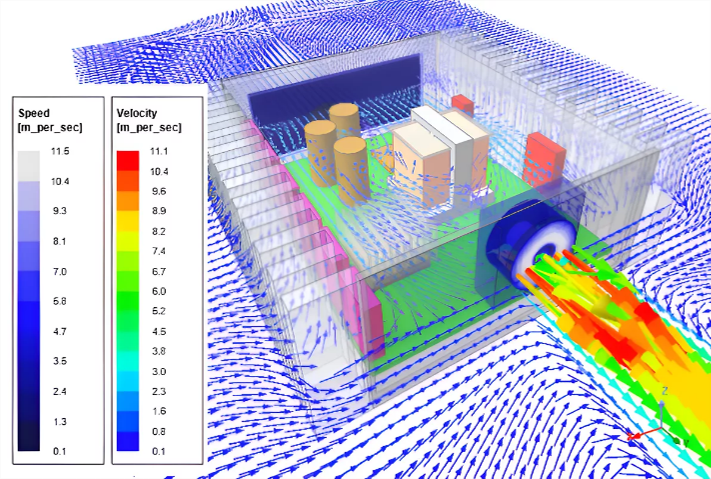
In the age of miniaturization, managing heat in compact electronic systems is critical. Tools like Ansys Icepak and Ansys Fluent allow researchers to simulate airflow, predict thermal hotspots, and develop advanced passive cooling strategies. These insights help extend product lifespan and reduce energy consumption without relying on costly physical tests.
Tool Spotlight: Ansys ICEPAK is ideal for electronics cooling simulations where airflow, PCB density, and convection need precise modeling.
2. Structural Optimization for Lightweight Design
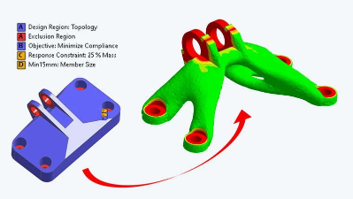
Simulation software such as Ansys Mechanical enables researchers to apply topology optimization — a process that identifies the most efficient material distribution in components. This approach has been pivotal in reducing the weight of aerospace and automotive parts by up to 50%, all while maintaining or even improving structural integrity. Most importantly, these simulation-optimized parts are ready for additive manufacturing, making them ideal for rapid prototyping.
Tool Spotlight: Ansys Mechanical enables lightweight and structurally optimized designs through topology optimization, ideal for aerospace, automotive, and 3D-printable components.
3. Multiphysics Simulation in Bioengineering
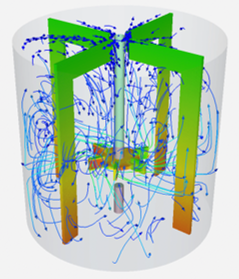
In emerging life sciences research, virtual models of bioreactors, drug delivery systems, and microfluidic platforms are now built using Ansys CFX and Ansys Multiphysics. By modeling fluid flow, nutrient gradients, and heat transfer, researchers can optimize conditions for cell growth or diffusion — all without a single wet-lab experiment.
Tool Spotlight: Ansys CFX is tailored for simulating fluid flow, mixing, and heat transfer in bioreactors and microfluidic systems, making it a powerful tool for bioengineering research.
Empowering Every Tier Of Academia
Simulation is no longer the privilege of elite institutions alone. Through initiatives such as cloud-hosted licenses, affordable academic bundles, and faculty development programs, simulation has found its way into smaller engineering colleges, private universities, and research startups. This democratization has led to:
A surge in Scopus indexed publications citing simulation-based validation
An increase in patent filings due to rapid design iteration cycles
Interdisciplinary research, blending mechanical, electronics, and biomedical engineering in one digital environment
Did you know? Over 180 Indian academic publications cited Ansys tools in 2024 alone – a 70% jump since 2020.
Simulation As A Research Mindset
In the hands of a researcher, simulation becomes more than just a digital mirror. It evolves into a thought partner — helping test bold hypotheses, fail quickly, and build smarter. It enables researchers to fail faster, refine smarter, and explore ideas that would otherwise be too expensive, time-consuming, or risky. To fully harness this shift, academic ecosystems must invest in:
Simulation-integrated research coursework
Faculty development and certification programs
Cross-department research initiatives built around digital twins and multiphysics systems
Conclusion: The Innovation Tipping Point
Simulation is redefining the boundaries of academic research in India. As the country moves toward global leadership in innovation, its universities and research centers must leverage simulation as a core capability, not an afterthought. The future doesn't belong to those who do more experiments — but to those who do it smarter, faster, and better.
Empower your research, enhance curriculum delivery, and support the creation of Centres of Excellence through best-in-class simulation solutions. Whether it's for thesis support, laboratory innovation, or long-term academic collaboration, CADFEM is committed to advancing academic excellence.
Found this useful? Share it
Continue Reading
More from our engineers.
If this article was useful, these picks up where it leaves off — practical reads from the CADFEM engineering practice.