BlogMBUAnsys FormingSheet Metal FormingStructuresManufacturing
Sheet Metal Forming Simulation Using Ansys Forming
A Smarter, Faster, and More Accurate Path to Manufacturing Excellence
LC
Laxmi Narasimha Chowdary
Nov 7, 20266 min read
Why Sheet Metal Forming Matters - and Why Ansys Forming Is Redefining the Future of Manufacturing
Walk through any manufacturing plant today-automotive, aerospace, energy, appliances, electronics- and you’ll see one process shaping the world more than almost any other and that is Sheet metal forming.
From the curves of car body panels to the structure of aircraft skins, from medical devices to home appliances - sheet metal components are everywhere. Yet behind every successful formed part lies a challenge that has frustrated engineers for decades.
For decades, manufacturers relied on trial and error:
Build prototype dies
Run press trials
Inspect for cracks, wrinkles, or defects
Modify dies
Repeat
This method worked - but at a massive cost:
Wasted raw material
High tooling expenses
Delayed launches
Increased machine wear
Limited visibility into why failures occur
In a world moving toward zero-defect manufacturing, this traditional approach simply can’t keep up.
What Modern Manufacturing Actually Demands
Today’s industries need more than experience alone. They need:
Visibility — understanding exactly how the material behaves
Predictability — knowing what will happen before the first press stroke
Speed — accelerating development without compromising quality
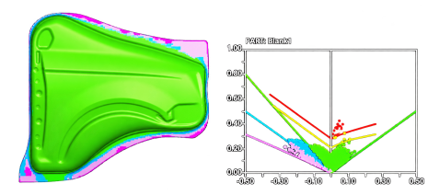
Even the most experienced tool designer can’t always predict where a part will split, wrinkle, or spring back. That uncertainty is where the industry still loses millions every year — and as products get lighter, stronger, and more sustainable, this question has only become more urgent: how do you guarantee perfect formability before production, without wasting time, material, and money?
Today, the answer is clearer than ever: forming simulation with Ansys.
Forming with Ansys
Ansys: Revolution in Sheet Metal Forming
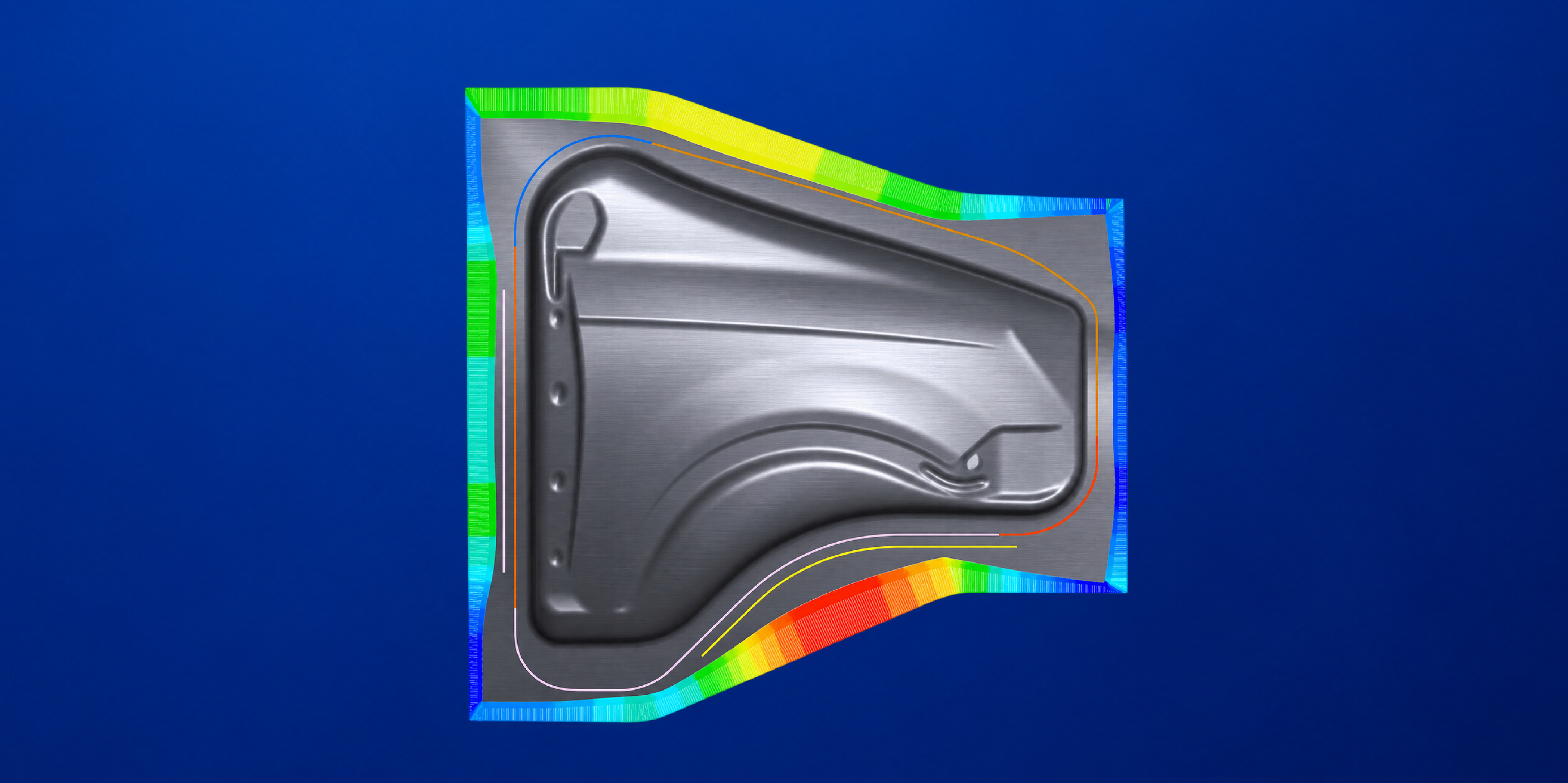
This is where Ansys changes everything. Forming isn’t just an advantage anymore-it’s becoming a necessity. With Ansys, engineers can simulate the entire forming process before touching a press, optimizing part design, tooling, and material usage-all while saving time, cost, and resources.
How Ansys Forming Works
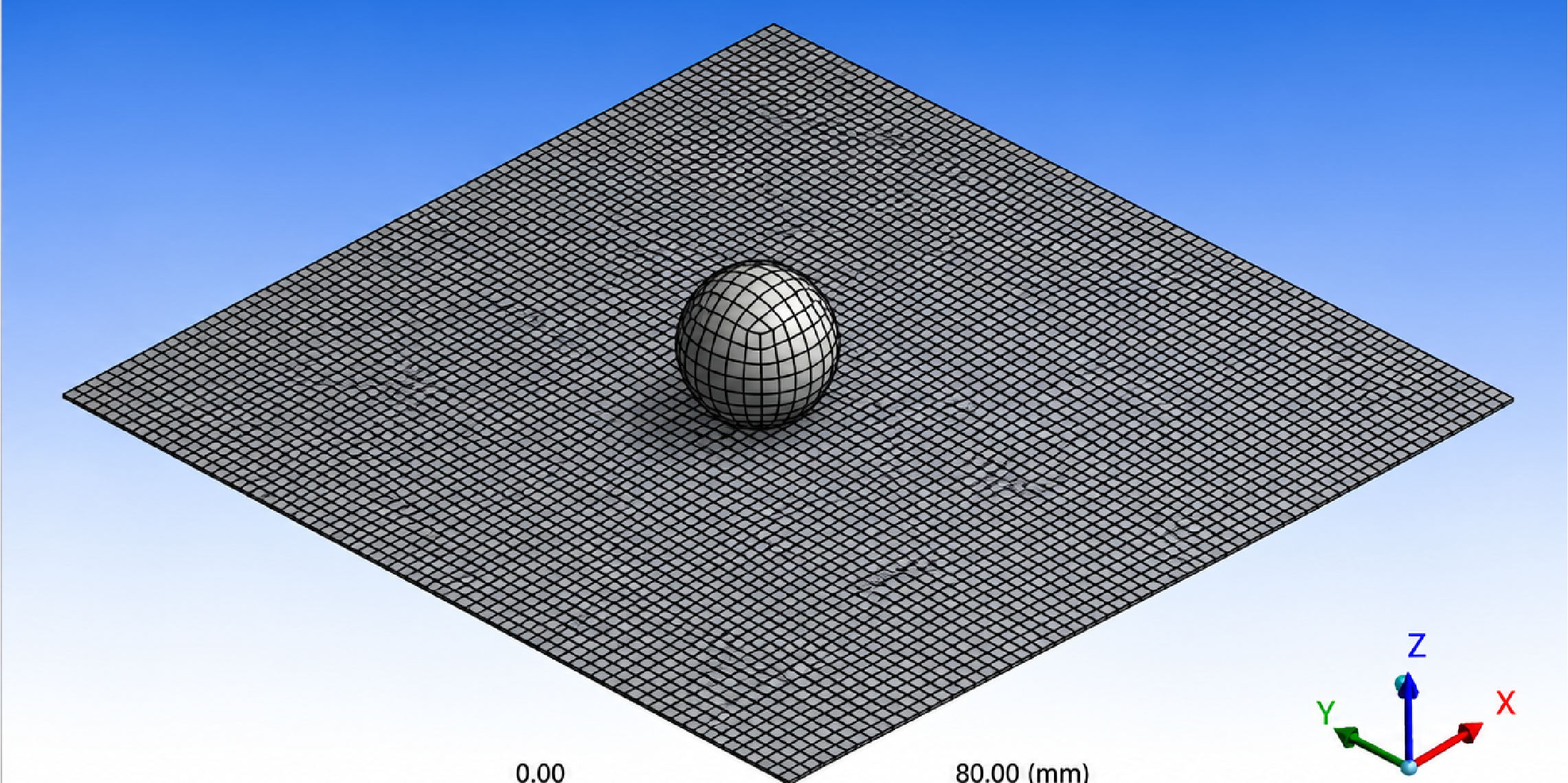
At its core, Ansys is a highly advanced finite element solver capable of handling complex nonlinear behaviours such as:
Large plastic deformations
Material strain-rate sensitivity
Contact and friction between tools and sheets
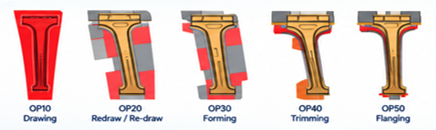
Multi-stage forming processes
Unlike traditional trial-and-error methods, Ansys simulates every detail of the forming process, predicting results with remarkable accuracy-often matching experimental data in both trend and magnitude.
Handle Any Forming Process with Ansys
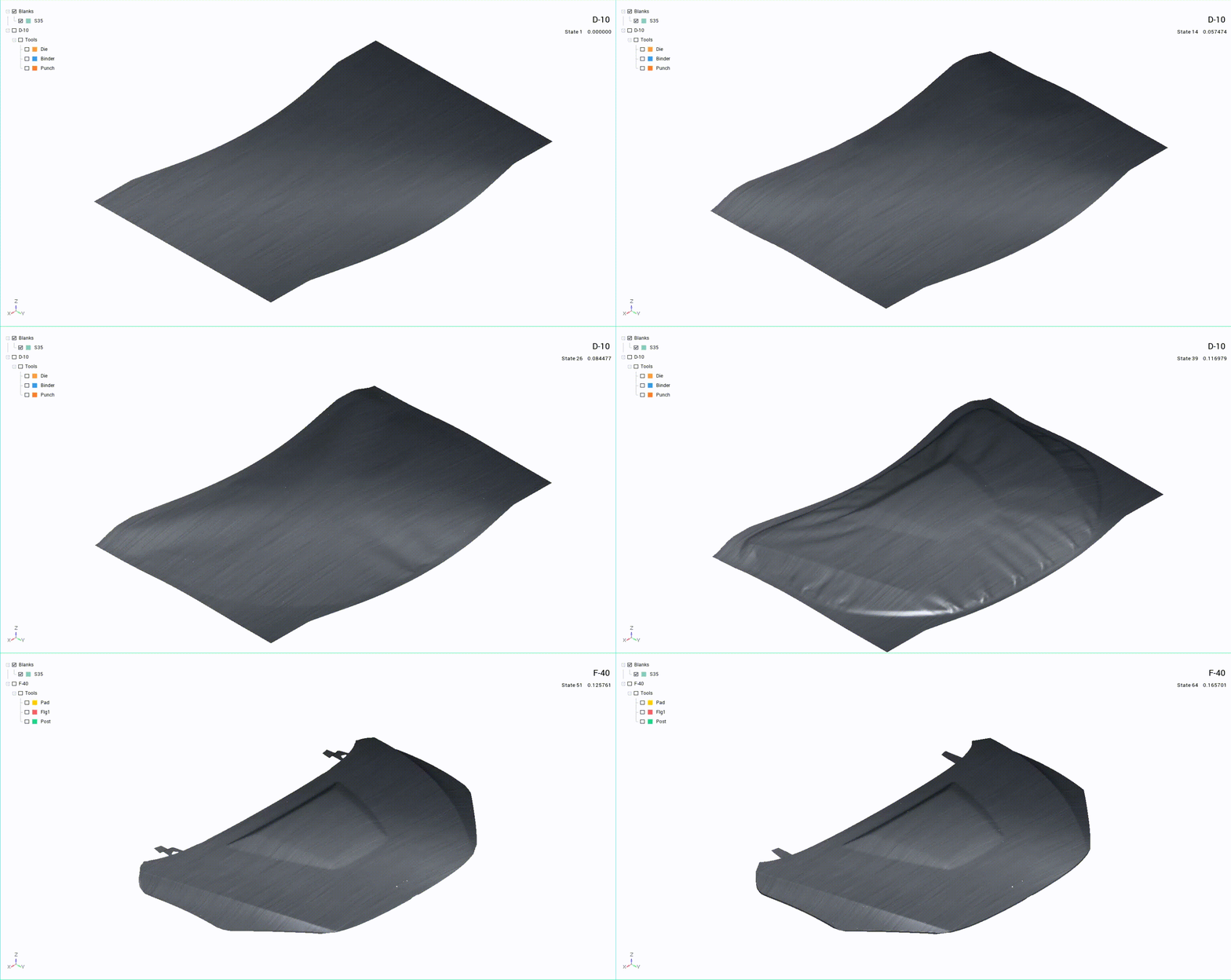
Ansys delivers a comprehensive forming-simulation environment capable of handling nearly every sheet-metal process used in today’s production lines. From initial concept to final trim Ansys enables engineers to evaluate designs, reduce try out loops, and eliminate costly physical experiments.
Ansys supports virtually all sheet metal operations:
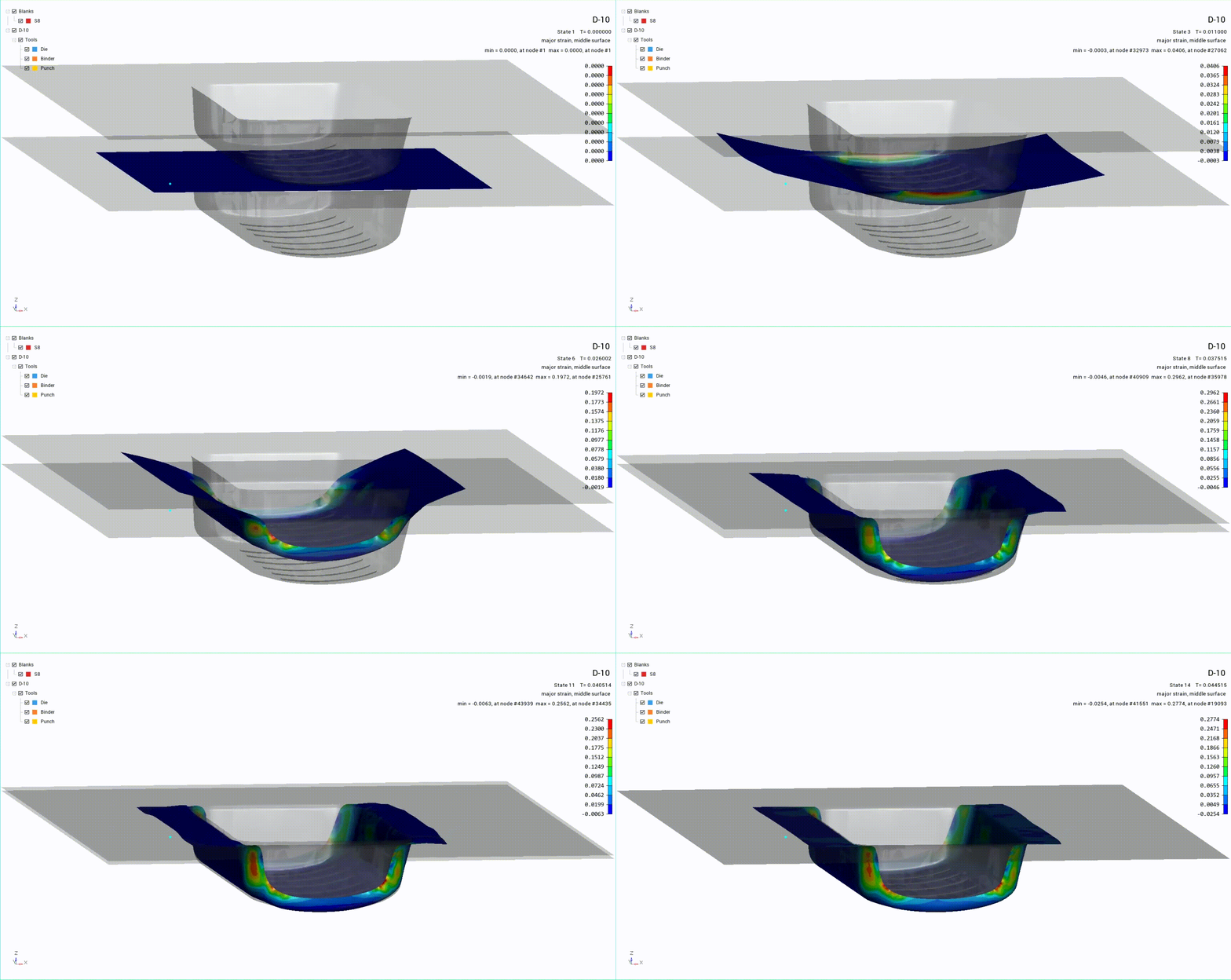
Deep Drawing – cups, trays, and complex shapes
Stamping & Press Forming – automotive panels, structural parts
Bending & Hemming – including spring-back prediction
Accurate forming simulation starts with accurate material behavior. Ansys provides one of the most comprehensive and production-proven material libraries in the industry, enabling engineers to model metals and advanced materials with confidence.
Ansys also supports advanced material models:
isotropic and anisotropic plasticity
strain-rate dependent materials
warm/hot forming materials
aluminum, steel, magnesium, titanium alloys
composites and multi-layer sheets
Advanced Contact for Real-World Forming
Ansys includes some of the most advanced and robust contact algorithms available, ensuring that every interaction between tools, sheets, and material layers is captured with precision.
Its forming contact algorithms handle:
complex friction models
multi-surface interactions
sliding, separation, and sticking
self-contact for folding or hemming
draw-bead representation
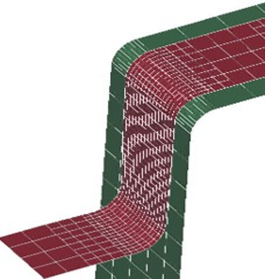
Adaptive Remeshing: Maintaining Accuracy in Extreme Deformations
One of the biggest challenges in sheet metal forming simulation is maintaining mesh quality as the material stretches, bends, and draws into complex shapes. Poor element quality can lead to numerical instability, inaccurate strain prediction, or premature failure in the simulation long before a real part would ever split.
Ansys eliminates this issue through advanced adaptive remeshing technology. Adaptive remeshing (adaptive mesh refinement) allows the solver to automatically refine, coarse, or redistribute the mesh during the forming process. As the sheet undergoes large deformations, Ansys intelligently updates the mesh so that element distortion never compromises accuracy.
Conclusion: The Future of Forming Is Digital - And It Starts with Ansys
Ansys delivers a smarter, faster, and far more sustainable way to engineer sheet metal forming-empowering teams to simulate, optimize, and validate every step of the process digitally, long before any physical material is used.
With its advanced material models, high-precision contact algorithms, and unmatched ability to replicate nearly every forming operation, Ansys gives manufacturers the tools to:
drastically reduce development time
eliminate unnecessary scrap and waste
cut tooling and try-out costs
enhance part quality and performance
accelerate innovation in a cleaner, more sustainable way
In short, Ansys turns forming from a time-consuming, trial-and-error challenge into a streamlined, predictable, and future-ready digital process.
Found this useful? Share it
Continue Reading
More from our engineers.
If this article was useful, these picks up where it leaves off — practical reads from the CADFEM engineering practice.