ANALYSIS TYPE / 06
Torque · Efficiency · Loss · Thermal Coupling
Overview
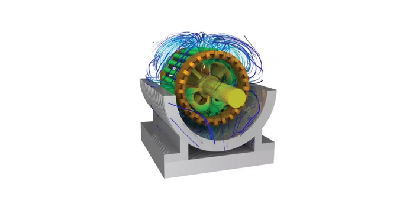
Electric motor and generator simulation computes torque, efficiency, losses, flux distribution, and thermal behaviour in AC induction motors, permanent magnet machines, switched reluctance drives, and generators across the full operating envelope. Coupled electromagnetic-thermal analysis identifies winding and magnet temperature under sustained duty cycles, guides cooling system design, and quantifies demagnetisation risk — enabling performance optimisation that meets EV traction and industrial drive targets before prototype hardware is built.
Industries Served
Deliverables
Key Aspects
Computing torque-speed characteristics, efficiency maps, and power factor across the full operating range — identifying peak efficiency regions and de-rating under field weakening.
Decomposing total machine losses into iron core loss, copper winding loss, eddy current loss, and magnet loss — identifying the dominant contributors for each operating point.
Evaluating permanent magnet operating point under fault current, temperature extremes, and field-weakening — predicting irreversible demagnetisation risk and margin.
Iteratively coupling electromagnetic loss maps with thermal CFD to predict winding and magnet temperatures under sustained operating cycles — informing cooling system design.
Connect with our electromagnetics simulation team to discuss the right approach for your application.