ANALYSIS TYPE / 02
Create Detailed 2D Drawings and Build 3D Design Models
Overview
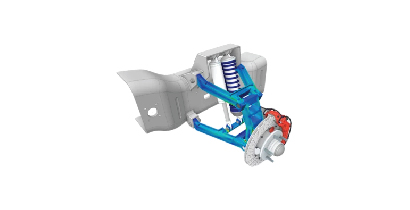
Three-dimensional Computer-Aided Design (3D CAD) modeling is a fundamental aspect of modern engineering, enabling the creation of digital representations of physical objects. These models serve as the basis for analysis, visualization, and manufacturing. The process involves conceptualization, sketching, extrusion, detailing, parametric modeling, and validation. In engineering, assemblies combine individual components to form complete systems, enabling engineers to visualize how parts fit together, detect interference, simulate motion, and generate Bills of Materials — forming the foundation for FEA, CFD, and PLM workflows.
Industries Served
Deliverables
Key Aspects
Building fully parametric, history-based models where key dimensions and relationships are captured as design parameters — enabling rapid, controlled iteration as requirements evolve without geometry rebuilds.
Creating multi-component assemblies with correctly defined mating constraints and motion relationships, enabling kinematic validation and interference checking at the digital stage before any hardware is built.
Preparing and simplifying CAD geometry for downstream FEA and CFD analysis — removing unnecessary features, defeaturing fillets, and creating mid-surface shells where required for structural and thermal models.
Delivering models with structured metadata, material assignments, and configuration management ready for integration into Teamcenter, Windchill, or Enovia PLM systems with correct BOM structure.
Connect with our design engineering team to discuss your project requirements and how we can deliver simulation-ready results.