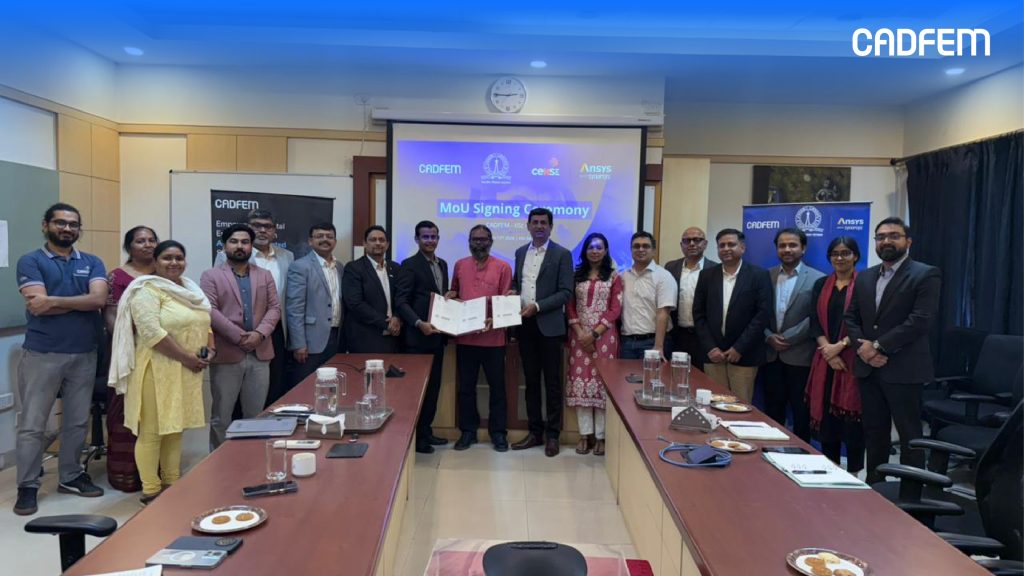
Bengaluru, India, March 2026
“Integrating advanced simulation capabilities into our research ecosystem will enable our teams to evaluate complex device behavior much earlier in the design cycle. In domains such as photonics, semiconductor devices, and nanoscale systems, the ability to digitally validate concepts prior to fabrication will significantly accelerate research progress while strengthening design confidence and technical rigor” said Dr. Shankar Kumar Selvaraja, Associate Professor and Associate Chair at CeNSE, IISc.
“Simulation today is no longer merely a design tool; it has become a strategic enabler of innovation. When high-fidelity multiphysics simulation is embedded within research environments such as CeNSE, it establishes a powerful digital engineering capability that enables scientists and engineers to explore a broader design space, validate ideas at much earlier stages, and significantly accelerate the pace of technology development,” said Dr.-Ing Madhukar Chatiri, CEO of CADFEM APAC.
Murali Pullela, Country Head (S&A), Synopsys said, “Semiconductor innovation is today at the intersection of advanced design, simulation, and system-level thinking. Synopsys’ collaboration with the IISc and CADFEM is a reflection of our commitment to strengthen India’s deep-tech ecosystem by allowing access to world-class electronic design automation and simulation capabilities. We believe that this will empower researchers to move from concept to validated design much faster and also help in building critical capabilities in areas such as nanoscale devices, photonics and next-generation electronic systems. This CoE launch is a key step toward developing India’s future semiconductor ambitions.”